
A signet ring is small in size, yet it can carry an extraordinary amount of meaning. A family crest, intertwined initials, a personal symbol, or a carefully chosen motto can turn a piece of jewellery into a record of identity and memory. What gives the finest examples their depth is not only the design, but the way that design is cut into metal by hand. Hand engraving is a controlled craft in which every line is shaped through pressure, judgement, and years of trained movement.
Unlike mass-produced decoration, hand engraving does not begin with a button and end with an identical result. The engraver studies the ring’s face, the proportions of the artwork, the hardness of the metal, and the way light should move across the finished cuts. Even when two customers request similar initials or symbols, differences in line weight, spacing, depth, texture, and finishing make each ring distinct. This is why a hand-engraved signet feels less like a standard accessory and more like a miniature work of art made for one person.
What Is Hand Engraving on a Signet Ring?
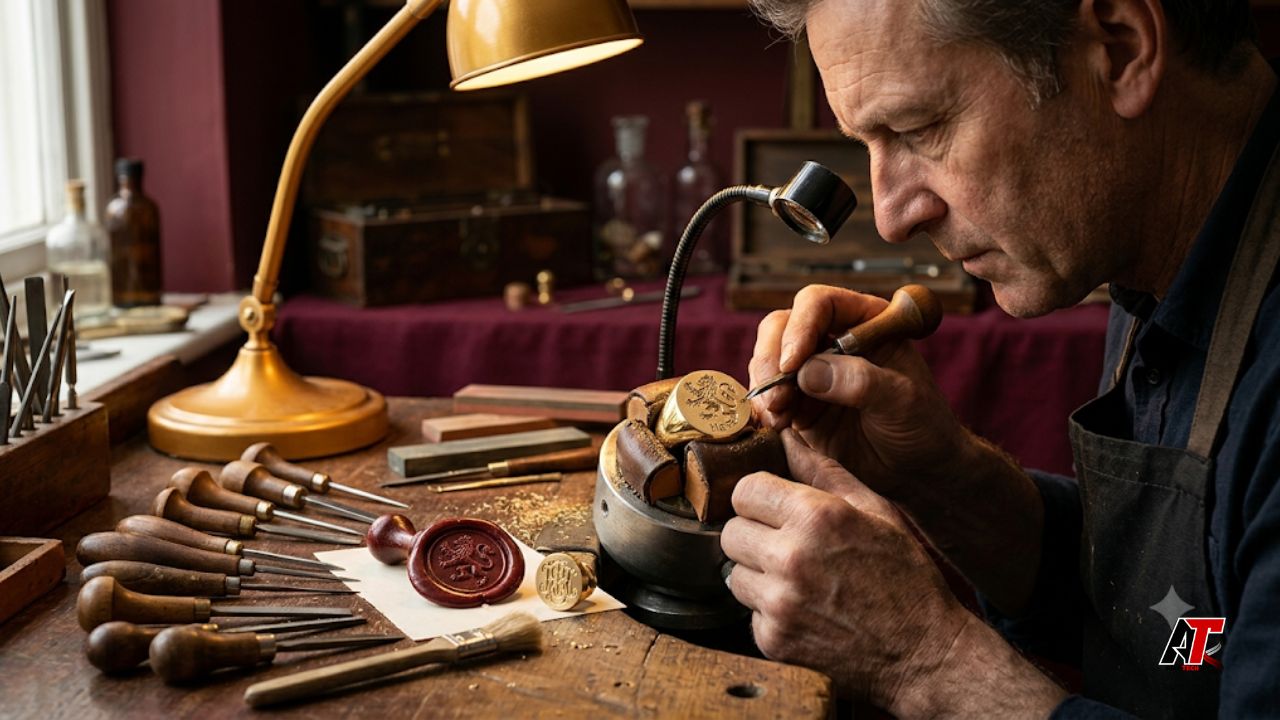
Hand engraving is the process of cutting a design directly into a ring with small hardened-steel tools called gravers. Different graver shapes allow the craftsperson to form fine outlines, broad reflective cuts, shaded areas, curves, textures, and deep recesses. Instead of removing metal through an automated laser or rotary programme, the engraver guides each cut by hand, often under magnification.
The limited space of a signet face makes planning essential. The artwork is usually resized, balanced, and transferred to the metal before permanent cutting begins. Hand engraving may be shallow and decorative, or it may be deep enough to create a functional seal. In deep seal engraving, the design is carved below the surface and in reverse, so pressing the ring into wax produces a raised impression that appears the correct way around.
Why Every Hand-Engraved Signet Ring Is Unique
The individuality begins with the engraver’s hand. Pressure, tool angle, cutting rhythm, and the way curves are formed all influence the result. A skilled engraver develops a recognisable touch, much like a calligrapher. These tiny variations are not flaws; they are evidence of genuine craftsmanship and give the ring a character that cannot be perfectly duplicated.
The ring itself also changes the work. Gold, silver, and platinum respond differently beneath a graver, while oval, cushion, round, and shield-shaped faces require different layouts. Personal artwork adds another level of originality. A crest, monogram, animal, flower, professional emblem, landscape, date, or private inscription can be adapted to suit the wearer. The combination of story, metal, shape, artist, and hand-cut surface ensures the finished ring belongs to no one else.
The Step-by-Step Art of Creating the Engraving
1. Understanding the Design
The process starts with the meaning behind the ring. The engraver discusses whether the style should feel traditional or modern, whether the ring will be worn daily, and whether it must create wax impressions. Existing artwork may need to be cleaned or simplified because complex designs can lose clarity when reduced to a small surface. The best composition gives priority to the most important symbol rather than forcing every possible detail into the design.
2. Preparing and Transferring the Artwork
Once approved, the artwork is resized to the exact ring dimensions. Margins, symmetry, lettering, and negative space are checked carefully. For seal work, the design is reversed. It is then transferred to the polished face as a temporary guide. The engraver may establish the main outlines with light cuts first, creating a framework before adding permanent depth.
3. Cutting, Shading, and Building Depth
Different gravers are selected for outlines, backgrounds, lettering, curves, and shading. The engraver controls both the width and depth of each cut. Bright cuts catch light, fine parallel lines create shadow, and deeper areas make a crest or monogram appear sculptural. Complex images are developed gradually, from major forms to small accents, while magnification helps the artist inspect edges and prevent crowded or uneven details.
4. Refining and Testing the Result
After cutting, the engraver removes burrs and unwanted marks without softening the crisp design. Polished highlights and matte or darkened recesses may be used to improve contrast. If the ring is a deep seal, a wax impression checks the depth, orientation, clarity, and release of fine elements. The ring is then cleaned and inspected before presentation.
Deep Seal Engraving Versus Surface Engraving
Surface engraving is primarily made to be viewed on the ring. Initials, dates, ornamental patterns, and detailed artwork can be cut at different depths, with light and texture creating visual interest. It suits wearers who want a beautiful visible design but do not need to stamp wax.
Deep seal engraving is carved as a reverse intaglio, with the image sitting below the surrounding metal. When pressed into softened wax, it produces a raised impression. Backgrounds usually require greater depth, and delicate areas must be shaped so they release cleanly. Neither option is automatically better; the right choice depends on whether appearance, historical tradition, or seal functionality matters most. Customers exploring bespoke Signets and Seals rings can compare both approaches when planning a personalised ring.
How Metal Choice Changes the Engraving
Gold is a classic signet-ring metal because it combines lasting value, warm colour, and good workability. Yellow gold creates a traditional look, rose gold feels softer, and white gold gives a more contemporary appearance. Different purities and alloys have different hardness levels, so the engraver adjusts tool pressure and finishing methods to suit the material.
Sterling silver offers a bright, accessible surface that accepts detailed cutting well. Its recessed lines can gain contrast as the metal develops a natural patina, although it requires care to reduce scratching and tarnish. Platinum is dense, naturally white, and highly durable. Its toughness demands confident tool control, but its weight and refined finish make it appealing for substantial heirloom pieces. Lifestyle, budget, preferred weight, and desired detail should all influence the final choice.
Hand Engraving Compared with Machine and Laser Engraving
Machine and laser engraving can create clean, repeatable results, particularly for simple text, logos, serial information, and designs that must be reproduced consistently. Digital layouts can be previewed accurately, and production is generally faster. For practical inscriptions or multiple matching items, these methods may be entirely suitable.
Hand engraving offers a different value. The engraver can taper a curve naturally, change depth within a single line, add microscopic shading, and respond to the exact shape of the ring. Each physical cut reflects light in its own direction, producing a lively surface. This is especially valuable for heraldry, sculptural motifs, deep seals, and heirloom commissions. Modern design tools can still help refine proportions, while the final artwork is cut traditionally by hand.
What to Consider Before Commissioning a Signet Ring
Begin by deciding what the ring should communicate. Collect clear reference material such as artwork, family documents, sketches, initials, dates, or examples of lettering. When using heraldic imagery, verify that the design is accurate. A meaningful, well-edited symbol will usually create a stronger ring than a crowded composition chosen only for decoration.
Consider the size and shape of the ring face as well. Larger faces allow more detail but create a bolder look, while smaller faces may require simplification. Think about the finger, daily comfort, neighbouring jewellery, and the conditions in which the ring will be worn. Review artwork carefully before engraving begins, checking spelling, dates, direction, symmetry, and placement. The quote and schedule should clearly cover design approval, engraving, finishing, optional inscriptions, wax impressions, and presentation.
Caring for a Hand-Engraved Signet Ring
A hand-engraved ring is made to be worn, but sensible care preserves its crisp detail. Remove it during heavy manual work, gym sessions, gardening, or tasks involving abrasive surfaces and strong chemicals. Store it separately from harder jewellery so the face is not repeatedly rubbed or struck.
For routine cleaning, use lukewarm water, mild soap, and a very soft brush to lift dirt from recessed areas. Rinse carefully and dry with a lint-free cloth. Avoid aggressive polishing compounds because repeated polishing can soften fine edges. Deep seal engravings should be cleaned gently rather than scraped with a pin or metal object. Occasional professional inspection is useful after a hard impact or when the ring includes gemstones.
Why Hand-Engraved Signet Rings Become Heirlooms
A signet ring can mark a graduation, wedding, business achievement, family bond, personal belief, or new chapter in life. Because the symbol is permanently cut into precious metal, the meaning feels tangible. The ring can be touched, worn, used to make an impression, and eventually passed to another generation.
Hand engraving adds emotional value because the object records the work of a real craftsperson. Tiny variations prove that the ring was not taken from an identical production line. The artist made decisions for one design, one piece of metal, and one client. At aelftech.com, we value stories that explain the skill behind distinctive products and help readers recognise the difference between decoration and enduring craftsmanship.
Frequently Asked Questions
How long does hand engraving take?
Timing depends on the size, depth, and complexity of the design. A simple monogram requires less workshop time than a detailed coat of arms or deep seal. Artwork approval, preparation, engraving, finishing, and quality checks all affect the final schedule.
Can any image be engraved on a signet ring?
Many images can be adapted, but very fine artwork may need simplification, stronger outlines, or a revised layout. An experienced engraver preserves the most recognisable features while removing details that would become crowded or unreadable at ring size.
Can a hand-engraved ring make a wax seal?
Yes, when it is created as a reverse deep seal engraving. The recessed design produces a raised, correctly oriented wax impression. A normal surface engraving may be decorative without having enough reverse depth to work as a clear seal.
Is hand engraving suitable for everyday wear?
Yes. Gold, silver, and platinum signet rings can be worn regularly when the design and metal suit the wearer’s lifestyle. Removing the ring for heavy work and cleaning it gently will help protect the detail.
Final Thoughts
The art of hand engraving transforms a signet ring from a shaped piece of metal into a personal object. Every stage—from interpreting the story and adapting the artwork to controlling the graver and testing the final impression—requires human judgement. The resulting variations in depth, texture, proportion, and finish are exactly what make each ring unique.
Whether the design carries a family crest, modern emblem, monogram, or private message, the strongest signet rings combine clear meaning with skilled execution. They are made to be seen, worn, remembered, and passed on. In a world of identical products, a hand-engraved signet ring remains a compelling reminder that the most valuable details are often created one careful line at a time.
Leave a Reply