
A Glock 19 is a compact handgun, but its size does not reduce the seriousness of owning or handling it. Responsible ownership begins long before anyone visits a range. It starts with a safety-first mindset, secure storage, careful preparation, and the willingness to follow the same rules every time. Good habits matter because a moment of distraction can have permanent consequences.
This guide explains Glock 19 safety essentials in a practical, human-friendly way. It does not replace the official owner’s manual, qualified in-person instruction, or the laws that apply where you live. Instead, it focuses on the everyday habits that help lawful owners prevent unauthorized access, negligent handling, theft, and avoidable injuries.
The central idea is simple: mechanical features can support safe use, but they can never replace responsible behavior. A firearm should always be treated with the same level of care, whether it is believed to be loaded or unloaded, stored at home, transported in a locked case, or handled during supervised training.
Understand the Glock 19 Before Handling It
Every owner should begin by reading the correct manufacturer manual for the exact model and generation in their possession. The Glock 19 uses the manufacturer’s Safe Action system, which includes internal safety mechanisms. However, internal safeties do not make careless handling safe. The user remains responsible for muzzle direction, trigger-finger discipline, secure storage, and confirming the firearm’s condition according to the manufacturer’s instructions.
Avoid learning from short social media clips, anonymous forum comments, or advice that cannot be verified. Online content may omit important warnings, show unsafe behavior, or apply to a different model. Use official documentation and work with a qualified instructor who can observe your habits in person.
Before any handling session, remove distractions. Do not handle a firearm while tired, angry, rushed, impaired by alcohol or drugs, or affected by medication that reduces alertness. Responsible handling requires clear judgment and full attention.
Build Every Habit Around the Four Primary Safety Rules
The strongest safety routine is built around four rules that apply at the same time. They are not separate options, and following one does not excuse ignoring another. The National Shooting Sports Foundation presents these principles as the foundation of safe firearm handling.
First, always keep the muzzle pointed in a direction where an unintentional discharge would not injure a person. A safe direction depends on the environment. Walls, floors, ceilings, windows, nearby rooms, and the possibility of penetration or ricochet must be considered.
Second, treat every firearm as though it is loaded. Even after another person says it is unloaded, maintain safe muzzle direction and trigger discipline. Never accept someone else’s assumption as a substitute for your own careful verification using the official procedure.
Third, keep your finger completely outside the trigger guard until you are at an authorized shooting location, have made a conscious decision to fire, and are following range commands. Resting a finger on the trigger guard instead of clearly along the frame can still create poor muscle memory.
Fourth, be certain of the intended target, the surrounding area, and what lies beyond it. A projectile can pass through or miss a target. This rule is essential at a formal range and in any lawful situation where a firearm might be present.
Use a Consistent Pre-Handling Routine
Consistency reduces mistakes. Before touching the Glock 19, pause and identify why it needs to be handled. Is it being placed into secure storage, prepared for lawful transport, presented to a qualified instructor, or inspected under the manual’s guidance? Handling without a clear reason increases unnecessary exposure to risk.
Choose a controlled location with no unauthorized people nearby. Keep live ammunition away from areas used for inspection, cleaning, or training with inert aids. Maintain a safe muzzle direction from the first moment of contact until the firearm is secured again.
When confirming that the firearm is unloaded, follow the current official manual exactly. Do not rely on memory, shortcuts, or assumptions based on whether a magazine appears to be removed. If anything feels unfamiliar, stop and ask a certified professional for help rather than experimenting.
Keep Trigger-Finger Discipline Automatic
Trigger-finger discipline is one of the most important habits an owner can develop. The index finger should remain straight and visibly positioned on the frame, away from the trigger and outside the trigger guard, during handling, movement, inspection, transfer, storage, and transport preparation.
This position should become automatic rather than something remembered only after picking up the firearm. Practice should occur only in a lawful, controlled setting under qualified supervision and with the firearm’s condition verified according to the manual. The goal is a reliable safety habit, not speed.
Gloves, unfamiliar holsters, objects inside a storage case, and loose clothing can also contact the trigger area. Before using any equipment, confirm that it is designed for the exact firearm and that it fully protects the trigger guard without allowing objects to enter.
Make Secure Storage Part of Daily Safety
A Glock 19 that is not under the direct control of an authorized adult should be secured against access, theft, and misuse. Hiding a firearm on a high shelf, in a drawer, under furniture, or inside an ordinary bag is not secure storage. Children and visitors can discover locations adults believe are secret.
Use an appropriate locked safe, lock box, or secure storage system that fits the household’s needs and complies with applicable law. Project ChildSafe and other safety organizations emphasize that secure storage helps prevent unauthorized access, accidents, theft, and misuse. Many households also store ammunition in a separate locked location. Keys, combinations, and access credentials should be protected from children and unauthorized adults.
Storage planning should consider everyone who enters the home, not only permanent residents. Relatives, contractors, guests, and children’s friends may be present unexpectedly. Review storage arrangements whenever family circumstances change or a person in the household faces a mental health crisis, substance misuse, cognitive decline, or another condition that could increase risk.
A cable lock or other locking device can add a layer of protection, but it should not be treated as a replacement for a secure storage container. Owners should choose devices that are compatible with the firearm and follow the device manufacturer’s instructions.
Prevent Unauthorized Handling by Children and Visitors
Children should be taught that firearms are not toys, that they must not touch one, and that they should leave the area and immediately tell a trusted adult if they encounter one. Education is useful, but it never replaces locked storage. Young people may act differently when curious, under peer pressure, or without supervision.
Do not display or casually handle the Glock 19 to impress visitors. Anyone who is not legally authorized, properly trained, and directly supervised should not have access. When transferring a firearm to another authorized person in a controlled setting, both people should maintain safe muzzle direction and confirm its status according to established procedures.
Household rules should be clear and consistent. Family members should know who is authorized to access the storage system, what to do if a firearm is found unsecured, and how to contact emergency services when there is an immediate danger.
Choose Qualified Training, Not Informal Advice
Professional instruction helps turn written rules into observable habits. A qualified instructor can identify unsafe finger placement, poor muzzle awareness, rushed movements, unsuitable equipment, and misunderstandings about the firearm’s features. New owners should seek an introductory safety course before developing habits on their own.
Training should be ongoing. A person who has not handled the firearm for a long period may become less consistent, even if they once completed a course. Periodic refreshers support better judgment and provide an opportunity to review changes in laws, range procedures, storage options, and manufacturer guidance.
At a range, follow every command from the range safety officer. Keep the firearm secured until instructed, use required eye and hearing protection, and stop immediately if anything seems unusual. Do not attempt to diagnose a malfunction while pointing the firearm in an unsafe direction. Maintain control, keep the finger away from the trigger, and seek qualified assistance.
Use Suitable Holsters and Storage Equipment
Inspect the holster and storage equipment regularly for cracks, loose hardware, deformation, moisture, worn straps, or anything that could interfere with secure retention. Do not place pens, keys, cords, fabric, or other objects in the same compartment as an unsecured firearm.
Holstering and removing a firearm are moments that require deliberate attention. Avoid rushing, multitasking, or attempting to imitate fast techniques seen online. Speed is never more important than safe muzzle control and keeping objects away from the trigger.
Follow Safe Maintenance Practices
Cleaning and maintenance should be performed only after the firearm’s unloaded condition has been confirmed using the official manual. Live ammunition should be removed from the maintenance area. Work in a clean, well-lit place where small parts cannot be lost and unauthorized people cannot enter.
Use only the cleaning products, lubrication amounts, replacement parts, and procedures approved by the manufacturer. Excess lubricant, incorrect parts, amateur modifications, or incomplete reassembly can affect reliable operation. Owners who are uncertain about damage, wear, or function should use a qualified armorer or gunsmith rather than attempting unverified repairs.
Never test a firearm’s function casually inside a home. After maintenance, follow the manual’s safety checks without live ammunition in the area. If the firearm has been dropped, exposed to water, damaged, or involved in an unusual event, have it inspected before further use.
Transport the Glock 19 Responsibly
Transport laws vary by country, state, and local jurisdiction. Before traveling, confirm the current rules for licensing, vehicle storage, ammunition, locked cases, prohibited locations, and cross-border movement. Do not assume that a permit or practice accepted in one place is valid elsewhere.
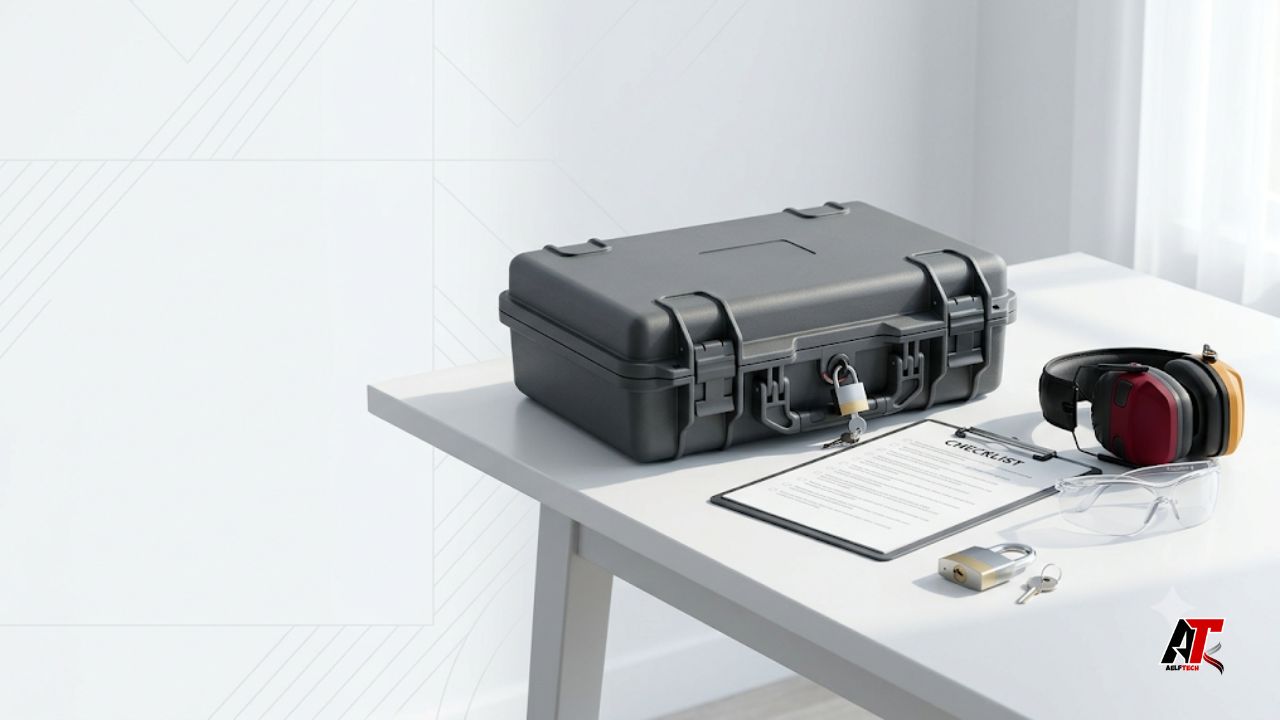
For lawful transport, use a strong locked case that prevents unauthorized access and protects the firearm from damage. Avoid leaving a firearm unattended in a vehicle. A vehicle is not a long-term storage solution, and theft from vehicles can place firearms into criminal circulation. Return the firearm to secure home storage as soon as practical.
Plan the route and destination before leaving. Confirm that the destination allows firearms and that the storage arrangements there are secure. Never handle the firearm unnecessarily in a parking area, public place, or vehicle.
Common Safety Mistakes to Avoid
Many preventable incidents begin with familiar phrases such as ‘I thought it was unloaded,’ ‘I was only checking it,’ or ‘It was out of reach.’ These statements show why assumptions and hiding places are not safety systems.
Avoid casual handling, showing off, touching the trigger during inspection, pointing the muzzle at a wall without considering the room beyond it, leaving the firearm in an unlocked vehicle, storing it in a bag with other objects, or allowing untrained people to handle it. Do not depend on an internal mechanical safety to correct unsafe behavior.
Another common mistake is allowing confidence to grow faster than competence. A person may become less careful after repeated uneventful handling. The correct response to familiarity is greater consistency, not relaxed standards.
Create a Personal Safety Checklist
A short written checklist can help make responsible habits repeatable. Keep it near the locked storage area without revealing access codes or sensitive information.
A useful checklist can include: confirm a safe reason and location for handling; remove distractions and unauthorized people; maintain safe muzzle direction; keep the finger outside the trigger guard; follow the official manual; keep ammunition away from maintenance areas; inspect storage and holster equipment; lock the firearm after use; protect keys or combinations; and review current laws before transport.
Update the checklist after training, equipment changes, or revisions to manufacturer guidance.
Conclusion
Glock 19 safety essentials are built through repetition, humility, and respect for the consequences of every action. The most reliable owner is not the person who handles a firearm most often, but the person who follows the same safety rules every time without shortcuts.
Treat the firearm as loaded, control the muzzle, keep the finger away from the trigger, know the target and surrounding area, use secure storage, seek qualified training, and follow the official manual. These habits protect the owner, family members, visitors, and the wider community.
Responsible educational content from aelftech supports a simple principle: safety is not a feature that can be switched on. It is a continuous behavior that must guide storage, transport, training, maintenance, and every moment of handling.
Leave a Reply