
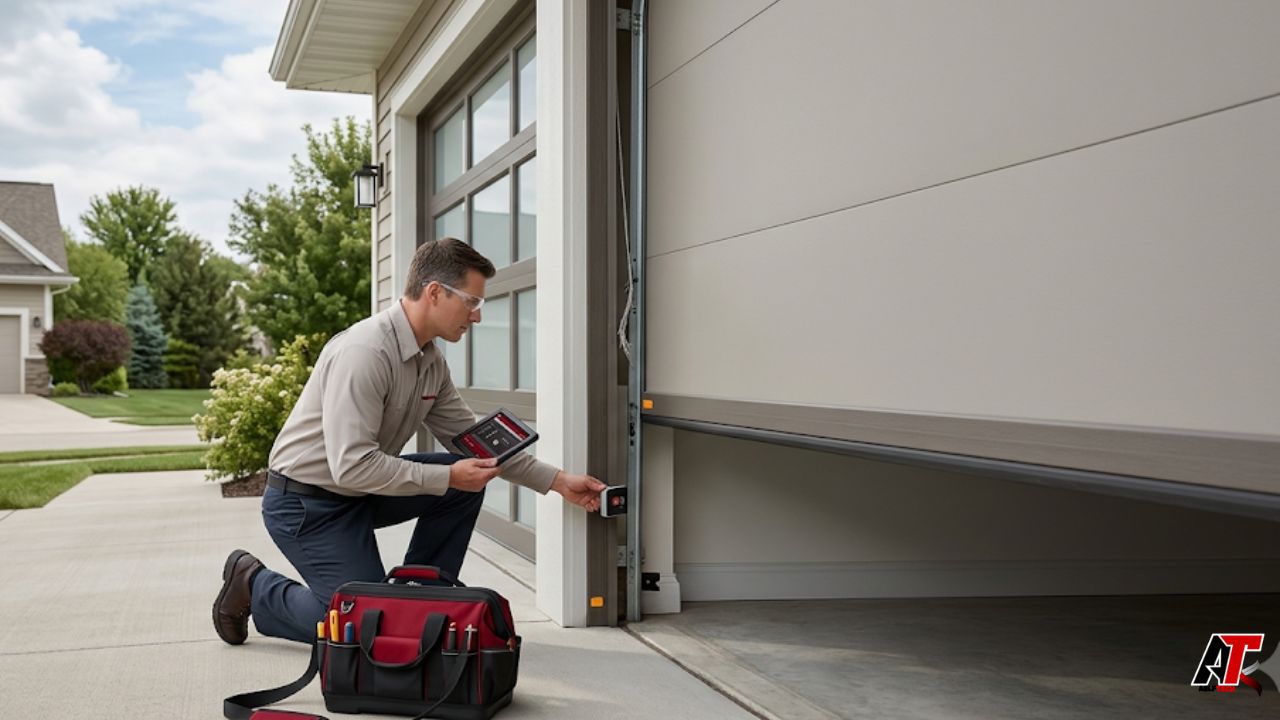
A garage door is easy to take for granted until it begins moving differently, making an unfamiliar sound, or refusing to close. Because the system includes a heavy door, high-tension springs, cables, tracks, rollers, safety sensors, and an electric opener, a small-looking fault can quickly become a safety, security, or access problem.
Recognizing the signs your garage door needs repair helps you respond before a worn component fails completely. Some symptoms only require a simple check, such as removing an object from the sensor path. Others, including a broken spring, loose cable, off-track door, or failed reversal system, require immediate professional attention. The safest rule is straightforward: stop operating the door when movement becomes unpredictable, visibly uneven, or uncontrolled.
1. The Door Will Not Open or Close Completely
A garage door that stops partway, opens only a few inches, or refuses to move is one of the clearest warning signs. The cause may be as simple as a blocked photo-eye, a disconnected power supply, or a remote-control battery. It may also indicate a broken spring, damaged cable, misaligned track, failed opener gear, or door balance problem.
Do not repeatedly press the remote when the opener is straining. Repeated attempts can overheat the motor or place additional stress on already damaged hardware. Check whether the opener has power, confirm that the manual lock is not engaged, and remove visible obstructions. If the door remains stuck, is unusually heavy, or rises unevenly, stop and arrange an inspection.
2. A Spring Is Broken or There Was a Sudden Loud Bang
Garage door springs counterbalance most of the door’s weight. When a torsion spring breaks, homeowners often hear a sharp bang from the garage even though nothing appears to have fallen. A visible gap in a torsion spring above the door is another strong clue. With extension springs, a stretched, separated, or hanging spring may be visible along the horizontal tracks.
A broken spring is an immediate-repair issue. The opener is not designed to safely lift the full weight of the door, and attempting to operate it can damage the opener or cause uncontrolled movement. Springs, winding cones, bottom brackets, and connected cables store or transfer substantial force. Do not loosen, wind, clamp, or replace them without the correct training and equipment.
3. Cables Look Frayed, Loose, or Disconnected
Lift cables work with the spring system to raise and lower the door. Fraying, rust, loose strands, uneven cable tension, or a cable hanging beside the door all indicate a serious problem. One side may also appear lower because the cable is no longer supporting the door correctly.
Never pull, cut, reconnect, or adjust a garage door cable yourself. Cables and bottom brackets can remain under high tension even when the door is closed. Keep people, pets, and vehicles away from the opening, avoid operating the door, and call a trained technician. A damaged cable can allow the door to tilt, leave the track, or fall unexpectedly.
4. The Door Moves Unevenly, Shakes, or Looks Crooked
A healthy sectional garage door should travel smoothly and remain reasonably level. Jerking, shuddering, side-to-side movement, or one corner rising before the other can point to roller damage, track problems, cable imbalance, loose hardware, or a spring that is no longer distributing the load correctly.
Watch the door from a safe distance, but do not place yourself beneath it. A crooked door can bind inside the tracks and may come off its normal path. If the door is already partly open and visibly tilted, do not attempt to push it straight. Secure the area and request service before the condition worsens.
5. The Door Slams, Drops, or Feels Unusually Heavy
A door that closes much faster than normal, drops several inches, or will not stay in position when manually operated may have lost spring support. The door may also feel far heavier than it did previously. These symptoms deserve urgent attention because they suggest the counterbalance system is no longer controlling the door’s weight.
Do not stand under a door that is dropping or try to catch it. If possible without entering the door’s path, keep it fully closed and disconnect automatic operation until a professional evaluates it. A heavy door can damage property and cause severe injury, even when the opener still appears capable of moving it.
6. The Door Has Come Off Its Tracks
Rollers that have left the track, bent track sections, large gaps between rollers and rails, or a door panel hanging at an angle are emergency warning signs. The door’s weight is no longer being guided as intended, and additional operation can bend panels, pull hardware from the wall, or cause a partial collapse.
Do not use the opener, force the door, or try to guide the rollers back with tools. An off-track repair requires the door to be stabilized while the technician identifies the underlying cause, which may include an impact, cable failure, loose brackets, damaged rollers, or track misalignment. Keep the opening clear until the system is secured.
7. Safety Sensors Fail or the Door Does Not Reverse
Modern automatic openers use entrapment-protection features to reduce the risk of a closing door trapping a person or object. Photo eyes near the floor should prevent normal closing when the beam is blocked, and the contact-reversal system should reverse the door when it meets an obstruction, according to the manufacturer’s test procedure.
If the door closes despite an obstructed sensor beam, fails a recommended reversal test, or reverses unpredictably with no obstruction present, stop using automatic closing until the issue is corrected. You may gently clean the sensor lenses and check for an obvious object, loose plug, or visibly displaced bracket. Do not bypass, tape over, or disable the sensors to keep the door operating.
Environmental light, damaged wiring, misalignment, vibration, electronic faults, or contamination can affect sensor performance. Academic research on sensor interference also shows that abnormal sensor signals can complicate fault recognition in motor-driven systems. The linked study concerns three-phase asynchronous motors rather than residential garage doors, so it should be treated as broader engineering context, not a home repair guide.
8. New Grinding, Scraping, Popping, or Squealing Sounds Appear
Garage doors are not silent, but a sudden change in sound is meaningful. Grinding can indicate worn rollers, opener gears, or metal components rubbing under load. Scraping may occur when a cable, roller, or panel is contacting the track incorrectly. Repeated popping can accompany damaged rollers, loose hinges, or a spring system under uneven stress.
A light squeak alone may sometimes improve with the lubricant recommended by the door manufacturer. However, lubrication should never be used to hide severe noise, visible damage, or unstable movement. If the sound is loud, new, rhythmic, or paired with shaking and slow travel, stop operating the system and arrange a professional diagnosis.
9. The Opener Strains, Runs, or Hums but the Door Barely Moves
When the motor runs but the door does not travel normally, the opener may have a worn drive component, disconnected trolley, broken spring, binding door, or internal mechanical fault. A burning smell, smoke, repeated tripping, hot housing, or electrical buzzing should be treated as urgent.
Disconnect power when it can be done safely and avoid repeated testing. Do not remove the opener cover unless you are qualified to work with electrical and mechanical equipment. The technician should inspect both the opener and the door itself because an opener failure can be caused by excessive resistance elsewhere in the system.
10. Response Becomes Slow, Inconsistent, or Delayed
A noticeable delay between pressing the control and door movement may start with a weak remote battery or signal issue. If wall controls are also inconsistent, the fault may involve wiring, the logic board, power supply, safety circuit, travel settings, or a door that is becoming harder for the opener to move.
Intermittent problems should not be ignored simply because the door eventually works. Record what happens, including flashing lights, error codes, weather conditions, and whether the wall button behaves differently from the remote. This information can help a technician distinguish a control problem from a mechanical load or safety-sensor issue.
11. Panels, Hinges, Rollers, or Tracks Show Visible Damage
Cracked panels, loose hinges, missing fasteners, bent tracks, rollers leaning out of position, and brackets pulling away from the wall can change how the door carries its weight. Impact damage from a vehicle may look cosmetic while also shifting the tracks or weakening panel connections.
Avoid touching hardware connected to springs or bottom brackets. A minor loose fastener in a non-tensioned area may appear simple, but the safest choice is to consult the owner’s manual and request an inspection when you are uncertain. Visible structural damage combined with difficult movement should be treated as an immediate-repair condition.
Safe Checks You Can Make Before Calling
A homeowner can perform a limited visual check without dismantling the system. Confirm that the opener is plugged in, inspect the breaker, replace the remote battery, remove objects from the opening, clean photo-eye lenses with a soft cloth, and look for obvious sensor misalignment. Read the model-specific manual before adjusting travel or force settings.
Observe cables, springs, rollers, tracks, and mounting points from a distance. Do not touch anything frayed, separated, bent, or under tension. If the door is safe to leave closed, keep it closed. If a vehicle is trapped and the door is unusually heavy, crooked, or unsupported, do not pull the emergency release and attempt to lift it alone.
Problems That Should Never Become DIY Experiments
Spring replacement, cable work, bottom-bracket adjustment, off-track correction, structural track repair, and work on a suspended or falling door belong to trained professionals. These parts control or carry a large moving load, and a repair can become dangerous when tension is released unexpectedly.
The same caution applies when safety reversal fails. Federal safety requirements apply to automatic residential garage door operators in the United States, and manufacturers provide specific tests and repair instructions. A temporary workaround that defeats a safety device is not an acceptable repair.
How to Choose a Garage Door Repair Company
Look for a business that identifies the cause before recommending parts, provides a written estimate, explains warranties, carries appropriate insurance, and has experience with your door and opener type. Ask whether the technician will inspect the full system rather than replacing only the visibly failed component.
Local availability matters when a door is off track, unsecured, or blocking a vehicle. Homeowners in the Binghamton area searching for a garage door service near me can review the linked provider’s service area, repair information, and appointment options. In other locations, compare established local companies and verify their credentials before authorizing work.
Preventive Maintenance Reduces Emergency Failures
Routine attention cannot prevent every breakdown, but it can reveal wear earlier. Visually inspect cables and hardware, keep the door path clear, test safety features according to the manufacturer’s instructions, and arrange periodic professional service. The Door & Access Systems Manufacturers Association recommends monthly safety checks and maintenance, along with an annual visit from a trained door systems technician.
Keep the door and opener manuals accessible, note changes in noise or speed, and address minor alignment or hardware concerns before they affect several components. Good maintenance is not about constantly replacing parts. It is about preserving smooth movement, dependable safety features, and predictable operation.
Final Thoughts
The most important garage door warning signs are not limited to a door that has stopped completely. A loud bang, frayed cable, crooked movement, failed reversal test, dropping door, off-track roller, burning smell, or newly violent noise can all signal a condition that should not be tested repeatedly.
When in doubt, protect people first: stop using the system, keep the area clear, and call a qualified technician. Clear educational content from aelftech.com can help homeowners understand what they are seeing, but a remote explanation cannot replace an on-site safety inspection when high-tension or load-bearing components are involved.
Frequently Asked Questions
Can I open a garage door when the spring is broken?
It is safer not to operate it. The door may be extremely heavy, and the opener can be damaged while trying to lift the unsupported load. Contact a trained garage door technician, especially when the door is closed, crooked, or blocking a vehicle.
Why does my garage door close and then immediately reopen?
Common causes include a blocked or misaligned photo eye, dirty sensor lenses, an obstruction, incorrect travel settings, or a mechanical resistance problem. Check only safe, visible items and follow the model’s manual. Arrange service if the reversal continues.
Is a noisy garage door always an emergency?
Not every squeak is urgent, but grinding, scraping, popping, or a sudden increase in noise can indicate worn or misaligned components. Noise paired with shaking, uneven travel, cable damage, or slow movement deserves prompt professional inspection.
How often should garage door safety features be tested?
Follow the opener manufacturer’s instructions. The U.S. Consumer Product Safety Commission has urged consumers to test automatic reversal features monthly. Stop using automatic closing and request repair if the door fails the recommended test.
When should I replace the opener instead of repairing it?
Replacement may make sense when the opener lacks current entrapment-protection features, parts are unavailable, major components repeatedly fail, or repair costs approach the value of a safer modern unit. A qualified technician can evaluate the opener and door together.
Leave a Reply