
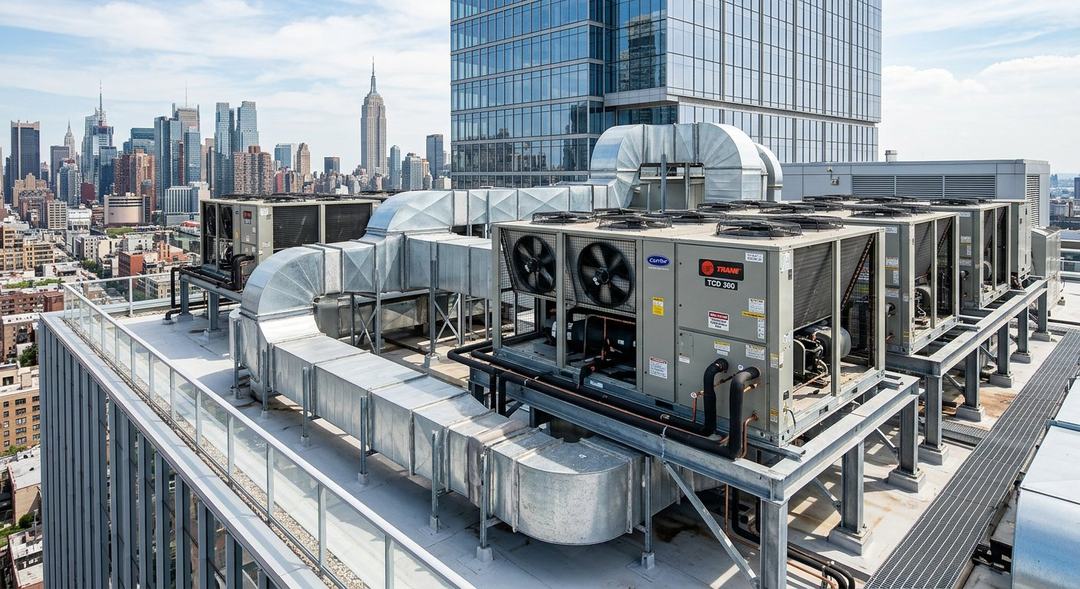
Investing in the right Commercial HVAC system is an important decision for businesses that want comfortable workplaces, manageable operating expenses, and dependable building performance. Heating, ventilation, and air conditioning influence indoor temperatures, airflow, humidity, and the conditions employees and customers experience throughout the day. Poorly matched or inadequately maintained equipment can create discomfort, increase energy consumption, and disrupt business activities.
However, choosing commercial heating and cooling equipment involves more than selecting a recognizable brand or the largest available unit. Building size, occupancy patterns, climate, ventilation requirements, equipment efficiency, installation quality, and long-term maintenance all influence performance. Understanding these factors helps business owners make practical investments that support daily operations without creating unnecessary costs.
What Is Commercial HVAC?
Commercial HVAC refers to the heating, ventilation, and air conditioning systems used in offices, retail stores, restaurants, warehouses, healthcare facilities, and other non-residential buildings. These systems regulate indoor environmental conditions according to the building’s requirements.
A Commercial HVAC installation may include heating equipment, cooling units, ventilation systems, air handling equipment, ductwork, controls, and related components. The exact arrangement depends on the building’s design and intended use.
Unlike many residential systems, commercial installations often need to serve multiple zones with different occupancy levels and operating schedules. This makes professional system design and ongoing management particularly important.
Main Functions of Commercial Heating and Cooling
Commercial systems perform several connected functions that support indoor environmental conditions. Their responsibilities extend beyond simply making rooms warmer or cooler.
A properly designed Commercial HVAC system may provide:
- Space heating
- Mechanical cooling
- Outdoor air ventilation
- Air filtration
- Humidity management
- Air distribution
- Temperature zoning
- Building control integration
Not every system performs all these functions independently. Some buildings use several coordinated systems to meet their environmental requirements.
Why Commercial HVAC Matters for Business Operations
Indoor conditions influence how people experience commercial buildings. Employees may spend most of their working day indoors, while customers form impressions of a business partly through the comfort of its premises.
Reliable Commercial HVAC equipment helps maintain suitable environmental conditions during normal operations. However, comfort also depends on insulation, glazing, occupancy, airflow, and other building characteristics.
A system that works well in one building may perform poorly in another. Equipment selection should therefore reflect actual operating conditions rather than generic assumptions.
Employee Comfort
Uncomfortable indoor temperatures can distract employees and create workplace complaints. Areas that are consistently too hot or cold may also be difficult to use effectively.
A well-designed Commercial HVAC system can help maintain suitable temperatures across occupied spaces. Individual comfort preferences still vary, making zoning and reasonable controls useful.
Customer Experience
Retail stores, restaurants, hotels, and other customer-facing businesses depend partly on the comfort of their environments. Excessive heat, cold, or poor airflow can make a visit unpleasant.
Commercial HVAC performance contributes to the overall customer experience. However, no heating and cooling system can guarantee customer satisfaction by itself.
Protecting Certain Equipment and Materials
Some commercial activities require controlled environmental conditions for equipment, products, or materials. Examples may include selected data systems, storage environments, and production processes.
A Commercial HVAC system must be designed according to the specific environmental requirements involved. Ordinary office comfort cooling may not be suitable for specialist applications.
The Financial Importance of Commercial HVAC
Heating, cooling, and ventilation can represent significant operating expenses in commercial buildings. Actual costs depend on climate, building efficiency, occupancy, utility rates, and system operation.
A Commercial HVAC investment should therefore be evaluated across its expected service life rather than only its purchase price. Energy consumption, maintenance, repairs, and replacement planning all influence total cost.
Initial Purchase and Installation Costs
The cost of commercial equipment varies according to capacity, configuration, controls, and installation complexity. Larger buildings may require several units or a centralized system.
A Commercial HVAC quotation should account for relevant building requirements. Comparing equipment prices without considering installation scope can produce misleading conclusions.
Ongoing Energy Costs
Heating and cooling equipment consumes energy whenever it operates. Inefficient controls, unsuitable equipment sizing, or poor maintenance can increase consumption.
Commercial HVAC efficiency should be evaluated using relevant equipment performance data and realistic operating assumptions. Savings should not be promised without a suitable assessment.
Maintenance and Repair Expenses
Commercial equipment requires periodic inspection and servicing. Maintenance costs depend on system type, operating hours, condition, and manufacturer requirements.
A Commercial HVAC budget should include ongoing care rather than treating maintenance as an unexpected expense. Planned servicing may help identify problems before major failures occur.
How Commercial HVAC Systems Work
Commercial heating and cooling systems use different technologies to move heat, distribute air, and maintain indoor conditions. The exact process depends on the equipment installed.
A Commercial HVAC system may combine refrigeration circuits, heat exchangers, fans, filters, pumps, ducts, and electronic controls. These components must operate together to meet building requirements.
Heating Operations
Commercial buildings may use heat pumps, boilers, furnaces, electric heating, or other systems. The appropriate technology depends on local infrastructure and the building’s needs.
Heating equipment should be selected according to calculated demand. Oversized or poorly controlled systems can create unnecessary operating problems.
Cooling Operations
Mechanical cooling systems remove heat from indoor spaces and reject it elsewhere. Refrigeration-based equipment commonly uses compressors, heat exchangers, and refrigerants.
Commercial HVAC cooling performance depends on equipment efficiency, load conditions, and installation quality. Refrigerant handling must follow applicable regulations.
Ventilation Operations
Ventilation introduces outdoor air and removes or dilutes certain indoor pollutants. Mechanical systems may use fans, ducts, filtration, and heat recovery equipment.
A Commercial HVAC design should provide ventilation appropriate to occupancy and building use. Cooling alone does not automatically establish adequate outdoor air supply.
Common Types of Commercial HVAC Systems
Commercial buildings use several HVAC configurations. Each has advantages and limitations depending on building layout, occupancy, climate, and operational requirements.
Selecting suitable Commercial HVAC equipment requires understanding how different systems distribute heating, cooling, and ventilation.
Rooftop HVAC Units
Packaged rooftop units combine selected heating, cooling, and air-handling components within an outdoor enclosure. They are commonly used in certain retail, office, and other commercial applications.
Rooftop Commercial HVAC systems can simplify some building layouts by locating major equipment outside occupied areas. However, structural capacity, roof access, weather exposure, and maintenance must be considered.
Variable Refrigerant Flow Systems
Variable refrigerant flow systems, often called VRF systems, use refrigerant circuits to serve multiple indoor units. They can provide flexible temperature control across different zones.
Commercial HVAC designs using VRF require careful attention to refrigerant piping, system limits, ventilation, and applicable safety standards. Their suitability depends on the building.
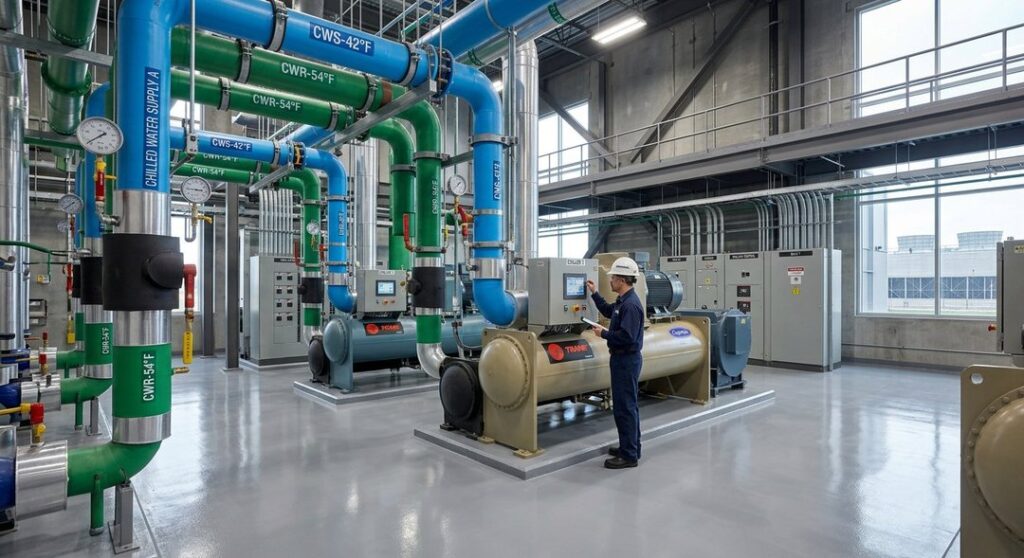
Chiller Systems
Chillers produce chilled water or another suitable cooling fluid for distribution through building systems. They are often associated with larger commercial or institutional properties.
A chiller-based Commercial HVAC installation may involve pumps, air handling units, controls, and additional plant equipment. Proper design is essential for reliable operation.
Heat Pump Systems
Heat pumps transfer heat between locations and can provide heating, cooling, or both depending on design. Their efficiency varies with operating conditions and equipment characteristics.
Commercial HVAC heat pump applications should be evaluated against climate, load requirements, and available electrical infrastructure.
Split and Multi-Split Systems
Split systems separate indoor and outdoor components. Multi-split configurations may connect several indoor units to an outdoor unit.
These systems can suit selected commercial spaces, but their capacity and ventilation arrangements need evaluation. They should not be assumed suitable for every building.
Choosing the Right Commercial HVAC System
Selecting equipment begins with understanding the building rather than choosing a product from a catalogue. A professional assessment should consider occupancy, floor area, internal heat gains, and operating schedules.
The right Commercial HVAC system should meet actual heating, cooling, and ventilation requirements without unnecessary capacity or complexity.
Evaluate Building Size and Layout
Large open spaces have different environmental requirements from buildings containing many small rooms. Ceiling height, glazing, insulation, and internal partitions influence performance.
Commercial HVAC design should reflect these characteristics. Floor area alone is insufficient for determining equipment capacity.
Consider Occupancy Patterns
A building used continuously may require a different operating strategy from one occupied only during standard business hours. Meeting rooms and shared areas can also experience fluctuating occupancy.
Commercial HVAC controls can help respond to these patterns. However, ventilation must continue meeting applicable requirements.
Understand Local Climate
Heating and cooling demand varies according to outdoor temperatures, humidity, solar exposure, and seasonal conditions. Climate influences equipment selection and operating costs.
A Commercial HVAC system should be designed using appropriate local design conditions. Equipment that performs well in a mild climate may not suit a more demanding environment.
Why Proper HVAC Sizing Is Essential
Equipment sizing affects comfort, efficiency, and operational reliability. A system that is too small may struggle to meet demand during challenging conditions.
Oversized Commercial HVAC equipment can also create problems, including inefficient operation or inadequate humidity control in some applications. The consequences depend on system design and controls.
Avoid Guessing Capacity
Square footage rules can provide rough preliminary estimates but are not substitutes for professional load calculations. Building materials, occupancy, ventilation, and equipment loads all matter.
Commercial HVAC capacity should be determined through appropriate engineering methods. Accurate sizing supports better long-term performance.
Consider Future Building Changes
Businesses may expand operations, introduce new equipment, or change how rooms are used. These developments can affect heating and cooling demand.
A Commercial HVAC design may allow reasonable flexibility when future changes are foreseeable. However, excessive spare capacity can create unnecessary costs.
Energy Efficiency in Commercial HVAC
Energy efficiency is an important consideration because commercial systems may operate for many hours each week. Better efficiency can reduce energy consumption under suitable conditions.
However, efficient equipment alone does not guarantee low utility bills. Commercial HVAC performance also depends on building construction, controls, maintenance, and occupant behavior.
Understand Efficiency Ratings
Different heating and cooling technologies use different performance metrics. These may include coefficients of performance, seasonal efficiency measures, and other standardized ratings.
Commercial HVAC comparisons should use metrics relevant to the equipment and application. Ratings from different test methods may not be directly comparable.
Improve Building Controls
Poor schedules can waste energy by conditioning spaces when they are unoccupied. Appropriate controls may reduce unnecessary operation.
A Commercial HVAC system should use schedules that match business needs while maintaining required ventilation and environmental conditions.
Maintain Filters and Components
Dirty filters, damaged fans, and other maintenance issues can affect system performance. The consequences depend on the equipment and severity of the problem.
Commercial HVAC maintenance should follow manufacturer recommendations and actual operating conditions. Replacing filters unnecessarily often is not automatically better.
Smart Commercial HVAC Controls
Modern control systems can help businesses monitor temperatures, equipment status, schedules, and energy use. Some systems also integrate with wider building management platforms.
Smart Commercial HVAC technology can provide useful operational visibility. However, connected equipment requires appropriate configuration and cybersecurity safeguards.
Programmable Scheduling
Time-based controls allow systems to respond to normal operating hours. This can reduce unnecessary heating or cooling during certain unoccupied periods.
Commercial HVAC schedules should account for cleaning staff, after-hours work, and other legitimate building uses. Required ventilation and safety functions must remain appropriate.
Occupancy-Based Controls
Some systems adjust selected operations based on occupancy information. Sensors or building schedules may provide relevant data.
Commercial HVAC control changes should not compromise minimum ventilation or other environmental requirements. Occupancy estimates can also be imperfect.
Remote Monitoring
Remote platforms may allow authorized staff to review alarms, temperatures, or equipment performance. These tools can improve visibility across several locations.
Commercial HVAC remote access should use suitable authentication and permissions. Convenience should not create unnecessary cybersecurity exposure.
Indoor Air Quality and Commercial HVAC
Indoor air quality depends on outdoor pollution, indoor emission sources, ventilation, filtration, humidity, and building activities. HVAC systems can influence several of these factors.
A well-designed Commercial HVAC system can support appropriate ventilation and filtration. However, it cannot eliminate every indoor pollutant or replace source control.
Outdoor Air Ventilation
Ventilation introduces outdoor air to help dilute certain indoor contaminants. The appropriate rate depends on occupancy and applicable standards.
Commercial HVAC systems should provide suitable outdoor air rather than relying exclusively on recirculated conditioned air.
Air Filtration
Filters can capture certain airborne particles when properly selected and installed. Performance varies according to filter efficiency, airflow, and system configuration.
Commercial HVAC filtration upgrades should account for equipment limitations. Installing a higher-resistance filter without assessment can affect airflow.
Humidity Management
Excessively high or low humidity can affect comfort and certain building conditions. The appropriate range depends on the environment and application.
Commercial HVAC systems may contribute to humidity control, but not every system provides precise humidity regulation. Specialist environments may need additional equipment.
Commercial HVAC and Workplace Comfort
Comfort involves more than the temperature displayed on a thermostat. Air movement, radiant temperatures, humidity, clothing, and activity level all influence how people feel.
Commercial HVAC design should consider these interacting factors. A single thermostat may not represent conditions throughout a large workplace.
Uneven Temperatures
Different rooms can experience different heat gains and occupancy patterns. Poor zoning or airflow distribution may create hot and cold areas.
A Commercial HVAC technician can investigate causes such as controls, airflow, or equipment problems. Adjusting one thermostat may not resolve the entire issue.
Drafts and Air Distribution
Excessive airflow in occupied areas can create discomfort. Poorly positioned diffusers may direct air toward desks or seating.
Commercial HVAC air distribution should be designed for the room’s intended use. Balancing and commissioning can help identify problems.
Noise Levels
Fans, compressors, and duct systems can generate noise. Excessive noise may affect workplaces requiring concentration or conversation.
A Commercial HVAC design should consider acoustic performance. Equipment selection, vibration isolation, and duct design can influence results.
Commercial HVAC for Office Buildings
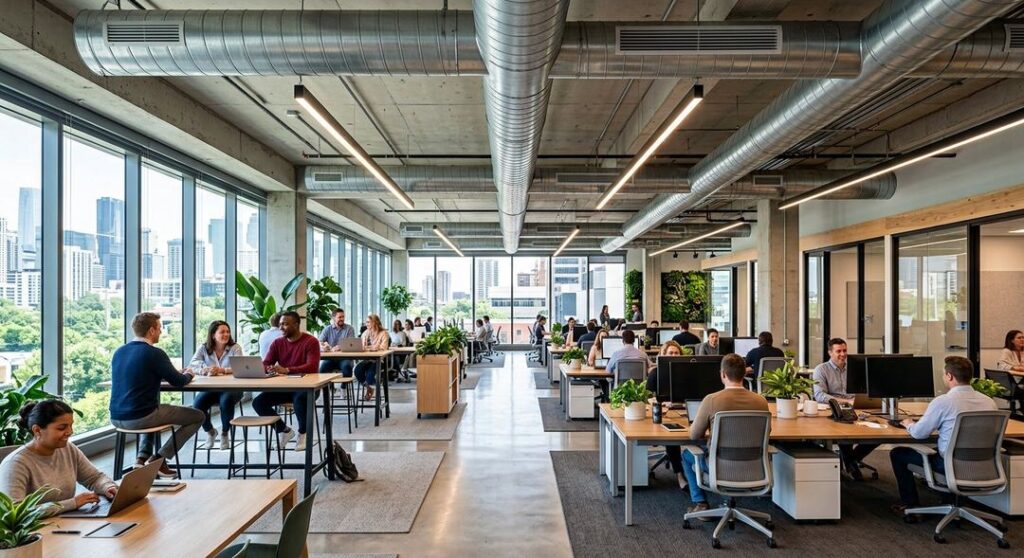
Office buildings often contain meeting rooms, open workspaces, private offices, and shared facilities. Each area may have different occupancy and heat loads.
Commercial HVAC systems can use zoning and appropriate controls to serve these spaces. Good design should balance comfort, ventilation, and energy use.
Meeting Room Ventilation
Meeting rooms can experience rapid changes in occupancy. Ventilation needs may therefore differ from those of nearby offices.
Commercial HVAC controls should address these conditions using suitable design methods. Carbon dioxide monitoring may support certain ventilation strategies but does not measure every indoor pollutant.
Open-Plan Office Cooling
Open-plan workspaces can contain computers, lighting, and numerous occupants. Internal heat gains influence cooling requirements.
A Commercial HVAC design should account for these loads and provide suitable air distribution. Employee comfort may still vary across the space.
Commercial HVAC for Retail Businesses
Retail environments may experience frequent door opening, changing customer numbers, and substantial lighting loads. These factors can influence indoor temperatures and energy consumption.
Commercial HVAC systems should reflect store layout and operating patterns. Customer comfort must be balanced with practical energy management.
Entrance Areas
Frequently opened doors can allow outdoor air to enter, affecting nearby temperature conditions. The impact depends on climate and building design.
A Commercial HVAC assessment may consider entrance arrangements and air distribution. Solutions should be selected according to the actual problem.
Product Display Areas
Certain products may have environmental requirements that differ from general customer comfort. Food storage and specialist merchandise can require dedicated systems.
Commercial HVAC should not be assumed to replace refrigeration or other specialized environmental controls.
Commercial HVAC for Restaurants
Restaurants can have substantial heat and ventilation demands because of cooking equipment, customers, and changing occupancy. Kitchen exhaust systems also influence building airflow.
Commercial HVAC design should coordinate comfort conditioning with kitchen ventilation and makeup air requirements. These systems need careful professional planning.
Kitchen Heat Loads
Commercial cooking equipment releases heat and moisture into the surrounding environment. Suitable exhaust and ventilation arrangements are important.
A Commercial HVAC system should account for these conditions without interfering with required kitchen safety systems.
Dining Area Comfort
Customers may prefer comfortable temperatures and minimal drafts. Dining areas can have different environmental needs from kitchens.
Separate zoning or appropriate controls may help. The design should reflect occupancy and operating schedules.
Commercial HVAC for Warehouses
Warehouses vary considerably in size, height, insulation, and occupancy. Some require comfort conditioning, while others prioritize ventilation or specific storage conditions.
Commercial HVAC solutions should reflect the actual activities taking place. A warehouse storing ordinary goods may have different requirements from a temperature-sensitive distribution facility.
High Ceilings
Large vertical spaces can develop temperature differences between floor and ceiling levels. Air movement and heating strategy influence these conditions.
Commercial HVAC design may use suitable distribution methods to manage occupied areas. Energy calculations should consider the entire building.
Loading Door Activity
Frequent opening of loading doors can affect indoor conditions. The impact depends on outdoor weather and operational patterns.
A Commercial HVAC strategy should consider these unavoidable activities. Insulation and door-management practices may also contribute.
Commercial HVAC for Healthcare Facilities
Healthcare buildings can have specialized ventilation, filtration, pressure, and environmental requirements. These depend on the clinical activities performed.
Commercial HVAC systems serving healthcare spaces should be designed by professionals familiar with applicable healthcare standards. Ordinary office systems may not meet specialized requirements.
Patient Comfort
Patient rooms and waiting areas need suitable thermal conditions. Individual medical needs may influence environmental requirements.
Commercial HVAC controls should support the intended healthcare setting. Clinical requirements take priority over generic comfort assumptions.
Specialized Clinical Spaces
Operating rooms, isolation areas, and certain laboratories can require carefully controlled ventilation and pressure relationships.
Commercial HVAC design for these spaces demands relevant expertise and compliance. Inappropriate changes can create serious consequences.
Commercial HVAC Installation Quality
Even high-efficiency equipment can perform poorly when incorrectly installed. Ductwork, electrical connections, refrigerant systems, controls, and commissioning all influence results.
Professional Commercial HVAC installation should follow manufacturer instructions and applicable codes. Qualified contractors should perform regulated work.
Ductwork Design
Duct dimensions and layout influence airflow resistance and distribution. Poorly designed ducts can create noise, pressure losses, and uneven conditions.
Commercial HVAC ductwork should be designed according to the required airflows. Simply connecting new equipment to unsuitable existing ducts may cause problems.
Refrigerant Installation
Refrigerant-based equipment requires appropriate piping, testing, and commissioning. Incorrect installation can affect performance and reliability.
Commercial HVAC contractors must follow applicable refrigerant-handling regulations. Environmental and safety requirements vary by jurisdiction.
System Commissioning
Commissioning verifies that installed equipment operates according to the intended design. It may involve airflow measurements, control checks, and performance testing.
A Commercial HVAC project should include suitable documentation. Commissioning helps identify problems before normal operation begins.
Why Commercial HVAC Maintenance Is Essential
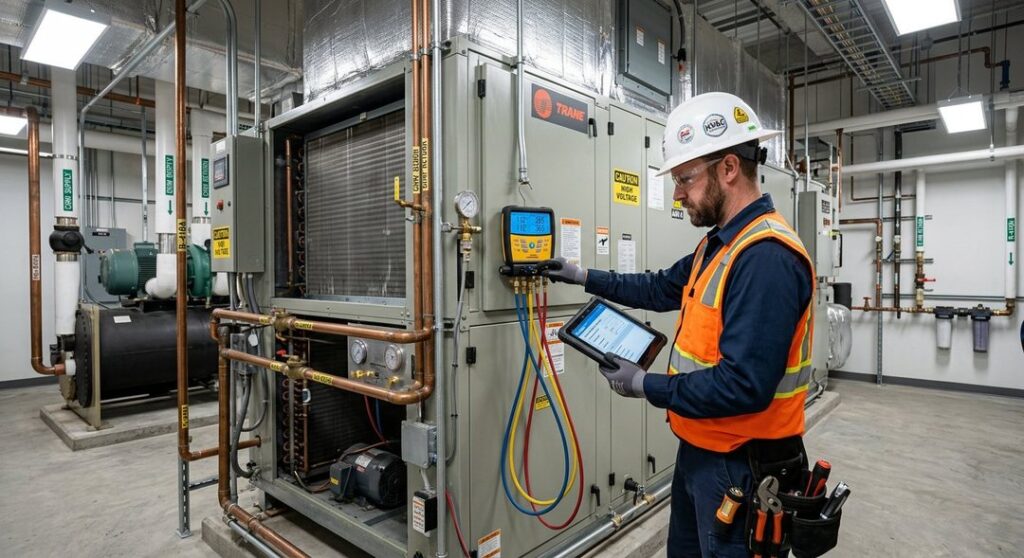
Commercial systems often operate for extended periods under changing loads. Components experience wear, and performance can deteriorate when maintenance is neglected.
Routine Commercial HVAC maintenance helps identify developing problems and supports dependable operation. However, servicing cannot prevent every unexpected failure.
Filter Inspection and Replacement
Filters collect particles and may eventually create excessive airflow resistance. Replacement requirements depend on filter type and operating conditions.
Commercial HVAC technicians should assess filters according to relevant maintenance guidance. Fixed replacement schedules may need adjustment for actual conditions.
Coil Maintenance
Heat exchanger coils can accumulate dirt or debris. This may reduce heat transfer or affect airflow in some systems.
Commercial HVAC maintenance may include appropriate coil inspection and cleaning. Products and methods must be compatible with the equipment.
Electrical Component Checks
Electrical connections, contactors, motors, and controls may require inspection. Faults can affect reliability or create safety concerns.
Only appropriately qualified personnel should perform electrical work. Commercial HVAC maintenance must follow relevant isolation and safety procedures.
Signs Your Commercial HVAC System Needs Attention
Equipment problems may initially appear as changes in comfort, noise, or operating behavior. Early investigation can help identify whether maintenance or repairs are required.
Commercial HVAC warning signs should not be ignored simply because the system continues operating. Some faults can worsen over time.
Inconsistent Temperatures
Persistent hot or cold zones may indicate airflow, control, or equipment problems. Building changes can also affect system performance.
A Commercial HVAC technician should investigate the actual cause. Replacing equipment without diagnosis may be unnecessary.
Unusual Noises
Grinding, rattling, or other unfamiliar sounds can indicate mechanical or installation problems. The significance depends on the source.
Commercial HVAC equipment producing concerning noises should be assessed promptly. Safety-critical faults may require shutdown.
Unexpected Energy Consumption
A sudden increase in utility usage may indicate equipment problems, changes in occupancy, or different weather conditions.
Commercial HVAC energy use should be compared against relevant operating factors. Higher bills alone do not prove that the system is defective.
Frequent Repairs
Repeated component failures may indicate broader reliability concerns. They can also increase maintenance costs and operational disruption.
A Commercial HVAC assessment should review repair history before recommending major replacement.
Repairing Versus Replacing Commercial HVAC Equipment
The repair-or-replace decision depends on equipment age, condition, operating costs, expected reliability, and available alternatives.
A Commercial HVAC system should not be replaced solely because it has reached an arbitrary age. However, repeated failures may justify a broader financial evaluation.
Consider Repair Costs
Some repairs can restore equipment performance at a reasonable cost. Others may represent a significant proportion of replacement expenditure.
Businesses should compare immediate repair costs with expected future maintenance. A Commercial HVAC contractor can provide technical information for this analysis.
Evaluate Energy Performance
Newer equipment may offer higher efficiency than older systems under comparable conditions. Actual savings depend on usage and installation.
Commercial HVAC replacement decisions should use realistic energy estimates. Manufacturer ratings alone do not establish annual savings.
Consider Business Disruption
Unexpected equipment failures can affect employees, customers, or temperature-sensitive operations. Reliability may therefore have financial value beyond energy expenses.
A Commercial HVAC investment should account for the consequences of unplanned downtime where they can be reasonably assessed.
How Much Does Commercial HVAC Cost?
Commercial HVAC pricing varies significantly because buildings and system requirements differ. Equipment capacity, configuration, installation complexity, controls, and regional labor costs all influence expenditure.
A reliable quotation should be based on the actual property and proposed scope. Universal price figures can be misleading without building-specific information.
Equipment Costs
Different technologies have different purchase prices and performance characteristics. High-capacity or specialized equipment may require substantial investment.
Commercial HVAC selection should compare suitable alternatives rather than choosing solely by initial cost.
Installation Costs
Labor, ductwork, electrical upgrades, controls, and access requirements can influence installation expenditure. Existing building conditions may also create additional work.
Businesses should request detailed quotations. A Commercial HVAC proposal should explain which tasks are included.
Ongoing Operating Costs
Electricity, fuel, maintenance, and repairs contribute to lifetime expenditure. Actual operating costs change with utility prices and building usage.
Commercial HVAC investment decisions should consider several realistic cost scenarios.
Calculating Commercial HVAC Return on Investment
Return on investment can help businesses compare system upgrades. However, meaningful calculations require reliable cost and performance assumptions.
A Commercial HVAC project may deliver value through energy savings, reduced maintenance, improved reliability, or other measurable operational benefits.
Estimate Energy Savings
Energy modeling or analysis of historical consumption can help estimate potential savings. Weather and occupancy differences should be considered.
Commercial HVAC savings forecasts should identify assumptions clearly. No prediction should be treated as a guaranteed result.
Include Maintenance Changes
Replacement equipment may have different servicing and repair requirements. These should be incorporated into the financial model.
Commercial HVAC lifecycle analysis is more useful than comparing installation prices alone.
Consider Payback Period
A simple payback calculation divides initial investment by expected annual net savings. This can provide a preliminary comparison.
However, payback does not capture every financial factor. Commercial HVAC decisions may also require lifecycle cost or net present value analysis.
Choosing a Commercial HVAC Contractor
Contractor selection can influence installation quality, system reliability, and long-term maintenance. Businesses should evaluate technical experience and project capabilities carefully.
A qualified Commercial HVAC contractor should understand the building type and proposed equipment. Relevant licenses and certifications should be verified where required.
Review Commercial Experience
Commercial buildings often involve more complex systems than ordinary homes. Contractors should have experience with similar equipment and project conditions.
Ask for relevant project examples. Commercial HVAC expertise should match the actual installation requirements.
Verify Qualifications
Licensing requirements vary by jurisdiction and type of work. Refrigerant handling, electrical installation, and certain mechanical tasks may require specific credentials.
A Commercial HVAC contractor should provide appropriate information about qualifications and legal compliance.
Compare Written Proposals
A detailed proposal should describe the equipment, installation scope, controls, commissioning, warranty, and relevant exclusions.
Businesses should compare like-for-like Commercial HVAC solutions. The lowest quotation may not include every necessary service.
Questions to Ask Before Investing in Commercial HVAC

A structured evaluation helps businesses understand the proposed system and associated responsibilities. Important decisions should be supported by clear technical and financial information.
Useful questions include:
- Has a suitable heating and cooling load assessment been completed?
- Which system types are appropriate for the building?
- What ventilation requirements apply?
- How will different zones be controlled?
- What efficiency ratings are relevant?
- What are the estimated operating costs?
- Are electrical or structural upgrades necessary?
- What commissioning work is included?
- How will maintenance be handled?
- What warranties apply?
- What is the expected installation schedule?
- What happens if equipment fails?
- Are future building changes being considered?
- What documentation will be provided?
A Commercial HVAC provider should answer these questions clearly. Written explanations help businesses compare technical recommendations and costs.
Common Commercial HVAC Mistakes Businesses Should Avoid
Some commercial heating and cooling problems begin during initial planning. Others arise because maintenance, controls, or building changes are overlooked.
Avoiding common mistakes can improve Commercial HVAC performance and reduce unnecessary expenditure.
Choosing Equipment Based Only on Price
Low purchase costs can be attractive, but equipment efficiency and maintenance requirements also matter. A cheap system may not provide the best lifetime value.
Businesses should compare total expected costs. Commercial HVAC investment requires a broader financial perspective.
Installing Incorrectly Sized Equipment
Oversized or undersized equipment can create comfort and efficiency problems. Proper load calculations are essential.
Commercial HVAC capacity should reflect actual building needs rather than rough assumptions.
Neglecting Ventilation
Heating and cooling alone do not guarantee suitable indoor air quality. Outdoor air requirements must be considered.
Commercial HVAC planning should integrate ventilation appropriately. Retrofitting missing functions later can increase complexity.
Ignoring Maintenance
Skipping required servicing can allow problems to develop unnoticed. It may also affect warranties or equipment reliability.
Commercial HVAC maintenance should follow manufacturer guidance and actual operating conditions.
Poor Control Settings
Incorrect schedules and temperature settings can waste energy or create discomfort. Advanced equipment cannot compensate for unsuitable configuration.
Controls should be reviewed after installation and when building use changes.
Commercial HVAC and Sustainability
Businesses increasingly consider energy consumption and environmental impact when investing in building systems. HVAC equipment can influence both.
Commercial HVAC sustainability depends on energy sources, equipment efficiency, refrigerants, maintenance, and operating practices. No single technology is automatically the most sustainable choice in every setting.
Lower Energy Consumption
Efficient systems can reduce energy use when correctly selected and operated. The environmental benefit depends partly on the energy source.
Commercial HVAC upgrades should be evaluated using realistic building performance information.
Refrigerant Considerations
Refrigerants differ in environmental characteristics and regulatory requirements. Leakage and improper handling can create environmental concerns.
Commercial HVAC contractors should follow applicable refrigerant regulations and use appropriate equipment.
Building-Wide Efficiency
Insulation, glazing, lighting, and occupancy practices can influence heating and cooling demand. Addressing these factors may reduce the capacity required.
A Commercial HVAC investment can be more effective when coordinated with wider building improvements.
Planning Commercial HVAC Upgrades Without Disrupting Business
Replacing commercial heating and cooling equipment may require temporary shutdowns, access restrictions, or construction work. The project should be coordinated with operating schedules.
Commercial HVAC contractors should explain expected disruption and possible phasing arrangements. Some businesses may need temporary conditioning during installation.
Schedule Work Carefully
Weekend or after-hours installation may reduce disruption in certain settings. Availability and additional costs should be confirmed.
Critical facilities may require more complex continuity planning. Commercial HVAC upgrades should account for operational risk.
Communicate With Employees
Staff should understand when work will occur and whether occupied areas will be affected. Clear information can reduce confusion.
A Commercial HVAC project manager should coordinate relevant updates with the business.
Test Before Full Operation
Commissioning and performance checks help confirm that the installed system operates as intended. Problems identified during testing can be addressed before handover.
Commercial HVAC projects should include appropriate training and documentation for facility personnel.
The Future of Commercial HVAC Technology
Commercial heating and cooling continues to evolve through improved controls, equipment efficiency, monitoring, and building integration. These developments may help businesses manage energy and environmental conditions more effectively.
However, Commercial HVAC innovation should be evaluated against actual needs. Adding complicated features without a clear purpose can increase maintenance and training requirements.
Predictive Maintenance
Connected systems may use operating data to identify unusual patterns or developing faults. These tools can support maintenance planning.
Commercial HVAC predictive monitoring should complement qualified inspection. Software alerts do not replace professional diagnosis.
Advanced Building Automation
Building management systems can coordinate HVAC operation with schedules and other building services. Integration may improve visibility and control.
Commercial HVAC automation requires suitable cybersecurity, commissioning, and ongoing management.
More Efficient Electrification
Heat pumps and other electric technologies may support energy and emissions objectives in suitable buildings. Their performance depends on climate, system design, and available infrastructure.
Businesses should evaluate electrification through building-specific analysis. Commercial HVAC technology choices should remain grounded in technical and financial evidence.
How to Build a Long-Term Commercial HVAC Strategy
A strong HVAC strategy considers existing equipment, building requirements, maintenance history, and future business plans. It should identify which improvements are urgent and which can be scheduled.
Commercial HVAC planning can help businesses avoid reactive decisions made only after major breakdowns. Regular assessment supports more deliberate investment.
Review Existing Equipment
Document system age, configuration, maintenance history, and known performance problems. This information helps establish current priorities.
Commercial HVAC professionals can identify whether repairs, controls improvements, or replacement deserve consideration.
Establish Maintenance Procedures
Create appropriate schedules for inspections, servicing, and performance review. Responsibilities should be assigned clearly.
Commercial HVAC maintenance records provide useful information for future budgeting and replacement decisions.
Monitor Energy and Comfort
Track relevant energy consumption, equipment faults, and occupant complaints. These measures can identify changes requiring investigation.
Commercial HVAC performance should be evaluated using consistent information rather than isolated impressions.
FAQ’s
What is Commercial HVAC?
Commercial HVAC refers to heating, ventilation, and air conditioning systems used in non-residential buildings. These systems help manage indoor temperature, airflow, ventilation, and other environmental conditions.
Why is Commercial HVAC important for businesses?
Commercial HVAC supports workplace comfort, appropriate ventilation, and reliable building operations. Efficient system design and maintenance can also help manage energy consumption.
How long does a Commercial HVAC system last?
Service life varies by equipment type, operating conditions, installation quality, and maintenance. Manufacturer information and professional assessment provide more reliable guidance than universal lifespan claims.
How can businesses improve Commercial HVAC efficiency?
Businesses can review control schedules, maintain equipment, address building insulation problems, and consider suitable efficiency upgrades. Actual savings depend on the building and system.
When should Commercial HVAC equipment be replaced?
Replacement may be appropriate when repairs become frequent, equipment performance is inadequate, or lifecycle analysis favors a new system. Age alone does not determine the decision.
How do I choose a Commercial HVAC contractor?
Evaluate relevant commercial experience, required qualifications, insurance, written proposals, commissioning procedures, maintenance support, and experience with the building’s equipment.
Conclusion
Commercial HVAC is an important investment because heating, cooling, and ventilation influence workplace comfort, operational reliability, indoor air quality, and energy expenditure. The right system should be selected according to building requirements, occupancy patterns, climate, equipment efficiency, and long-term maintenance needs. Professional design, correct installation, and suitable controls are essential for achieving dependable performance.
Smart businesses evaluate Commercial HVAC through total ownership cost rather than purchase price alone. By choosing qualified contractors, maintaining equipment consistently, monitoring performance, and planning upgrades before major failures occur, organizations can make better-informed decisions about their building systems. A well-managed commercial heating and cooling strategy supports comfortable spaces, responsible energy use, and more reliable business operations.
Leave a Reply