
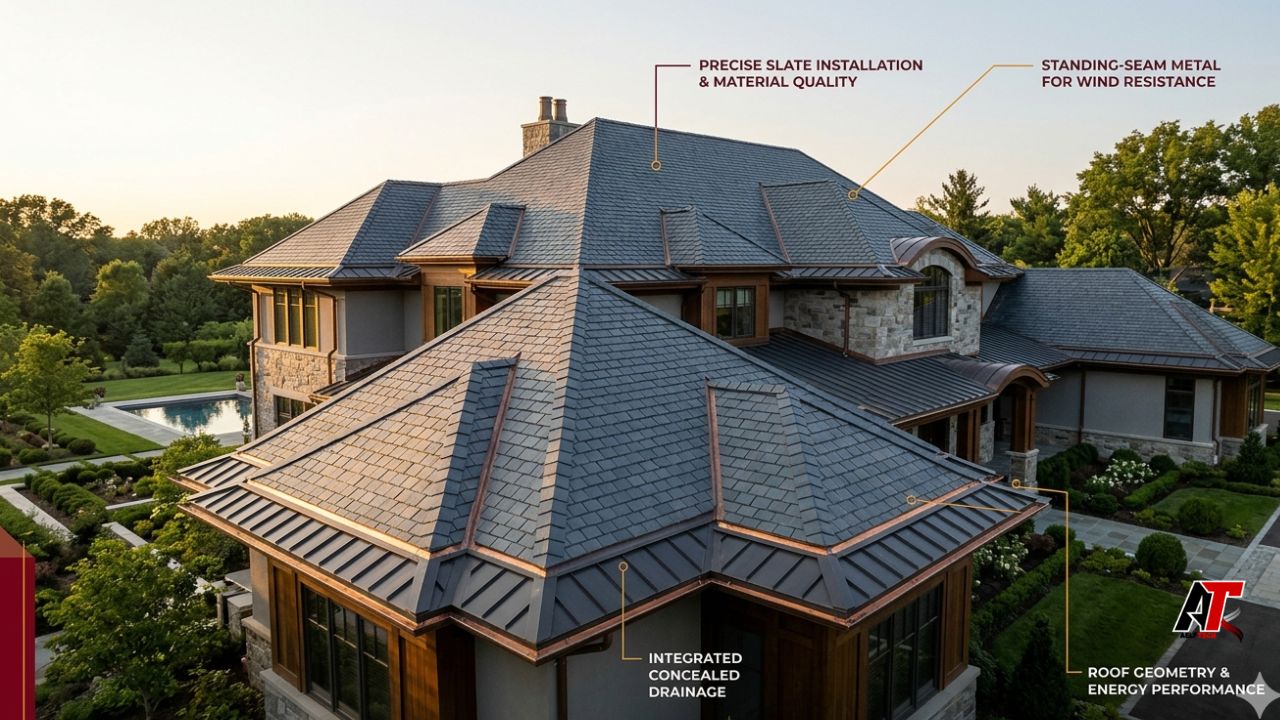
Celebrity homes are often photographed for dramatic entrances, infinity pools, glass walls, and carefully styled interiors. Yet one of the clearest signs of a genuinely high-end estate is often above the camera frame. The roof determines the silhouette, protects every expensive finish below it, and reveals whether the design team treated the house as a complete architectural system or as a collection of eye-catching features.
The best celebrity estate roofs rarely depend on a single flashy material. Their quality comes from proportion, restraint, structural logic, climate suitability, precise installation, hidden drainage, and long-term maintenance planning. Even when a roof appears simple, the simplicity may be the result of extensive coordination among architects, engineers, builders, fabricators, and roofing specialists.
Because private estates are not always documented in technical detail, it is better to study the design principles visible across luxury residential architecture than to make unsupported claims about individual owners. Those principles show what true high-end design looks like and how homeowners can apply the same thinking at a more practical scale.
1. Proportion Matters More Than Ornament
A roof shapes the first impression of a house. Its pitch, overhangs, ridges, dormers, and transitions determine whether the building feels calm, top-heavy, grounded, traditional, or contemporary. On a large estate, small proportional errors become highly visible. An oversized roof can overwhelm the facade, while a roof that is too shallow may make a substantial house look unfinished.
High-end design usually creates a clear hierarchy. The main roof establishes the dominant form, while secondary wings, guesthouses, garages, and pavilions use related but quieter rooflines. This prevents a sprawling property from looking like several unrelated buildings placed together. Luxury is communicated through visual order rather than unnecessary complexity.
2. Material Selection Begins With Architecture
Premium materials are valuable only when they support the architectural idea. Natural slate can suit formal, historic, European-inspired, or traditional estates. Standing-seam metal can reinforce a modern, agricultural, mountain, or coastal expression. Clay or concrete tile may complement Mediterranean and regional styles, while carefully specified wood shakes can create warmth in rustic or shingle-style architecture.
The National Roofing Contractors Association notes that roofing materials differ in standards, fire performance, and code considerations. For example, wood shakes and shingles may face local fire restrictions unless an appropriate fire-rated product is used. This is why choosing a roof from photographs alone is risky. The material must suit the building structure, roof slope, climate, fire exposure, maintenance expectations, and local rules.
True luxury also considers how a material will age. Copper develops a patina, cedar changes colour, and natural stone varies from piece to piece. A sophisticated design team decides whether that evolution supports the house rather than expecting every surface to remain visually frozen.
3. Craftsmanship Is Visible at the Edges
Large roof surfaces attract attention, but the quality of a roof is often revealed at its smallest details. Crisp valleys, balanced ridges, aligned courses, clean eaves, carefully formed metalwork, and consistent transitions around chimneys and skylights distinguish deliberate construction from expensive material installed without finesse.
Estate roofs frequently involve intersecting wings, low-slope connections, terraces, concealed gutters, parapets, roof windows, solar equipment, and mechanical penetrations. Each junction creates a water-management challenge. Skilled installers plan these areas before materials arrive, coordinate with other trades, and avoid improvised solutions that may look acceptable on completion day but fail after repeated weather exposure.
For complex homes, experienced professional roofers can help translate drawings and specifications into a weather-tight assembly, identify vulnerable transitions, and document the roof’s condition before small defects become interior damage.
4. Water Management Is the Real Measure of Luxury
A beautiful roof that cannot control water is not high-end design. Luxury estates may contain large catchment areas, multiple roof levels, internal valleys, terraces, and landscaped zones near the building. Rainwater must move away from vulnerable joints, entrances, foundations, and lower roofs without staining facades or overwhelming drains.
Well-resolved projects integrate slopes, underlayments, flashings, scuppers, gutters, downspouts, overflow routes, and site drainage. Some elements are intentionally visible and become part of the architecture; others are concealed. Concealment demands even more careful design because hidden drainage problems can develop before occupants see warning signs.
The lesson from estate architecture is simple: invisible performance deserves as much attention as visible finish. A roof should be designed as a complete water-control system, not merely as a decorative surface.
5. High-End Roofs Respond to Climate
An estate in a hurricane-prone region needs a different roofing strategy from a mountain retreat, desert residence, wooded property, or coastal home. Wind uplift, salt air, hail, wildfire, snow load, intense sun, humidity, and freeze-thaw cycles influence the appropriate material, fastening pattern, underlayment, ventilation, flashing, and maintenance schedule.
Climate-responsive design does not have to look technical. A roof may preserve a traditional colour and profile while using modern membranes, tested fasteners, improved edge details, or reflective pigments. The U.S. Department of Energy explains that cool roofs reflect more sunlight and absorb less solar energy, although their value depends on climate, insulation, roof type, and heating and cooling needs.
This balance between appearance and performance is central to luxury. The house should look effortless while its components quietly respond to local weather and energy demands.
6. Sustainability Is Integrated, Not Added Later
High-end homeowners increasingly expect a roof to contribute to energy performance and environmental goals. That may involve cool-coloured materials, rooftop solar, daylighting, rainwater collection, durable products, or a carefully engineered vegetated roof. The strongest projects consider these systems early so that panels, drains, access paths, and equipment do not appear as late additions.
The Department of Energy notes that green roofs can manage stormwater and create usable rooftop space, but they are heavier, more expensive, and require structural capacity, waterproofing protection, and maintenance. A luxury roof therefore does not adopt sustainable features simply because they are fashionable. It integrates them where they improve the building without creating avoidable risk.
7. Mechanical Equipment Is Controlled Visually
Large homes require substantial heating, cooling, ventilation, security, and communication systems. Poorly planned roof equipment can damage the clean silhouette of an otherwise refined property. High-end design anticipates these needs through equipment zones, screens, attic spaces, service courtyards, or roof areas positioned away from primary views.
The same principle applies to vents, satellite equipment, skylights, solar panels, and safety anchors. Rather than scattering components wherever installation is easiest, the design team groups and aligns them. This creates a calmer roof while improving access for inspection and repair.
8. Long-Term Access Is Part of the Design
An estate roof may be difficult to reach, steeply pitched, or spread across several levels. Maintenance cannot depend on risky improvisation. Good projects plan safe access to gutters, drains, chimneys, mechanical systems, skylights, and roof surfaces. They may include discreet access hatches, walk pads, tie-off points, ladders, or service routes.
This planning protects both the building and the people who maintain it. It also reduces the chance that technicians will damage premium finishes while trying to reach equipment. High-end design recognises that a roof is not complete when construction ends; it must remain inspectable and serviceable for decades.
9. Restraint Creates a More Expensive Look
Luxury architecture often looks most convincing when the roof uses fewer materials, fewer unnecessary changes in pitch, and fewer decorative features. Repetition, alignment, and limited colour variation allow the building’s form to speak clearly. A complicated roof can be costly without appearing refined.
Restraint does not mean plainness. A carefully proportioned chimney, hand-formed copper gutter, deep shadow line, precisely framed dormer, or subtle material transition can provide character. The difference is that each detail has a reason and contributes to the whole composition.
This is one of the most transferable lessons from celebrity estate roofs: a homeowner does not need celebrity-scale square footage to achieve a high-end result. Clear roof geometry, disciplined colour selection, durable materials, and carefully finished edges can elevate a modest home more effectively than adding multiple decorative elements.
10. Inspection Protects the Design Investment
The more valuable and complex the property, the more expensive hidden roof damage can become. Water may affect custom ceilings, imported wall finishes, built-in cabinetry, artwork, electrical systems, and structural timber before a stain appears in an obvious location. Regular inspection is therefore not routine housekeeping; it is asset protection.
Inspections are particularly important after severe weather, before purchasing a property, before installing solar equipment, and when materials begin approaching expected service intervals. A qualified professional can examine visible surfaces, flashings, penetrations, drainage, attic conditions, and signs of movement or moisture.
Homeowners who notice missing materials, staining, storm impact, unusual debris in gutters, or interior moisture should schedule a roofing inspection rather than waiting for a visible leak to become more serious. The provider’s service area, credentials, insurance, warranty terms, and inspection scope should always be confirmed directly.
What Homeowners Can Learn From Estate Roof Design
The first lesson is to begin with the house, not the product catalogue. Choose roof form and materials that support the architecture, site, climate, and structural system. Second, prioritise drainage, flashing, and ventilation even when those elements are not visible in photographs. Third, hire teams with experience in the selected material and level of complexity.
Fourth, ask for samples, mock-ups, and detailed drawings at important transitions. A small test area can reveal colour variation, edge thickness, seam spacing, or installation concerns before the full roof is committed. Fifth, budget for inspection and maintenance. A premium roof can have a long service life, but no material is maintenance-free.
Finally, treat the roof as part of the home’s overall brand and visual identity. Resources from team aelftech.com can support broader research and planning, but final roofing decisions should be based on local codes, structural calculations, manufacturer requirements, and qualified professional advice.
Final Thoughts
Celebrity estate roofs reveal that true high-end design is not defined by cost alone. It is the coordination of beauty, structure, weather protection, energy performance, access, and maintenance. The roof may be visually quiet, but it carries enormous architectural and practical responsibility.
A successful roof makes the house feel complete from a distance and remains dependable at every close-up detail. Its materials suit the climate, its edges are precise, its drainage is deliberate, and its future maintenance has been considered. That combination of restraint and performance is what transforms a roof from an expensive covering into lasting high-end design.
Leave a Reply