
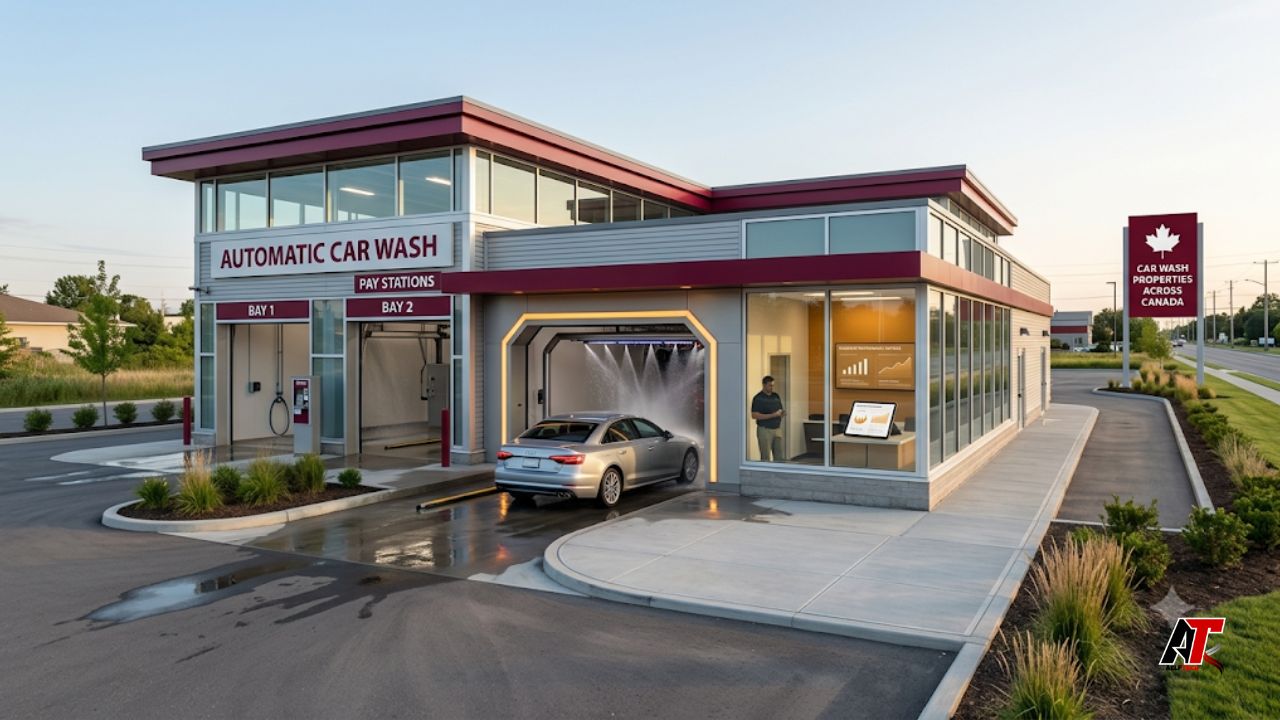
Buying an established car wash can be an appealing way to enter a business with existing customers, equipment, and local visibility. It can also be a complex purchase. Profitability is shaped by property terms, water and energy use, equipment reliability, staffing, seasonal demand, environmental obligations, and daily management.
This guide explains how to compare car wash businesses for sale in Canada, review financial performance, assess risks, and identify realistic growth opportunities. The aim is to help you look beyond the asking price and understand what you would actually be buying.
Why Consider an Existing Car Wash?
An existing operation may offer advantages that a new development cannot provide immediately. The site may already have approved commercial use, a recognized location, supplier relationships, trained employees, and a history of customer transactions.
Canada’s climate can create regular reasons for vehicle cleaning. Winter road salt, slush, mud, pollen, and summer dust all affect vehicles. However, demand still varies according to traffic flow, local income, nearby competition, service quality, pricing, and the type of wash offered.
The strongest benefit is access to historical evidence. Instead of relying only on projections, you can review monthly sales, utility bills, repair costs, membership activity, and seasonal patterns. This helps you determine whether the business is stable, declining, or capable of improvement.
Choose the Right Car Wash Model
Different formats require different levels of capital, staffing, and owner involvement.
Self-Service Car Washes
Self-service sites usually have several bays where customers use pressure wands, brushes, and vacuums. Labour needs may be lower, but the site still requires frequent cleaning, chemical refilling, security monitoring, and maintenance.
In-Bay Automatic Washes
An in-bay automatic system cleans a stationary vehicle while the equipment moves around it. These washes may operate with limited staff. Buyers should examine equipment age, wash-cycle capacity, downtime, and access to replacement parts.
Tunnel and Express Washes
Tunnel operations move vehicles through a conveyor system. They can process more cars per hour and often support memberships. The trade-off is greater equipment complexity, higher capital requirements, and stricter maintenance and safety procedures.
Full-Service and Detailing Businesses
Full-service operations may include interior cleaning, hand drying, waxing, and detailing. They can raise the average sale, but they also require stronger employee training, scheduling, quality control, and customer service.
Define Your Buying Criteria
Create an acquisition profile before contacting sellers. Start with your maximum total investment, not simply the deposit. Your budget should include the purchase price, professional fees, financing costs, working capital, repairs, insurance, and immediate upgrades.
Decide whether you want to purchase the real estate or buy the operating business and lease the site. Owning the property may provide long-term control and asset value, but it usually requires more capital. A leased site may cost less initially, yet its value depends heavily on the remaining term, renewal options, rent increases, and assignment rights.
Also define your preferred province, city size, service format, revenue range, staffing level, and desired owner involvement. A wash operated daily by its owner should not be valued as though it were already a passive investment.
Where to Find Suitable Opportunities
Business marketplaces, commercial brokers, accountants, real estate professionals, equipment suppliers, and industry contacts can all help identify opportunities.
A dedicated page for car wash businesses for sale can help you review current listings and compare asking prices, locations, and operating formats. Remember that a listing is a sales document, not verified due diligence. Treat all figures as unconfirmed until they are supported by statements, tax records, bank deposits, and point-of-sale reports.
Some buyers also explore convenience stores for sale, especially when a wash is connected to a fuel station or neighbourhood retail property. Mixed-use sites may create cross-selling opportunities, but each revenue stream should be evaluated separately.
Evaluate the Location and Market
Review road visibility, traffic volume, turning access, queue space, nearby housing, commuter routes, commercial activity, and competing washes. A busy road is not enough if customers cannot enter safely or the site is difficult to see.
Study the customer base. Apartment residents, commuters, rideshare drivers, commercial fleets, and owners of premium vehicles may prefer different services and price points. The surrounding market should match the wash model.
Visit the property at different times and in different weather. Observe traffic, waiting time, cleanliness, staff activity, equipment performance, and the overall customer experience. Check for planned road construction, new competitors, or development that may change future demand.
Review Revenue and Operating Costs
Request at least three years of financial information when available. Useful records include income statements, tax filings, bank statements, merchant processor reports, point-of-sale records, and monthly sales summaries. The goal is to confirm that reported revenue is complete and supported by independent evidence.
Separate revenue by category, including basic washes, premium packages, memberships, detailing, vacuums, fleet accounts, and retail sales. Monthly figures matter because demand can change significantly by season.
Examine operating costs carefully. Major expenses may include water, sewer, electricity, natural gas, chemicals, labour, rent, property tax, insurance, maintenance, payment processing, snow removal, and marketing. Compare utility usage with sales activity because unusual changes may indicate leaks, inefficient equipment, or weak reporting.
Do not rely only on the seller’s stated cash flow. Recalculate normalized earnings after reviewing owner compensation, personal expenses, one-time costs, and deferred maintenance. Every adjustment should be supported by documents.
Inspect Equipment and Physical Assets
Ask for an asset list showing the manufacturer, model, installation date, maintenance history, and ownership status of each major component.
Inspect wash units, conveyors, pumps, motors, boilers, dryers, payment terminals, doors, vacuums, tanks, water treatment systems, reclaim equipment, drainage, surveillance, lighting, and signage. Confirm whether any assets are leased, financed, or covered by service agreements.
Deferred maintenance can sharply reduce value. Replacing an automatic wash unit, conveyor, boiler, roof, drainage system, or payment platform may require substantial capital. Prepare a three-year repair and replacement plan and include those costs in your offer.
Review Environmental, Zoning, and Property Matters
Car washes use water, chemicals, drainage systems, and sometimes underground infrastructure. Confirm zoning, permitted use, wastewater requirements, chemical storage practices, drainage design, and any previous environmental concerns. Requirements may differ by province and municipality, so professional advice is important.
When real estate is included, review permits, inspection reports, complaints, utility correspondence, and previous property uses. Ask whether the site has had fuel storage, underground tanks, spills, or soil contamination.
For a leased property, review the remaining term, renewal options, rent increases, repair duties, insurance obligations, assignment conditions, and permitted use. A profitable wash with a short or uncertain lease may carry serious risk.
Assess Employees and Daily Operations
Understand who runs the wash when the owner is absent. Request employee details, schedules, job descriptions, training records, and length of service. Identify staff members who hold important technical knowledge or customer relationships.
Review opening and closing procedures, cash controls, refunds, maintenance routines, chemical handling, accident reporting, equipment shutdown procedures, and complaint management. Weak controls can lead to theft, downtime, inconsistent service, and safety problems.
If your plan depends on retaining a manager or technician, include transition arrangements in the purchase discussions. Important procedures should be documented rather than stored only in someone’s memory.
Value the Business Conservatively
Car wash values may reflect normalized cash flow, equipment condition, real estate, location quality, growth potential, and comparable sales. No single earnings multiple suits every opportunity.
Prepare three forecasts. A base case should use verified revenue and realistic costs. A downside case should allow for lower sales, higher utilities, repairs, and temporary downtime. An upside case may include memberships, better pricing, fleet accounts, or premium services.
Do not pay the seller for improvements you must create after closing. The purchase should still make sense using conservative assumptions. Your offer should reflect required repairs, working capital, lease risk, environmental findings, and near-term capital spending.
Plan Financing and Working Capital
Financing may combine personal equity, commercial loans, real estate financing, and seller financing. Lenders commonly review the buyer’s experience, credit profile, down payment, business cash flow, collateral, lease strength, and debt-service ability.
Prepare a clear business plan with verified historical results, realistic forecasts, and an explanation of how you will operate the wash. Keep additional working capital for payroll, chemicals, utilities, insurance, repairs, and seasonal fluctuations.
Identify Realistic Growth Opportunities
Growth options may include monthly memberships, premium packages, fleet agreements, longer hours, improved signage, local search marketing, referral offers, or partnerships with dealerships. Digital payments and online membership management can also improve convenience.
Before increasing demand, confirm that the site has enough capacity. Marketing a wash with frequent downtime, long queues, or poor service may harm customer retention. Growth planning should combine promotion with reliable equipment, trained staff, and efficient traffic flow.
Common Buyer Mistakes
A common mistake is focusing on revenue while ignoring equipment condition and future capital spending. Buyers may also accept seller-provided earnings without checking bank deposits, tax filings, and payment records.
Other risks include underestimating utilities, assuming memberships will remain after ownership changes, overlooking lease restrictions, and skipping environmental or wastewater review. It is also dangerous to base the purchase on optimistic improvements that have not been tested.
Use qualified legal, accounting, equipment, building, and environmental professionals where appropriate. Their fees are small compared with the cost of buying an unsuitable property or failing system.
Practical Due Diligence Checklist
Before closing, confirm that:
- Financial statements, tax filings, bank deposits, and sales records support the stated revenue.
- Equipment ownership, condition, service history, and replacement costs have been verified.
- The lease or real estate terms support long-term operation.
- Zoning, permits, wastewater requirements, and environmental matters have been reviewed.
- Employee obligations, supplier agreements, memberships, and customer contracts are understood.
- Working capital and near-term capital expenditure are included in your financing plan.
- The purchase agreement contains appropriate conditions, warranties, and representations.
Final Thoughts
Buying a car wash in Canada can provide an established route into a service business with recurring demand, but the investment depends on disciplined evaluation. The best opportunity is not necessarily the one with the highest sales or newest equipment. It is the business where earnings can be verified, costs are understood, the location is defensible, the assets are reliable, and the price leaves room for future investment.
Compare several opportunities, visit each location, test the seller’s assumptions, and build conservative forecasts. Understand both the customer experience and the systems behind it, from water use and equipment maintenance to staffing and local marketing. For practical business and digital growth insights, team aelftech.com provides useful guidance for owners and investors.
Frequently Asked Questions
Is buying a car wash in Canada a good investment?
It can be when the business has a strong location, verified earnings, reliable equipment, and manageable competition. Base the decision on cash flow, capital needs, property or lease security, and operational risk.
How much money is needed to buy a car wash?
The amount varies according to the location, wash model, real estate, equipment, and financial performance. Budget beyond the purchase price for professional fees, repairs, working capital, financing costs, insurance, and upgrades.
What documents should a buyer request?
Request financial statements, tax filings, bank statements, sales reports, utility bills, equipment records, permits, leases, employee information, supplier agreements, insurance policies, environmental reports, and details of memberships or fleet contracts.
Should I buy the property with the business?
Owning the property can provide control and asset value, but it requires more capital. A leased business may still be attractive when the lease has a suitable term, fair rent, renewal options, and clear assignment rights.
What is the biggest risk when buying a car wash?
Major risks include overstated earnings, deferred maintenance, weak lease security, environmental liabilities, rising utility costs, and insufficient working capital. Careful due diligence helps identify these issues before closing.
Leave a Reply