
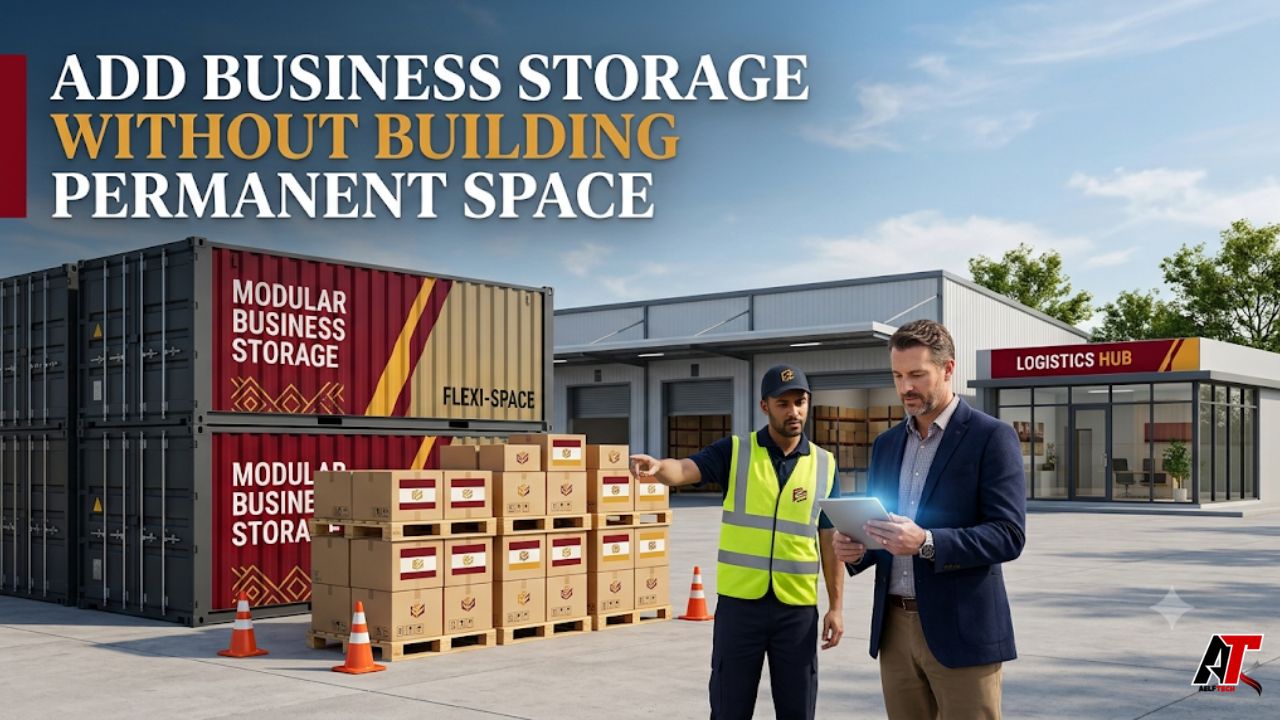
Growing companies often face one simple problem. They need more room, but they do not always need a new building. Inventory increases, tools pile up, seasonal stock arrives, and records need a secure place. At the same time, building permanent space can be expensive, slow, and risky.
That is why many owners now look for business storage without permanent space. This approach gives a company extra capacity without locking it into a major construction project. It can support retail, construction, ecommerce, agriculture, events, and logistics teams.
The key is to plan storage as a flexible business system. You need the right structure, the right location, clear safety rules, and a process for keeping items organized.
This guide explains how to add business storage without building permanent space. It also covers planning, containers, safety, access, costs, and mistakes to avoid.
Why Permanent Construction Is Not Always the Best First Step
A permanent storage building can be useful. However, it is not always the smartest first move. Construction usually brings design fees, permits, site work, contractors, utilities, and long timelines. For a growing business, that can create pressure before the storage problem is fully understood.
Demand can also change. A retailer may need more room before the holiday season. A contractor may need secure storage during a large project. A distributor may need short-term overflow space after a bulk purchase. In these cases, permanent construction may solve a temporary issue with a permanent cost.
There is another risk. A business may build too much space or the wrong type of space. Flexible storage helps owners test real requirements before making a long-term property decision.
Therefore, it often makes sense to start with adaptable storage first.
Start With a Clear Storage Audit
Before buying, renting, or placing any storage unit, start with an audit. This step saves money. It also prevents confusion later.
List the items that need storage. Separate them into groups such as tools, spare parts, documents, raw materials, packaging, finished goods, event supplies, and seasonal inventory. Then decide what must be accessed daily, weekly, monthly, or only in emergencies.
Next, measure the volume of your items. Do not guess. Count pallets, bins, shelves, cartons, racks, and loose equipment. Also note heavy items, fragile items, hazardous materials, temperature-sensitive goods, and items that need special security.
Finally, review how goods move. Ask where deliveries arrive, who needs access, and how items are picked. A storage solution should support workflow, not slow it down. As a practical planning resource, team aelftech.com often recommends documenting these details before making a storage investment. Link this planning habit with your internal systems through a central resource such as aelftech.com.
Use Shipping Containers as Flexible Business Storage
Shipping containers are one of the most common ways to add storage without constructing a permanent building. They are strong, movable, weather-resistant, and available in many sizes. They can be used for job sites, retail overflow, farm supplies, tools, records, equipment, and temporary warehouse support.
Businesses that need regional options can explore shipping containers in Canada when they want practical units for sale, storage, or site use. Containers are especially helpful because they can often be delivered faster than a building can be designed and constructed.
A container can sit near a loading area, beside a workshop, at a construction site, or in a secured yard. It can also be moved later if the business relocates or the project ends. This makes it useful for companies that are growing but still want flexibility.
However, a container is not just a metal box. It needs planning. Think about size, access, lighting, ventilation, shelving, locks, and staff movement.
Choose the Right Size and Layout
Choosing the right size is important. A small unit may save money at first, but it can become crowded quickly. A large unit may create unused space and higher delivery costs. The best option depends on what you store and how often you need access.
For slow-moving items, a simple stacked layout may work. For daily-use tools or inventory, add shelving and keep aisles clear. For palletized goods, check whether you need forklift access or pallet jack space. For records, use labeled boxes and keep them away from floor moisture.
Good layout also improves safety. Staff should not need to climb over items or move heavy goods every time they need one box. Place frequently used items near the entrance. Put heavy items low. Keep fragile goods protected. Keep exits clear.
In addition, create a simple map of the storage space. It helps staff find items faster.
Think About Site Preparation Before Delivery
Storage fails when the site is not ready. Before placing a container, review the ground. The area should be firm, level, and easy to access. Poor drainage can create mud, rust risk, and unsafe walking areas. A weak surface can cause the unit to settle unevenly.
Concrete pads, compacted gravel, blocks, or other prepared surfaces may help, depending on the property and local rules. You should also allow space for delivery trucks. Some trucks need room to turn, tilt, or unload safely. If access is tight, confirm delivery requirements in advance.
Also think about daily movement. Can staff reach the storage unit in bad weather? Is there enough lighting? Will the doors open fully? These details affect productivity every day.
A well-prepared site turns extra storage into a useful asset.
Keep Safety and Compliance at the Center
Any business storage plan must include safety. Poor storage can cause trips, falling objects, blocked exits, fire hazards, and damaged goods.
Set simple safety rules from the start. Keep walkways open. Use stable shelves. Label heavy items. Do not overload racks. Keep flammable items in approved storage when required. Do not store chemicals beside incompatible materials. Train staff on safe lifting and access procedures.
Canadian businesses can review general workplace safety information from The Canadian Centre for Occupational Health and Safety when building safe storage habits. This is useful because storage is connected to housekeeping, hazard control, fire prevention, and worker training.
Also check local rules before placing a container or portable structure. Zoning, permits, fire access, and insurance requirements can vary by location. Always confirm requirements before installing storage.
Protect Inventory From Weather and Damage
Flexible storage must protect what is inside. Weather resistance is important, but you should still think about moisture, airflow, and temperature. Some goods can handle normal outdoor storage. Others need climate control or added protection.
Use pallets or shelves to keep items off the floor. Add moisture absorbers for sensitive goods. Inspect seals and doors. Avoid storing cardboard directly against metal walls where condensation may form. Use plastic bins for small parts and weather-sensitive items.
If you store electronics, documents, textiles, or delicate materials, review temperature and humidity needs. You may need ventilation, insulation, climate control, or a different method.
Regular inspection also matters. Check for leaks, pests, rust, door issues, and damaged packaging. A five-minute weekly check can prevent expensive losses later.
Improve Security With Smart Controls
Business storage often holds valuable assets. That may include tools, equipment, stock, documents, or machinery. Security should never be an afterthought.
Start with a strong lock system. Use a lock box or protected hasp if the container supports it. Place the unit in a visible area when possible. Add lighting, cameras, fencing, and access control if the value of stored items is high.
You should also control who has keys or codes. Keep a simple access log. When employees leave or contractors finish work, update access. For higher-value storage, assign responsibility to one manager and set rules for opening, closing, and reporting missing items.
Security is not only about theft. It also protects operations and reduces confusion when items are moved.
Use Storage to Support Better Inventory Control
Extra space can make inventory problems worse if there is no system. More room often encourages clutter. That is why every storage setup needs clear organization rules.
Use labels, shelf numbers, bin codes, and simple categories. Keep similar items together. Mark slow-moving stock. Create a check-in and check-out process. If your business uses software, match physical labels with digital records.
For small businesses, even a spreadsheet can help. Record item names, quantities, storage zones, and responsible staff. Review the list monthly and remove obsolete items.
Good storage is not just about having room. It is about finding the right item quickly, protecting it, and knowing when to reorder.
Compare Renting, Buying, and Modifying Storage
Some companies rent storage units. Others buy containers. Some modify containers with doors, vents, windows, shelving, power, or workbench areas. Each option has a place.
Renting can work well for short-term projects, seasonal stock, or temporary overflow. Buying may suit long-term storage, frequent site needs, or companies that want full control. Modifying may be useful when storage must support a specific workflow, such as tool rooms, mobile workshops, or site offices.
When comparing options, look beyond the monthly price. Include delivery, site preparation, insurance, permits, locks, shelving, and maintenance. A cheap unit can become expensive if it slows work.
The best choice should match your timeline, budget, risk level, and growth plans.
When Flexible Storage Is the Right Choice
Flexible storage is a smart choice when your needs may change. It works well for businesses with seasonal peaks, temporary projects, limited property space, uncertain growth, or a need for fast deployment.
It is also useful when a company wants to delay construction until it has better data. After using temporary storage, owners better understand size, access, and layout needs.
However, flexible storage is not perfect for every case. If goods require strict climate control, heavy utility connections, customer-facing space, or permanent production areas, a fixed building may still be better. The goal is not to avoid construction forever. The goal is to choose the right solution at the right stage.
Common Mistakes to Avoid
The first mistake is buying storage before planning workflow. A container placed in the wrong spot can waste time every day. Another mistake is ignoring permits or local property rules.
Another mistake is filling the space without labels. Within weeks, the storage area becomes hard to use. Businesses also forget ventilation, lighting, ground preparation, and security.
Finally, many companies keep old items too long. Extra space should not become a hiding place for unused inventory.
Conclusion
Adding business storage without building permanent space is a practical way to grow with less risk. It gives companies more room, better flexibility, and faster setup than traditional construction. It can also help owners understand their real storage needs before making a large investment.
The best results come from planning. Audit your items, choose the right size, prepare the site, protect inventory, improve security, and follow safety rules.
When used wisely, flexible storage is a smart business tool. It helps companies stay organized while growth continues.
Leave a Reply