
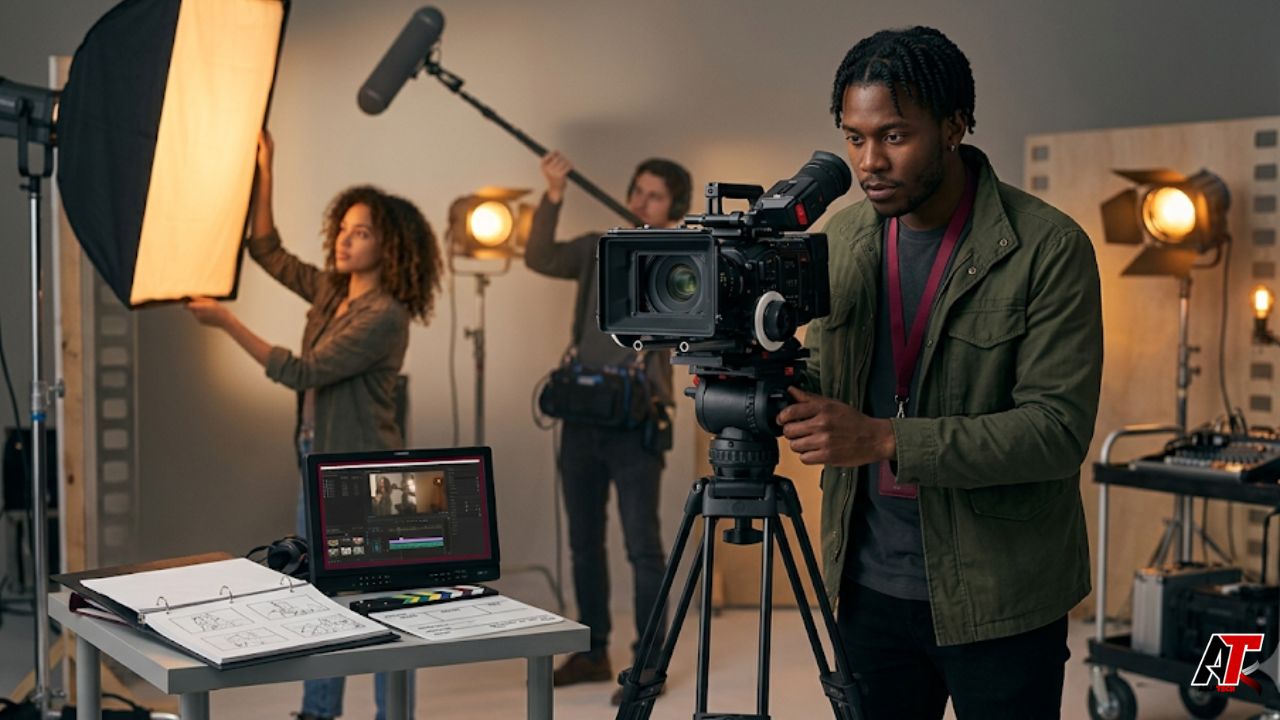
A future in filmmaking rarely begins with a perfect camera, a studio connection, or a complete career plan. It usually starts with curiosity about how images create emotion. Lasting progress comes from learning the craft, completing projects, accepting feedback, and steadily improving your ability to tell clear, memorable stories.
Modern filmmaking reaches far beyond cinema. The same core skills support documentaries, branded content, weddings, music videos, online education, corporate communication, television, streaming, and independent productions. These entry points create opportunity, but a career still requires deliberate learning, portfolio evidence, professional habits, and patience.
Understand What a Filmmaking Career Really Includes
Filmmaking is a collaborative system rather than a single job. Directors shape performances and creative decisions. Cinematographers control lighting, framing, lenses, and camera movement. Editors build pace and meaning in post-production. Producers organise budgets, schedules, people, and delivery. Sound recordists, production designers, colourists, writers, assistant directors, camera assistants, and many other specialists contribute to the finished work.
Jobs and Skills Australia lists cinematographers, editors, directors, and video producers as distinct occupations. Explore several roles early rather than assuming one path. You may discover that you prefer shaping performances, solving lighting problems, organising productions, recording sound, or turning raw footage into a compelling sequence.
Start With Story, Not Equipment
A technically sharp video can still feel empty when it lacks purpose. Before choosing a camera angle, ask what the audience should understand or feel. Every strong project has a subject, a point of view, a structure, and a reason to continue watching. Even a thirty-second product film needs a beginning, development, and conclusion. Learning to identify those elements makes your technical choices more intentional.
Practise with simple exercises. Film a person completing a task without dialogue. Create a one-minute portrait of a local business owner. Tell a short story using only five shots. Rewrite an ordinary event from two emotional perspectives. These limits force you to think about shot size, sequence, rhythm, and visual information. They also prove that meaningful practice does not require a large crew or a costly location.
Build Strong Technical Foundations
Creative freedom grows when basic camera decisions become familiar. Learn exposure, frame rates, shutter speed, aperture, ISO, white balance, focus, lens choice, composition, and camera movement. You do not need to memorise every specification at once. You need to understand how each setting affects the image and how to make consistent decisions under real shooting conditions.
Lighting and sound deserve equal attention. Beginners often chase cinematic images while treating audio as an afterthought, yet unclear dialogue can make otherwise attractive footage difficult to watch. Learn microphone placement, room tone, background-noise control, and basic audio levels. For lighting, begin with available light, reflectors, negative fill, and one controllable source. The goal is not complexity. It is repeatable control.
Learn the Complete Production Workflow
Reliable filmmakers understand what happens before, during, and after a shoot. Pre-production includes the brief, concept, script, storyboard, shot list, schedule, location planning, permissions, release forms, equipment checks, and backup arrangements. Production requires communication, continuity, time management, media handling, and safety. Post-production involves organising footage, editing, sound, colour, graphics, captions, exports, revisions, and delivery.
Learning the complete workflow protects you from a common beginner mistake: focusing only on recording footage. A beautiful shot is useful only when it supports the story, matches surrounding shots, has usable sound, and reaches the edit safely. Build checklists for every stage. Professionalism is often visible in ordinary habits such as charging batteries, naming files clearly, confirming call times, and keeping multiple copies of important media.
Use Structured Learning to Shorten the Trial-and-Error Stage
Self-teaching can be valuable, but random tutorials often leave knowledge gaps. A structured videography course can provide a clearer sequence from camera fundamentals and lighting to storytelling, scripting, filming, editing, and complete projects. The Australian Photography School describes its program as online and self-paced, with practical assessments, tutor support, and modules covering production and post-production skills.
The value of a course depends on active practice. Repeat demonstrations, shoot alternative versions, ask precise questions, and improve work after feedback. Compare the curriculum with your goals, available time, instructor support, and desired portfolio. Education should move you toward finished work, not simply more information.
Create a Portfolio That Shows Decisions, Not Just Pretty Shots
Your portfolio is evidence that you can turn a brief into a finished result. A short, focused collection is usually stronger than a long reel filled with unrelated footage. Include projects that demonstrate story structure, controlled exposure, clean audio, purposeful editing, and an understanding of the intended audience. Label your role honestly when a project involved collaborators.
Aim for three to five complete pieces before building a large showreel. Create a brand story, documentary portrait, dialogue scene, event highlight, or social campaign. Complete projects show whether you can sustain quality from planning to delivery. Update the portfolio as your standards rise.
Gain Experience Through Small, Real Projects
Early experience does not need to come from a major set. Local businesses, community groups, musicians, charities, sports clubs, student productions, and independent creators often need video. Choose projects carefully, define the scope in writing, and avoid promising results beyond your current ability. Even unpaid collaborations should have clear expectations about ownership, credits, deadlines, revisions, expenses, and portfolio use.
Treat small projects professionally. Arrive prepared, communicate changes, respect people on camera, and deliver when promised. These behaviours create referrals and repeat work. They also teach lessons that controlled exercises cannot: managing nervous contributors, adapting to weather, working around noise, protecting a schedule, handling feedback, and making creative decisions when time is limited.
Develop Editing as a Core Storytelling Skill
Editing is where filmmakers discover whether the footage truly works. Learn to organise media, select takes, build assemblies, refine pacing, use cutaways, clean dialogue, balance music, correct colour, and export for different platforms. Avoid hiding weak decisions behind excessive transitions or effects. Strong editing is often quiet; it guides attention without making the technique more noticeable than the story.
Edit your own practice footage, but also work with material shot by someone else. This develops objectivity and teaches you to solve problems without remembering the conditions on set. Save multiple versions and review them after a break. Ask viewers what they understood, where their attention dropped, and what emotion remained. Specific audience feedback is more useful than a general request to make the video ‘better.’
Build Relationships Before You Need Opportunities
Film work is highly collaborative, so your network grows through genuine working relationships rather than collecting contacts. Attend screenings, workshops, local industry events, and filmmaker groups. Volunteer selectively on credible productions. Ask thoughtful questions, observe set etiquette, and follow up without pressuring people for work. A useful relationship develops when both sides recognise reliability, respect, and shared interests.
Your reputation travels through small actions. Credit collaborators, respond clearly, protect confidential material, and respect safety instructions. People remember calm problem-solvers. Technical talent may open a door, but dependable conduct often determines who is invited back.
Learn the Business Side of Creative Work
Freelancers and small production companies need more than creative skill. Learn to interpret a client brief, estimate time, price work, define revisions, manage deposits, document usage rights, issue invoices, track expenses, and store project files. Written agreements reduce confusion and make the relationship feel professional. They should explain deliverables, schedule, payment, cancellation, music licensing, talent permissions, and ownership.
Marketing should communicate the problems you solve, not only the equipment you own. A restaurant may need a film that increases bookings. A training provider may need clear instructional video. A family may want an emotionally sensitive wedding film. Show relevant work, explain your process, and make it easy to enquire. For broader digital career and business insights, readers can also explore resources from team aelftech.com.
Choose a Direction Without Becoming Too Narrow
A niche helps clients and collaborators understand your strengths. You may focus on documentary, commercial, wedding, corporate, music, narrative, educational, or social content. However, do not specialise so early that you avoid essential skills. A documentary filmmaker still benefits from lighting knowledge. A cinematographer benefits from understanding editing. A director benefits from knowing production limits and sound requirements.
Use your first year to test different formats and identify patterns. Which projects hold your attention? What kind of pressure do you handle well? Do you prefer controlled sets or unpredictable real environments? Are you energised by clients, actors, technical systems, or solitary editing? Your answers will help you choose a direction based on experience rather than an imagined version of the profession.
Follow a Practical Twelve-Month Development Plan
A clear plan turns ambition into measurable progress. Adjust the pace around your responsibilities, but keep producing work throughout the year.
- Months 1-3: learn camera, audio, lighting, composition, basic editing, and visual storytelling. Complete several short exercises.
- Months 4-6: plan and finish two small productions with scripts, shot lists, organised media, and audience feedback.
- Months 7-9: collaborate with other creators, take a defined crew role, improve your online portfolio, and study business basics.
- Months 10-12: create one ambitious signature project, refine a concise showreel, request testimonials, and approach suitable clients or productions.
Review the plan every month. Measure completed projects, not hours spent watching tutorials. Note the skill that limited each production and make it the focus of your next exercise. This cycle of planning, making, reviewing, and revising is one of the most dependable ways to build a future in filmmaking.
Common Mistakes That Slow Progress
- Waiting for better gear instead of learning with the camera available now.
- Starting many projects but finishing none, leaving no portfolio evidence.
- Ignoring audio, permissions, backups, or production safety.
- Copying a visual style without understanding the story it should support.
- Accepting vague client work without written scope, payment, or revision terms.
- Comparing an early portfolio with established professionals instead of tracking personal improvement.
Conclusion: Build the Career One Finished Film at a Time
You do not need to map your entire career before taking the first step. Learn the fundamentals, finish short projects, build relationships, study the full workflow, and gradually identify the role and market that fit you. The film industry rewards imagination, but it also depends on preparation, communication, resilience, and the ability to deliver.
Your future in filmmaking will be shaped by the work and trust you build over time. Start with a manageable idea, plan carefully, record usable sound, and edit with purpose. Share the result, learn from the response, and begin the next project with higher standards.
Frequently Asked Questions
Do I need an expensive camera to begin filmmaking?
No. A phone or entry-level camera can teach composition, movement, exposure, sound planning, and editing. Upgrade equipment when a clear production need consistently limits your work.
Is a course necessary for a filmmaking career?
Not always, but structured training can organise the learning process, provide feedback, and reveal gaps that random tutorials may miss. The strongest results come from combining education with repeated practical projects.
What should a beginner filmmaking portfolio include?
Include a small number of complete, polished pieces that show storytelling, technical control, editing, and your specific role. Choose work relevant to the productions or clients you hope to attract.
How can I get filmmaking experience without industry contacts?
Create self-directed shorts, help on student or community productions, collaborate with local creators, and offer clearly scoped projects to suitable organisations. Professional conduct on small jobs often leads to stronger opportunities.
Leave a Reply