
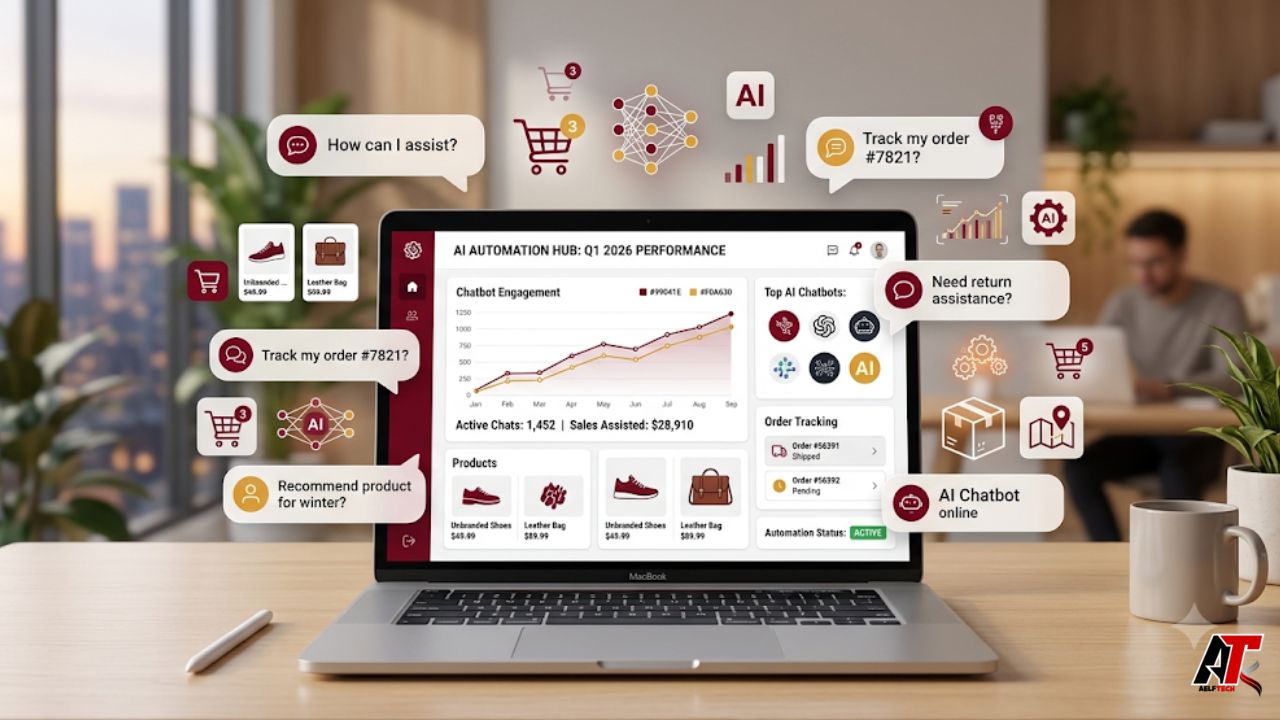
Ecommerce has changed fast, and customer expectations have changed even faster. Shoppers no longer want to wait hours for a reply about delivery, sizing, returns, discounts, or product availability. They want clear answers while they are still ready to buy. This is where AI chatbots for ecommerce stores have become more than a support tool. In 2026, they are becoming sales assistants, support agents, product guides, and customer experience partners.
This guide explains the best 7 AI chatbots for ecommerce stores in 2026 in a simple and practical way. Instead of only listing tools, it looks at use cases, strengths, possible limits, and the type of business each chatbot fits best.
Why Ecommerce Stores Need Smarter AI Chatbots in 2026
Older chatbots were mostly rule-based. They followed fixed scripts and often failed when a customer asked a question in a natural way. Modern ecommerce AI chatbots are different. They can understand intent, read knowledge base content, check policies, support product discovery, and in some cases take actions such as updating order information or starting a return.
For ecommerce teams, this matters because most questions repeat. Customers ask about delivery time, product details, refund rules, payment issues, order status, and discount codes every day. A good AI chatbot can answer these common questions instantly while your human team handles complex or emotional issues.
How We Selected These Ecommerce AI Chatbots
Before choosing any tool, focus on real business needs. A chatbot should not only sound smart. It should reduce support pressure, improve shopping experience, and protect your brand reputation. At aelftech.com, the most important selection factors are ecommerce integrations, answer quality, setup effort, automation depth, human handoff, analytics, and scalability.
Quick Comparison Table
| AI Chatbot | Best For | Main Strength |
| YourGPT | Flexible AI agents for growing ecommerce teams | Custom support and sales automation |
| Gorgias | Shopify-heavy brands and support teams | Ecommerce helpdesk plus AI automation |
| Tidio Lyro | Small and mid-sized stores | Easy setup and live chat automation |
| Intercom Fin | Support-heavy online businesses | Strong AI agent with human handoff |
| Zendesk AI | Enterprise and omnichannel support teams | Advanced ticketing, AI agents, and governance |
| Shopify Inbox | Shopify stores starting with AI chat | Native store chat and product-aware replies |
| Freshdesk Freddy AI Agent | Mid-market teams needing workflows | AI agents with support workflows and integrations |
1. YourGPT – Best for Flexible AI Support and Sales Automation
If you want a flexible AI platform that can support customer service, sales conversations, and business automation, YourGPT is one of the strongest options to consider. It is useful for ecommerce stores that want to build AI agents trained around their own knowledge, product details, and business rules.
YourGPT can be a good fit for stores that do not want a generic chatbot. You can use it to answer FAQs, qualify leads, guide shoppers, and reduce repetitive customer queries. For example, if your store sells skincare, electronics, or home products, the AI can help users compare products and understand usage details before buying.
The main advantage is flexibility. It can serve as a support assistant, a product guide, or a sales helper depending on how your team trains it. That makes it useful for growing stores that need more control over the chatbot experience.
2. Gorgias – Best for Ecommerce Support Teams
For ecommerce brands that already handle many support tickets, Gorgias is a strong choice because it combines helpdesk features with AI automation. It is especially popular among stores that need order context, customer history, chat, email, social messaging, and support workflows in one place.
Gorgias is built with ecommerce operations in mind. It can help with common post-purchase questions such as order tracking, returns, shipping updates, refunds, and product questions. It can also support pre-purchase conversations by helping shoppers find the right item or understand product benefits.
The best thing about Gorgias is that it connects AI with the support inbox. This helps human agents and automation work with the same context. When the AI cannot solve the issue, the conversation can move to a human without forcing the customer to repeat everything.
Gorgias may not be the cheapest option for very small stores, but it can be worth it for brands that have steady ticket volume and want a serious support system. If your team already spends too much time answering the same questions, this tool deserves attention.
3. Tidio Lyro – Best for Small and Mid-Sized Stores
Tidio Lyro is a practical option for small and mid-sized ecommerce stores that want a friendly chatbot, live chat, and automation without a complicated setup. It is often a good fit for Shopify, WooCommerce, and service-based ecommerce websites that need quick customer communication.
Lyro can answer customer questions, support product discovery, and help visitors when your team is offline. It is useful for stores that receive many simple questions such as “Where is my order?”, “Do you ship to my city?”, “Is this product available?”, or “How can I return this item?”
The main benefit is ease of use. Many small store owners do not have a technical team. They need a chatbot that can be set up quickly and adjusted without heavy development work. Tidio is strong in that area.
The limitation is scale. If your store has complex workflows, multiple brands, advanced approval steps, or enterprise-level compliance requirements, you may eventually need a bigger customer service platform. Still, for many growing stores, Tidio Lyro is a smart starting point.
4. Intercom Fin – Best for Support-Heavy Online Businesses
Intercom Fin is a powerful AI customer support agent for businesses that care about fast responses, accurate answers, and smooth escalation. It can work well for ecommerce stores that already use Intercom or stores that have a large knowledge base and serious support volume.
Fin is designed to answer questions from approved support content and hand over to human agents when needed. This is useful when your store has many product rules, subscription details, shipping regions, or warranty conditions. Customers get instant help, while your agents receive better context.
Intercom Fin is also helpful when customer experience is a major part of your brand. For premium stores, the chatbot must feel polished. It should not only answer quickly but also sound helpful and on-brand.
5. Zendesk AI – Best for Enterprise Ecommerce Support
Zendesk AI is suitable for larger ecommerce businesses that need omnichannel support, ticket management, automation, analytics, and strong governance. It is not only a chatbot. It is part of a larger customer service system.
For enterprise ecommerce, support is rarely limited to website chat. Customers contact brands through email, live chat, social media, phone, and messaging apps. Zendesk AI helps teams manage these channels with automation and agent support.
Its AI agents can help resolve customer issues, suggest replies, classify tickets, and support agents with context. This is useful for businesses with high ticket volume, multiple teams, and more formal customer service processes.
6. Shopify Inbox – Best Native Option for Shopify Stores
Shopify Inbox is a strong option for merchants who want a simple AI-powered chat experience directly connected to their Shopify store. It is especially helpful for newer stores that want to answer customer questions, share product recommendations, and manage buyer conversations without adding a complex helpdesk.
Because it is connected to Shopify, it can use store information such as product catalog content and policies. This helps the chatbot support shoppers during the buying process. A visitor can ask about a product, get a recommendation, or receive help without leaving the store.
The biggest advantage is convenience. Store owners who are already inside Shopify can start with a native tool instead of adding too many third-party systems. It is a clean option for solo founders and small teams.
7. Freshdesk Freddy AI Agent – Best for Workflow-Based Support
Freshdesk Freddy AI Agent is a strong choice for ecommerce teams that want AI to do more than answer simple questions. It can support customer service workflows and connect with tools related to payments, shipping, ecommerce platforms, and internal processes.
This makes it helpful for stores where customer support includes actions, not just replies. For example, an ecommerce team may need to check delivery status, update a support request, guide a refund process, or send the issue to the right department.
As with any workflow-based AI tool, setup quality matters. Your team should define what the AI can do, what it cannot do, and when it should involve a human. Clear boundaries reduce errors and protect the customer experience.
Which AI Chatbot Is Best for Your Ecommerce Store?
The best choice depends on your store size, platform, team, and customer journey. A new Shopify store may start with Shopify Inbox or Tidio. A growing brand with daily support tickets may choose YourGPT or Gorgias. A larger team may prefer Zendesk AI, Freshdesk Freddy AI Agent, or Intercom Fin.
Features to Check Before Buying an Ecommerce Chatbot
Before you subscribe, check the most important features. The chatbot should connect with your ecommerce platform, understand product data, answer from approved sources, support live chat handoff, and provide reporting. It should also let you test answers before going live.
You should also review multilingual support, mobile experience, privacy settings, and pricing model. Some tools charge by seat, some by conversation, and some by AI resolution. A tool that looks affordable at low volume can become expensive when traffic grows. Always estimate monthly conversations before choosing a plan.
Common Mistakes to Avoid
The first mistake is launching the chatbot without training it properly. If your return policy is unclear, your AI will also be unclear. If your product pages are thin, your chatbot may not answer product questions well. Good AI still needs good content.
Final Thoughts
AI chatbots for ecommerce stores are no longer optional for brands that want fast support and better conversions. In 2026, the strongest tools can answer questions, guide shoppers, support orders, reduce tickets, and improve the overall buying journey.
For flexible AI automation, YourGPT is a strong option. For ecommerce support teams, Gorgias is one of the most focused choices. For small stores, Tidio and Shopify Inbox are practical starting points. For larger operations, Intercom Fin, Zendesk AI, and Freshdesk Freddy AI Agent offer more advanced support workflows.
The right chatbot should feel like a helpful extension of your brand. Start with your customer pain points, prepare clean store content, test carefully, and keep improving. When used well, an AI chatbot can save time, support your team, and help more shoppers buy with confidence.
Leave a Reply