
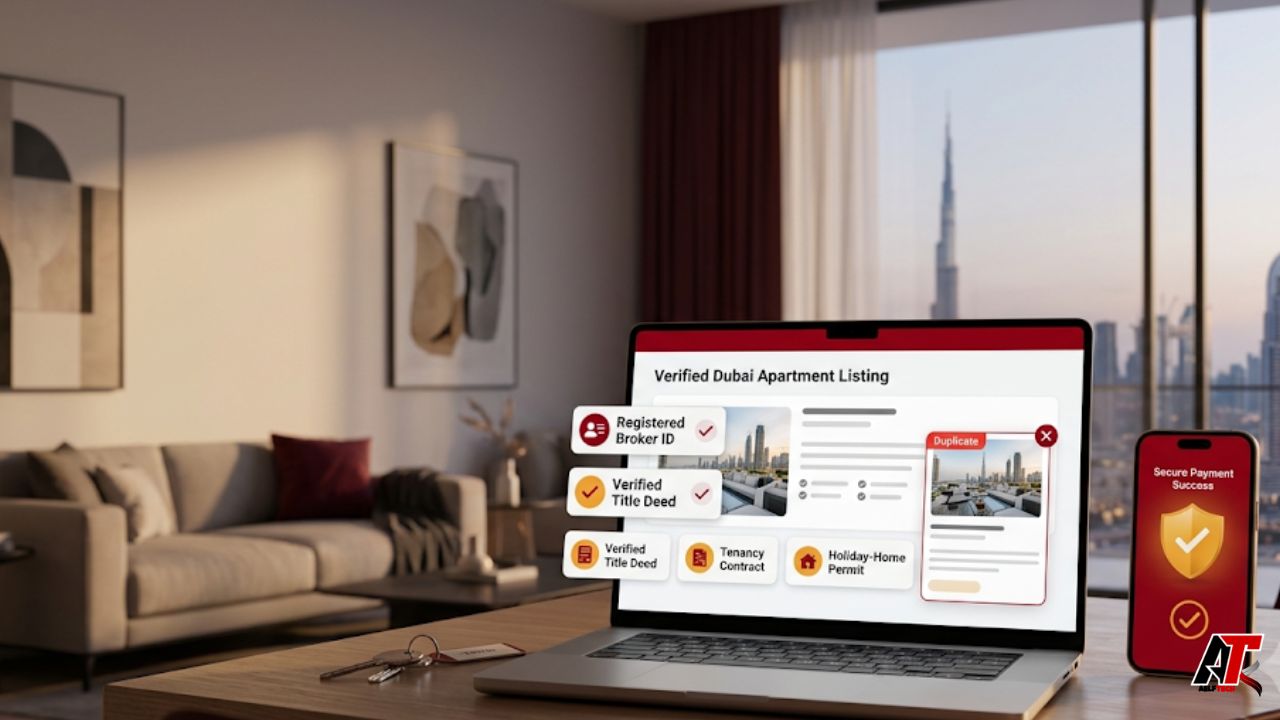
Booking a Dubai apartment online can save time, especially when you are relocating from another country or arranging accommodation before arrival. However, attractive photographs, polished messages, and a professional-looking listing do not prove that the property, landlord, or agent is genuine. Rental fraud often succeeds because the renter is rushed into paying before completing basic checks.
The safest approach is not to avoid online booking altogether. Instead, treat every listing as unverified until you have confirmed the people involved, the property details, the contract, and the payment route. This guide explains how to avoid rental scams in Dubai when booking online, whether you are searching for a long-term tenancy or a licensed short-term holiday home.
Why Online Rental Scams Can Be Convincing
A fraudulent listing may use real photographs copied from a legitimate advertisement. The person contacting you may know the building, quote realistic service charges, and send documents that appear official. Some scammers impersonate licensed brokers, while others claim to be owners who are travelling and cannot meet in person.
The scam usually becomes visible when the advertiser creates pressure. You may be told that several tenants are ready to pay, that the price is available for only a few hours, or that the keys will be released after a reservation deposit. Urgency is designed to stop you from checking the details. A genuine rental opportunity should survive reasonable verification.
Common Dubai Rental Scams to Recognise
Fake listings are the most familiar example. A scammer advertises a property that does not exist, is not available, or belongs to someone else. The rent is often noticeably below comparable units, and the renter is asked to transfer a holding deposit before viewing.
Impersonation scams involve someone pretending to be a registered agent, landlord, property manager, or holiday-home operator. Document forgery may include altered broker cards, title deeds, tenancy contracts, receipts, or payment instructions. Another risk is duplicate leasing, where the same unit is promised to more than one renter and deposits are collected from several people.
Payment diversion is also common. A renter may initially communicate with a legitimate agency, but later receive a message from a lookalike email address requesting payment to a different account. Always confirm changed bank details through a trusted phone number obtained independently, not through the message requesting the change.
1. Start with Reputable Platforms, but Verify Independently
Established property portals and recognised booking platforms generally apply listing controls, yet no platform should replace your own checks. Search the property address, building name, agent name, company name, and phone number separately. Duplicate photographs, conflicting prices, or the same contact using several identities are important warning signs.
Look at how long the account has existed and whether reviews appear natural and detailed. Be cautious when the advertiser immediately moves the conversation to a private messaging app, refuses to communicate through the platform, or asks you to cancel the platform booking and pay directly. Moving off-platform can remove useful records and payment protections.
2. Compare the Price with the Real Market
A low price is not automatically fraudulent, but it should trigger more investigation. Compare several similar units in the same building or neighbourhood, including size, furnishing, view, parking, and contract duration. A luxury apartment offered far below the normal range without a clear reason may be bait.
For long-term rentals, the Dubai Land Department’s rental tools can help you understand the local market. Do not focus only on annual rent. Ask for a written breakdown of the security deposit, agency commission, utility deposits, maintenance responsibility, tourism charges for short stays, and any platform or administration fees. Hidden or constantly changing charges are a reason to pause.
3. Verify the Broker and Real Estate Company
A legitimate Dubai real estate professional should be verifiable through official channels. Ask for the broker’s full name, brokerage company, RERA e-card or broker card number, office contact details, and trade licence information. Then check the information through the Dubai Land Department website or Dubai REST app rather than relying on a screenshot sent by the advertiser.
The Dubai Land Department provides an e-card verification service and a list of licensed real estate brokers. Confirm that the photograph, name, card number, employer, and status match the person speaking with you. Call the agency using the number published on its official website and ask whether the agent works there and is authorised to market the specific property.
Do not assume that a branded email signature, company logo, or office photograph is proof. Fraudsters can copy branding within minutes. Verification must connect the individual to a licensed company through an independent source.
4. Confirm Ownership and Authority to Rent
Before paying a long-term rental deposit, request evidence showing who owns the unit. The Dubai Land Department offers a title-deed verification service through its website and Dubai REST app. Check that the owner’s identity and property details are consistent with the documents and proposed contract.
When an agent or representative acts for the owner, ask for written authority or a valid power of attorney where relevant. The payment beneficiary should also make sense. A request to pay rent or a large deposit into an unrelated third party’s personal account is a serious red flag unless the legal authority and transaction structure have been clearly verified.
Document checks should be handled carefully. Do not circulate copies of passports, Emirates IDs, title deeds, or signatures beyond what is genuinely required. Watermark sensitive copies with the purpose and date when appropriate, and store them securely.
5. View the Property Before Making a Major Payment
An in-person viewing is the strongest practical check. Confirm the building, unit number, condition, access, furniture, appliances, parking, and any promised facilities. Ask the agent to demonstrate that the keys or access card work. Speak with building reception or management when possible, without asking them to disclose private information.
If you are overseas, arrange a live video tour rather than accepting a prerecorded clip. Ask the presenter to show the current date on another device, move continuously from the building entrance to the unit, display the unit number, and respond to spontaneous requests such as opening a cupboard or showing the view from a particular window. A live tour does not replace official verification, but it makes recycled media harder to use.
6. Check the Permit for Short-Term Holiday Homes
Short-term vacation rentals follow a different process from ordinary annual tenancies. Dubai’s Department of Economy and Tourism states that apartments and villas must be registered and approved before they are listed as holiday homes. Each genuine holiday home should therefore be connected to a licensed operator and a valid unit permit.
Ask the host or operator for the licence and unit permit details, then confirm them through official DET channels when possible. DET guidance also requires a holiday-home unit QR code to be displayed outside the unit near the DEWA premises plaque. The absence of licensing information, a proper guest agreement, or clear operator contact details should make you reconsider the booking.
For a short stay, keep the booking confirmation, cancellation policy, total price, deposit terms, check-in instructions, and customer-support details. Pay through the recognised booking platform or the verified operator’s official payment system rather than through a personal transfer requested in chat.
7. Read the Contract and Use Ejari for Long-Term Tenancies
Never sign a blank, incomplete, or inconsistent tenancy contract. Check the landlord and tenant names, unit and building details, lease dates, annual rent, payment schedule, deposit, maintenance obligations, renewal terms, early termination conditions, and inventory for furnished properties. Every verbal promise that matters should appear in writing.
For ordinary long-term tenancies, Ejari is the Dubai Land Department system used to register or renew the tenancy contract. Registration creates an official e-contract registration certificate and supports access to services and formal dispute procedures. Make sure the property and owner details can be matched in the official system rather than accepting a PDF that cannot be verified.
The linked guide to Ejari explains the registration process in more detail. Do not confuse Ejari with a holiday-home booking permit: they serve different rental arrangements. Ask which legal framework applies before you pay.
8. Use Safer Payment Methods and Demand Receipts
The safest payment route is one that identifies the recipient, records the purpose, and provides a recoverable transaction trail. Use a verified company payment link, recognised booking platform, cheque arrangement stated in the signed tenancy contract, or bank transfer to the confirmed landlord or licensed business account. Credit-card payment may offer additional dispute options, depending on the provider and circumstances.
Avoid cryptocurrency, gift cards, cash handed to an unknown person, remittance to an unrelated individual, or transfers made only because someone promises an immediate discount. Never share a one-time password, banking PIN, card security code, or UAE Pass approval with an advertiser.
Obtain a dated receipt showing the payer, recipient, property, amount, payment purpose, and balance. Confirm whether a holding deposit is refundable and under what conditions. If the payment instructions change, stop and independently contact the verified landlord, agency, platform, or operator before continuing.
9. Keep Communication and Evidence Organised
Use email or the booking platform for important terms instead of relying entirely on disappearing messages or voice calls. Save the original listing, photographs, profile, broker details, contract versions, receipts, payment instructions, and messages. Take screenshots that include dates and account information.
Check email domains carefully. A one-letter difference can redirect you to an impersonator. Do not open unexpected attachments or login pages without confirming the sender. Practical digital-safety advice from aelftech.com can complement these property checks by helping users recognise suspicious links, fake login screens, and account-takeover attempts.
10. Complete a Final Before-You-Pay Checklist
Before sending money, confirm that you have independently verified the agent or operator, brokerage or company, property ownership, authority to rent, exact unit, market price, total fees, contract, refund conditions, and payment beneficiary. For long-term rentals, confirm the path to tenancy registration. For holiday homes, confirm the DET licence and unit permit.
Also verify the move-in or check-in process. You should know who will provide access, where keys will be collected, what identification is required, who handles emergencies, and how defects will be reported. A genuine provider should answer these questions clearly and consistently.
When one important detail cannot be verified, do not allow a deadline or discount to overrule the risk. Walking away from a questionable deal is cheaper than trying to recover a fraudulent payment.
What to Do If You Suspect a Scam
Stop further payments and preserve all evidence. Contact your bank or card provider immediately because fast reporting may improve the chance of stopping or tracing a transaction. Notify the property portal or booking platform so it can review the listing and account.
For suspected misconduct by a real estate company or broker, the Dubai Land Department provides a real estate violation complaint service. DLD notes that contractual rental disputes fall under the Rental Disputes Settlement Centre, so the correct reporting route depends on whether the issue is a regulatory violation, a tenancy dispute, or suspected criminal fraud. Serious fraud should also be reported to the appropriate police or cybercrime channel.
Do not confront a suspected scammer in person or attempt to recover money through threats. Give authorities and financial institutions complete records, including transaction references, contact details, advertisements, and altered documents.
Dubai and Abu Dhabi Have Different Rental Systems
Rental processes are regulated at emirate level, so a Dubai checklist should not be copied blindly to another emirate. If your search expands beyond Dubai, research the relevant registration system, regulator, and local contract requirements. People comparing locations can review current options to rent in Abu Dhabi, but they should verify Abu Dhabi-specific rules and documentation before making a payment.
Final Thoughts
The best defence against an online rental scam is a deliberate verification routine. Confirm the identity of the agent or operator, verify the property and authority to rent, inspect the unit, read the contract, and pay only through a traceable route connected to the verified transaction.
Dubai provides official digital tools for checking brokers, professional e-cards, title deeds, tenancy registration, rental information, and complaints. Use those tools before trusting documents sent through private messages. A legitimate landlord, broker, or holiday-home operator should understand why you are checking and should cooperate without creating artificial pressure.
Frequently Asked Questions
How can I tell whether a Dubai rental listing is fake?
Look for an unusually low price, copied photographs, pressure to pay immediately, refusal to arrange a viewing, inconsistent identities, and payment to an unrelated account. Verify the broker, company, ownership, unit, contract, and payment beneficiary independently.
Can I safely rent a Dubai apartment before arriving in the UAE?
It is possible, but use a live video viewing, official broker and title-deed checks, a complete written contract, and a traceable payment method. Consider arranging temporary accommodation first when major details cannot be verified remotely.
Is a RERA broker card enough to prove an agent is genuine?
No. Ask for the card details, verify the e-card through Dubai REST, check the licensed brokerage, and call the company’s published number. Confirm that the agent is authorised to market the exact unit.
Do short-term Dubai rentals need Ejari?
Holiday homes operate under DET licensing and unit-permit requirements, while ordinary long-term tenancy contracts use the DLD tenancy-registration process. Confirm which rental category applies to your booking instead of assuming the documents are interchangeable.
What should I do after sending money to a suspected scammer?
Contact your bank or card provider immediately, preserve the listing and messages, notify the platform, and report the matter through the appropriate Dubai authority or police channel. The fastest possible action can be important.
Leave a Reply