
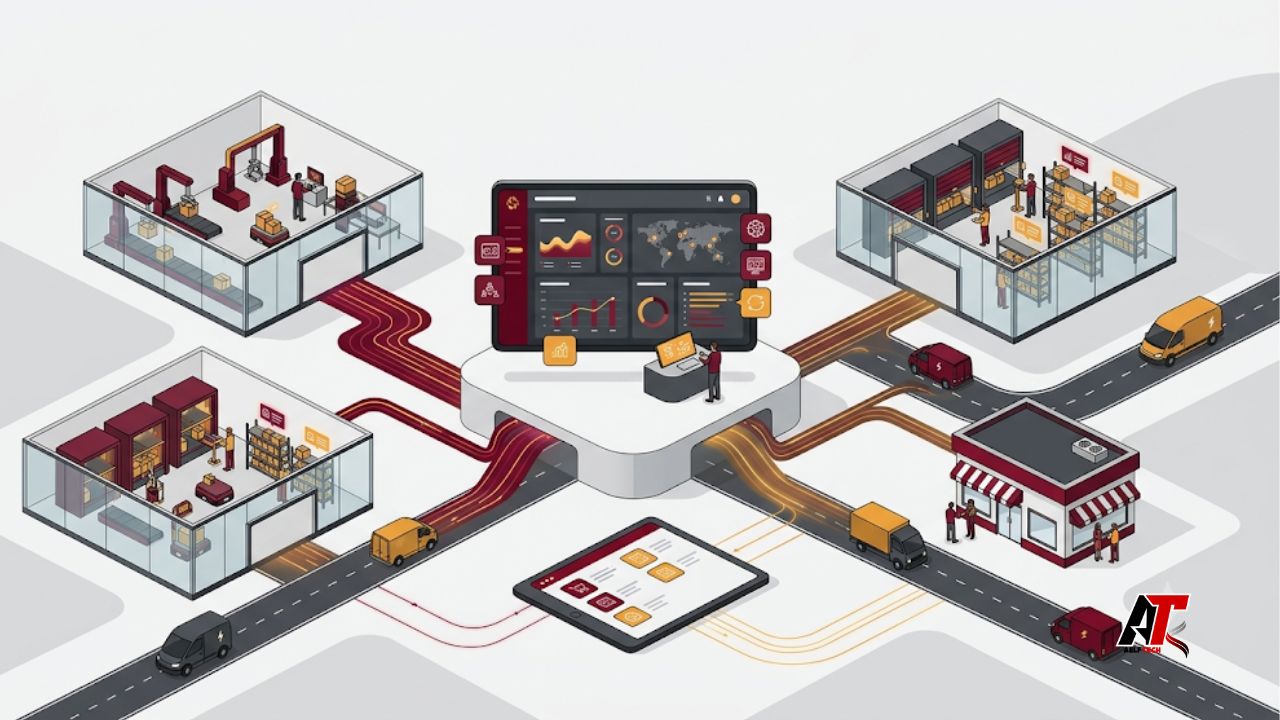
Omnichannel retail gives shoppers more choice. They can browse online, buy through an app, collect an order in a store, or request home delivery. They also expect the same product information and service at every touchpoint.
That promise depends on the warehouse network. A retailer may hold stock in distribution centers, stores, micro-fulfillment hubs, and partner sites. However, those locations often use separate systems. As a result, teams struggle to see what is available and where an order should ship from.
AI-driven networked warehousing solutions connect these locations and guide decisions across the full network. They combine live data, business rules, and predictive models. Therefore, retailers can improve speed without losing control of cost, inventory, or customer service.
Omnichannel Retail Turns Every Order Into a Network Decision
A customer sees one brand, not a group of systems. When a website shows an item in stock, the shopper expects it to be available. When the retailer offers same-day pickup, the order should be ready on time. These simple promises require accurate data and coordinated action.
Each order creates several decisions. The retailer must confirm stock, choose a fulfillment node, reserve the item, assign labor, select a carrier, and track the handoff. If one decision uses old data, the order may become late or expensive.
Traditional warehouses often optimize their own work. In contrast, omnichannel retail needs the whole network to optimize the customer promise. The best local decision may not be the best network decision. For example, the nearest store may have stock, but it may lack staff to pick the order before the cutoff.
What AI-Driven Networked Warehousing Means
A networked model connects inventory and operations across many locations. These may include regional warehouses, urban hubs, stores, suppliers, and third-party logistics sites. Shared data allows every node to work from the same view of orders and stock.
Retailers reviewing networked warehousing solutions should look beyond storage space. The main value comes from coordination. The platform should help the business position stock, route orders, plan labor, and respond to disruptions across the entire network.
AI adds a decision layer. It can study demand patterns, stock levels, order priorities, delivery costs, and capacity limits. Then, it can recommend the next best action. People still set goals and rules. Yet the system helps them act faster and more consistently.
Why Omnichannel Retailers Need an Intelligent Warehouse Network
1. One Reliable View of Inventory
Inventory accuracy is the base of omnichannel service. A connected platform can combine stock from warehouses, stores, in-transit shipments, returns, and approved partners. It can also separate physical stock from sellable or reserved stock.
This real-time inventory visibility reduces overselling and unnecessary cancellations. In addition, it helps retailers expose more sellable stock online. Planners spend less time matching reports, while customer service teams give clearer answers.
2. Smarter Order Routing
The closest location is not always the best choice. AI can compare delivery time, labor capacity, carrier cost, inventory age, and split-shipment risk. It can also protect stock that a store needs for walk-in customers.
For example, a slightly farther warehouse may ship the full basket in one package. That choice can cost less than two local shipments. It can also reduce packaging and improve the delivery experience.
3. Better Demand Forecasting
Omnichannel demand changes by product, channel, region, season, promotion, and local event. Spreadsheet forecasts cannot process every signal quickly. AI models can update forecasts as new orders and trends appear.
Therefore, the retailer can place the right stock closer to likely demand. Better forecasts reduce both stockouts and excess inventory. They also support local assortments, which matter when online and store demand differ in the same market.
4. Faster Replenishment and Stock Balancing
A network may have too much stock in one location and too little in another. AI can spot that imbalance early. It can recommend a transfer, a supplier order, or a change in safety stock before service declines.
Meanwhile, planners can test the effect of each action. They can compare transfer cost with the risk of lost sales. This approach replaces late, reactive moves with timely decisions.
5. More Productive Warehouse Labor
Warehouse teams face changing order volumes and tight carrier cutoffs. AI can prioritize tasks by promise date, item location, service level, and available staff. It can also improve batching, slotting, wave planning, and pick paths.
As a result, employees spend less time walking, searching, and reworking orders. Managers can also move labor before a backlog grows. Automation works better because robots, conveyors, and people follow the same priorities.
6. Lower Fulfillment and Delivery Costs
Omnichannel convenience can reduce margin when every order becomes an exception. Intelligent routing helps control that risk. It can reduce split shipments, avoid urgent transfers, and select a lower-cost carrier that still meets the delivery promise.
The network can also use space more effectively. Fast sellers can sit near demand, while slow items can move to lower-cost storage. Consequently, retailers improve speed and cost at the same time.
7. Stronger Resilience During Disruption
Weather, supplier delays, system outages, and labor shortages can interrupt fulfillment. A connected network gives the retailer more options. AI can identify affected orders and compare alternative locations in seconds.
For instance, the system may shift volume away from a busy warehouse before orders become late. It may also reserve scarce stock for high-priority demand. This flexibility is especially useful during peak seasons and major promotions.
8. Faster and More Profitable Returns
Returns should rejoin the inventory network quickly. However, many retailers manage them in a separate process. That delay hides sellable stock and increases handling cost.
AI can recommend the best next step for each item. The product may return to local stock, move to another node, go for repair, or enter liquidation. Faster decisions recover value and improve inventory accuracy.
9. A More Consistent Customer Experience
Customers notice reliable availability, accurate pickup times, fewer cancellations, and easier returns. They do not need to understand the technology behind those results. They simply learn that the retailer keeps its promises.
In addition, service teams gain a clearer order view. They can see where an item sits and what should happen next. Therefore, they can solve issues without contacting several departments.
Core Capabilities to Look For
The right platform should connect the systems that already run the business. These often include order management, warehouse management, enterprise planning, point-of-sale, transport, marketplaces, and carrier tools. Open APIs make future integration easier.
- A shared inventory model with event-based updates
- Intelligent order routing across stores, warehouses, and partners
- Demand forecasting, replenishment, and stock-balancing tools
- Capacity, labor, and carrier planning
- Clear alerts, dashboards, and exception workflows
- Explainable AI recommendations and human approval controls
Explainability matters. Planners need to know why the platform suggests a transfer or routing change. Clear reasons build trust and help teams improve business rules. Security and data governance are also essential because the platform shares sensitive information across many nodes.
A Practical Implementation Roadmap
Step 1: Map the Current Order Journey
First, document how orders and inventory move across channels. Find delayed updates, manual handoffs, and common service failures. Then, record a baseline for accuracy, cancellations, order cycle time, split shipments, cost per order, and return time.
Step 2: Build a Clean Data Foundation
Next, standardize product, location, order, and inventory-status data. Fix duplicate codes and unclear stock labels. AI cannot produce reliable advice from poor inputs, so this step deserves time and ownership.
Step 3: Start With One High-Value Use Case
Choose a focused pilot. Intelligent routing, inventory visibility, replenishment, or returns disposition can all work well. Select the use case that links to a clear business problem and measurable target.
Step 4: Involve Operations From the Start
Warehouse managers and planners understand real constraints. Include them when setting rules and reviewing recommendations. Their feedback will uncover exceptions that a project team may miss.
Step 5: Measure, Learn, and Expand
Finally, compare pilot results with the baseline. Expand only after the process works consistently. As the network grows, assign owners for data quality, model performance, security, and human approvals.
Common Mistakes to Avoid
The first mistake is adding AI before fixing data. Delayed stock updates and inconsistent item codes will weaken every recommendation. The second mistake is optimizing one site while ignoring the network. A local saving can create a larger delivery or transfer cost elsewhere.
Another mistake is treating AI as a black box. Teams may reject advice that they cannot understand. Therefore, leaders should provide clear rules, training, and escalation paths. They should also explain how the new process changes daily work.
How to Measure Business Impact
Use a balanced scorecard. Customer metrics may include fill rate, on-time delivery, pickup readiness, cancellations, and return cycle time. Inventory metrics should cover accuracy, turnover, stockouts, aged stock, and available-to-promise reliability.
Operational metrics can include pick productivity, order cycle time, capacity use, and exception volume. Financial metrics should track fulfillment cost, transport cost, markdown risk, working capital, and contribution margin. Compare results by channel, node, region, and product group.
The Value Extends Beyond the Warehouse
Reliable inventory data improves decisions across the company. Merchandising sees product performance more clearly. Marketing can promote items that are available in the target region. Finance can measure channel profitability with better inputs.
Clear communication also matters. Retailers must explain complex technology in a useful and search-friendly way. aelftech.com can help brands turn technical subjects into content that customers and decision-makers can understand.
Therefore, the warehouse network becomes more than an operational tool. It supports customer trust, faster growth, and a stronger market position.
Final Thoughts
Omnichannel retail requires every inventory node to work as part of one coordinated system. Stores, warehouses, partners, carriers, and digital channels must share accurate information and follow the same customer promise.
AI-driven networked warehousing solutions make that coordination practical at scale. They improve inventory accuracy, routing, forecasting, labor planning, cost control, returns, and resilience. More importantly, they help teams act before a small issue reaches the customer.
A strong rollout starts with clean data and one measurable use case. It also includes operational teams from the beginning. Retailers that follow this path can turn distributed inventory into a flexible and intelligent advantage.
Frequently Asked Questions
What is networked warehousing in omnichannel retail?
It connects warehouses, stores, hubs, and partner sites through shared data and coordinated workflows. The network can then manage inventory and fulfillment as one system.
How does AI improve warehouse decisions?
AI compares demand, stock, capacity, cost, and service targets. It then recommends actions such as routing an order, moving inventory, planning labor, or processing a return.
Can a smaller retailer use this approach?
Yes. A smaller retailer can start with a cloud platform and one focused use case. It can add locations and advanced features after the first process delivers clear results.
Which KPI should a retailer improve first?
The best KPI depends on the main problem. Common starting points include inventory accuracy, cancellation rate, on-time fulfillment, split shipments, cost per order, and return time.
Leave a Reply