
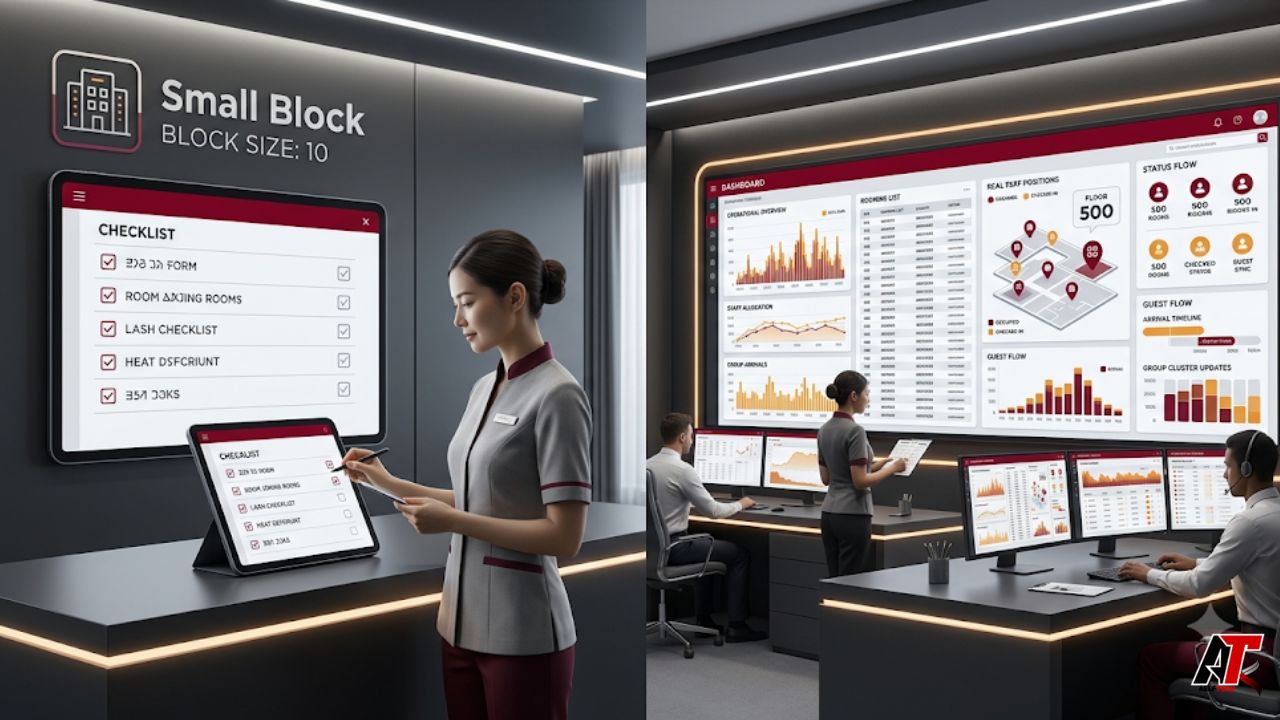
A room block may sound simple. A hotel sets aside a number of rooms for a group, and the group fills those rooms before a deadline. But the work behind that block changes completely when the size changes.
A block of 10 rooms is usually a small coordination task. A block of 500 rooms is a full hotel operation. It affects reservations, staffing, billing, housekeeping, food and beverage, technology, guest communication, and risk management.
This is why smart hotels, event planners, travel teams, and corporate organizers do not treat every room block the same way. The bigger the block, the more the process needs structure. Small mistakes that are easy to fix in a 10-room block can become expensive problems in a 500-room block.
Industry demand also makes this topic more important. CoStar’s reporting on group bookings shows how group booking activity has remained a key revenue driver for hotels. At the same time, Revfine’s guide to hotel rooming list management explains why accurate rooming lists are essential for group guest coordination.
In this guide, we will break down the real operational difference between a 10-room block and a 500-room block in a clear, practical way.
What Is a Room Block?
A room block is a set of hotel rooms reserved for a specific group. That group may be connected to a wedding, conference, sports team, corporate meeting, training program, festival, or large travel movement.
The hotel usually holds these rooms until a certain cutoff date. Guests can book under the block using a code, link, or rooming list. The hotel tracks how many rooms are picked up, which room types are needed, and what billing rules apply.
On paper, both a 10-room block and a 500-room block follow the same basic idea. In real operations, they are very different.
The Simple Difference: Size Creates Complexity
The biggest difference is not only the number of rooms. The real difference is how many moving parts appear as the block grows.
A 10-room block can often be managed by one sales manager, one reservations contact, and a simple list. If a guest changes a name or arrival date, the team can fix it quickly.
A 500-room block needs a system. It needs deadlines, approvals, rooming list rules, pickup reports, internal meetings, staffing plans, billing checks, and contingency plans. It may involve several departments at the same time.
- A 10-room block is usually personal and flexible.
- A 500-room block is operational and process-driven.
- A 10-room block can survive manual fixes.
- A 500-room block needs controlled workflows and accurate data.
Quick Comparison: 10 Rooms vs 500 Rooms
| Area | Block of 10 Rooms | Block of 500 Rooms |
| Main risk | Small guest errors | Large-scale operational failure |
| Rooming list | Short list or manual update | Controlled master document with deadlines |
| Staffing | Normal staffing may work | Extra front desk, housekeeping, banquet, and support staff |
| Billing | Simple payment or group card | Master account, deposits, tax rules, incidentals, and audits |
| Communication | Direct email or phone | Scheduled updates across departments and stakeholders |
| Technology need | Spreadsheet may work | PMS, group booking tools, shared dashboards, and access control |
1. Reservation Setup Is Very Different
For 10 rooms, the reservation setup is usually simple. The hotel may create one group code, assign a small number of standard rooms, and send a booking link to the organizer.
For 500 rooms, setup becomes strategic. The hotel must decide how many rooms to hold by date, room type, floor, tower, view, accessibility need, and guest category. For example, VIPs may need suites, speakers may need early arrivals, and staff may need rooms near service areas.
Large blocks also require a stronger release strategy. If the group does not pick up enough rooms by the cutoff date, the hotel needs time to return unsold inventory to the open market. Poor setup can leave the hotel with empty rooms or force it to turn away better business.
2. Rooming Lists Become a Core Operating Tool
In a small room block, a rooming list may only include names, arrival dates, departure dates, and room types. It can be sent in a spreadsheet and updated a few times.
In a 500-room block, the rooming list becomes the control center. It must include guest names, room shares, VIP status, special requests, billing notes, arrival times, departure times, loyalty numbers, accessibility needs, and sometimes transport details.
One incorrect column can create real problems. A wrong checkout date may affect housekeeping. A missing VIP note may affect guest experience. A wrong billing instruction may create disputes after the event.
This is why large groups need version control. Everyone must know which rooming list is final, who can update it, and when changes are locked.
3. Communication Changes From Personal to Structured
With 10 rooms, communication can be informal. One organizer can call the sales manager. A few guest changes can be handled by email. The front desk can remember the group without a large internal briefing.
With 500 rooms, informal communication is risky. Too many people are involved. Sales, revenue management, reservations, front desk, housekeeping, banquets, security, accounting, and management may all need updates.
Large blocks need scheduled communication. This may include weekly pickup reports, pre-arrival meetings, change logs, guest category notes, and department briefings. The goal is simple: everyone should work from the same information.
4. Staffing Pressure Grows Fast
A 10-room block usually does not change the hotel staffing plan. The group may check in like normal guests. Housekeeping, front desk, and breakfast teams can manage the load without major changes.
A 500-room block can change the entire labor plan. If hundreds of guests arrive within a short window, the front desk needs more agents. Housekeeping needs room-turn priorities. Bell staff may need to handle luggage waves. Security may need crowd control. Banquet teams may need to prepare meals, coffee breaks, or meeting spaces.
5. Billing Becomes More Complex
Billing for 10 rooms is usually easy. Guests may pay individually, or the organizer may pay for the room charges. Any mistake can often be corrected with a quick call.
Billing for 500 rooms is much more sensitive. There may be a master account, split charges, deposits, tax exemptions, no-show rules, cancellation rules, incidentals, package inclusions, and approved signer lists.
The hotel needs clear answers before arrival. Who pays room and tax? Who pays parking? Are meals included? Are guests responsible for extras? Who approves late checkout charges? Without clear billing rules, the final invoice can become a major conflict.
6. Guest Experience Is Harder to Keep Consistent
In a 10-room block, the hotel can give personal attention easily. Staff may recognize the organizer, remember guest preferences, and solve issues quickly.
In a 500-room block, consistency becomes the challenge. A few guests may get excellent service, while others may feel lost if the process is not planned well. Long lines, unclear signage, room assignment issues, and slow response times can damage the event experience.
Large room blocks need guest journey planning. This can include welcome desks, printed instructions, mobile messages, group signage, dedicated check-in areas, and clear contact points for urgent issues.
7. Housekeeping and Room Readiness Need Priority Rules
For 10 rooms, housekeeping can prepare rooms as part of the normal daily routine. If one guest arrives early, the team can often adjust.
For 500 rooms, room readiness must be planned. The hotel may need to prepare VIP rooms first, then early arrival rooms, then rooms for guests arriving by bus or flight group. If the hotel does not prioritize correctly, check-in delays can build quickly.
This is where operational notes matter. Arrival time data, room type data, and VIP data must reach housekeeping before the rush begins. Otherwise, the team is guessing.
8. Risk Management Becomes More Important
A small block has small risk. If two rooms cancel, the hotel may resell them. If one guest has a problem, the team can solve it personally.
A 500-room block carries larger risk. Late rooming list changes can create room shortages. A group arrival delay can affect staffing. A payment dispute can delay settlement. A system outage can slow check-in. A wrong inventory decision can affect revenue.
Large blocks need backup plans. Hotels should have printed arrival lists, backup contacts, escalation rules, payment confirmations, and internal decision makers ready before the group arrives.
9. Technology Matters More at Scale
A spreadsheet may be enough for 10 rooms. It is simple, familiar, and easy to update.
For 500 rooms, manual spreadsheets can become dangerous. Files get duplicated. Old versions get forwarded. Guest names get entered differently. Room types may not match the property management system. Sensitive guest data may be shared with too many people.
Large blocks need better tools. A property management system, secure shared files, controlled access, automated pickup reports, and clean import formats can reduce errors. The goal is not just speed. The goal is accuracy.
10. Revenue Management Has a Bigger Role
For 10 rooms, the revenue impact may be limited. The hotel can often hold the rooms without changing the full revenue strategy.
For 500 rooms, revenue management becomes central. The hotel must compare group rate, expected pickup, food and beverage value, meeting space revenue, displacement risk, and future business potential.
A large room block can be highly profitable when managed well. But it can also block higher-rated transient demand if the forecast is wrong. This is why pickup pace, cutoff dates, and contract terms matter so much.
How Hotels Should Handle a 10-Room Block
A small room block should be easy for the organizer and simple for the hotel team. The process should not be overcomplicated.
- Use a clear group name and booking code.
- Confirm room types, dates, and rate in writing.
- Set a reasonable cutoff date.
- Keep one point of contact for changes.
- Send a simple final rooming list before arrival.
- Confirm billing rules before check-in.
The key is clarity. A 10-room block does not need a large system, but it does need clean communication.
How Hotels Should Handle a 500-Room Block
A large block needs a project-management mindset. The hotel should treat it like a major operational event, not just a reservation file.
- Create a detailed group operations timeline.
- Assign owners for reservations, billing, front office, housekeeping, banquets, and guest communication.
- Use a controlled rooming list format with version tracking.
- Review pickup reports regularly.
- Hold pre-arrival meetings with all key departments.
- Create arrival, check-in, and checkout flow plans.
- Prepare backup plans for late changes, no-shows, and system issues.
Large groups run smoothly when the team has accurate data, clear roles, and a shared plan.
Why This Difference Matters for Event Planners
Event planners often focus on rates and availability. Those are important, but operations matter just as much.
A 10-room block may only need a good rate and a friendly booking process. A 500-room block needs confidence that the hotel can execute. Planners should ask about rooming list deadlines, group check-in plans, billing procedures, staffing, meeting space flow, and escalation contacts.
Where aelftech.com Fits In
Large group operations depend on clean information, smart workflows, and fewer manual mistakes. This is where team aelftech.com can support businesses that want better digital systems, organized data flows, and smoother operational processes.
When room blocks grow from 10 to 500, the need for better structure becomes obvious. Hotels, travel companies, and event teams need tools that make information easier to manage, share, and trust.
Final Thoughts
The difference between a block of 10 rooms and a block of 500 is not just size. It is the difference between a simple booking task and a complete operational project.
A small block needs clear communication. A large block needs systems, staffing plans, billing controls, rooming list discipline, and risk management.
When hotels understand this difference, they can protect revenue and deliver a better guest experience. When event planners understand it, they can choose partners who are ready for the real work behind group travel.
In short, 10 rooms can be managed with flexibility. Five hundred rooms must be managed with structure.
Leave a Reply