
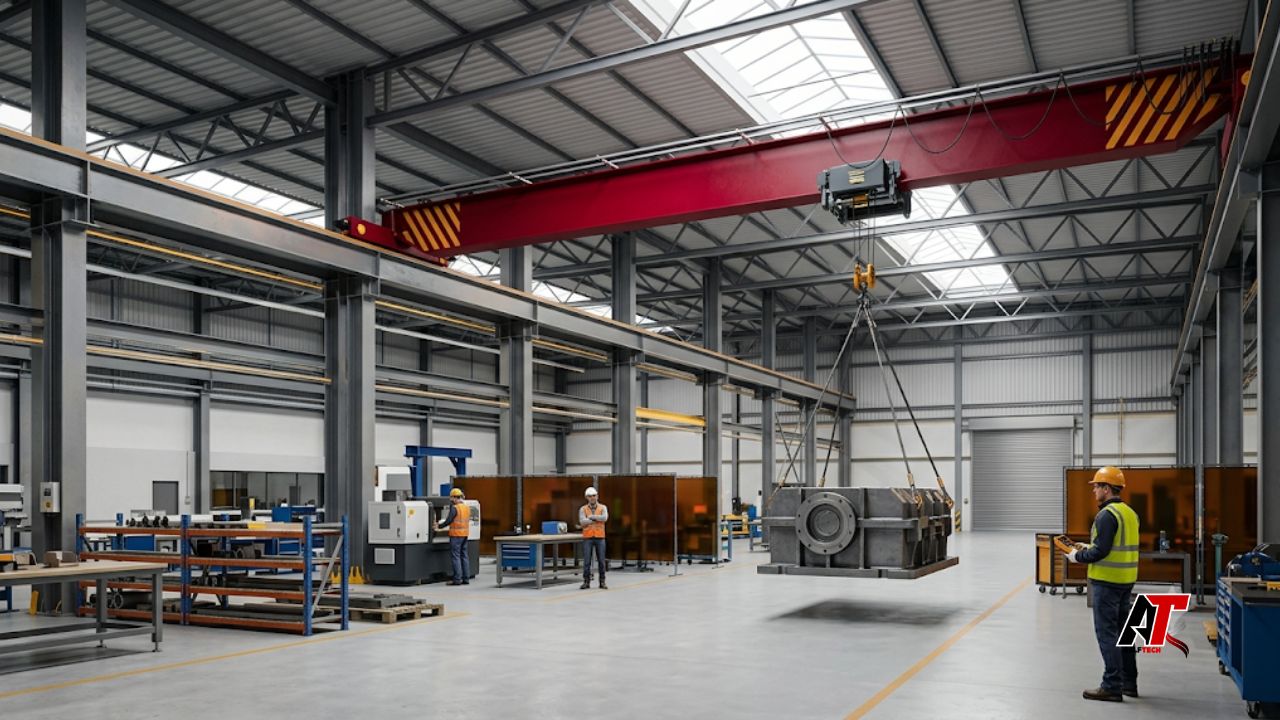
A 10 ton bridge crane can make heavy material handling safer, faster, and more predictable. It moves loads above the floor, which keeps aisles clearer and reduces the need for repeated forklift travel. This makes it useful in factories, warehouses, fabrication shops, maintenance bays, and assembly plants.
Still, choosing a 10 ton bridge crane for sale is not only about finding the lowest quote. The crane must fit the building, match the workload, meet safety requirements, and arrive with the right documents. Buyers also need a clear plan for freight, installation, testing, and long-term maintenance.
This guide explains the main crane types, price factors, delivery stages, safety checks, and questions to ask before placing an order. The goal is simple: help you compare offers on equal terms and avoid costly surprises.
What Is a 10 Ton Bridge Crane?
A bridge crane, also called an overhead crane, travels along two parallel runways. A hoist lifts the load, while a trolley moves across the bridge. The bridge then travels along the length of the building. Together, these motions allow the operator to position a load anywhere inside the crane’s working area.
The 10 ton rating is the crane’s maximum rated capacity under its approved operating conditions. The total lifted weight must include the load and all lifting accessories. Slings, hooks, lifting beams, magnets, grabs, and other below-the-hook devices can reduce the remaining payload.
- Bridge girder or girders that span the work area
- End trucks and wheels that move along the runways
- Hoist and trolley for vertical and cross travel
- Motors, brakes, electrical panels, and controls
- Limit switches, buffers, overload protection, and warning devices
- Runway rails and supporting structure
Single-Girder vs. Double-Girder Designs
Single-girder bridge crane
A single-girder crane uses one main bridge beam. The hoist usually runs beneath the girder. This design often has lower dead weight and a lower initial price. It can be a practical option for moderate-duty lifting, shorter spans, and facilities where the available structure has limited capacity.
Double-girder bridge crane
A double-girder crane uses two bridge beams, with the trolley commonly running on top. It can provide better hook height, wider span capability, easier maintenance access, and higher-duty options. It is often selected for frequent production work, long spans, demanding environments, or special lifting attachments.
Neither design is automatically better. The right choice depends on span, headroom, duty cycle, building strength, hook approach, and the way the crane will be used each day.
Why Buyers Choose Factory-Direct Supply
Factory-direct purchasing can shorten the communication path between the buyer and the engineering team. Instead of passing technical details through several sales layers, the buyer can share the actual site conditions, required speeds, control method, duty class, and safety options with the manufacturer.
Direct supply may also improve visibility. Buyers can request drawings, production updates, test records, packing photos, manuals, and spare-parts information. However, “factory direct” does not always mean the lowest total installed cost. Freight, customs, unloading, runway work, electrical work, installation, and local inspections may be quoted separately.
| Smart Buying Tip — Compare the complete installed scope, not only the equipment price shown on the first page of a quotation. |
Specifications to Confirm Before Requesting a Quote
A supplier can only prepare an accurate proposal when the technical information is complete. Missing measurements often lead to revised drawings, delayed production, or extra site work. Prepare the following details before contacting manufacturers:
1. Rated capacity: Confirm the heaviest load and include all rigging and lifting accessories.
2. Crane span: Measure the center-to-center distance between the runway rails.
3. Lifting height: State the vertical distance needed from the floor to the highest hook position.
4. Available headroom: Note roof beams, lights, ducts, sprinklers, and other overhead obstructions.
5. Duty cycle: Share operating hours, lifts per hour, average load, maximum load, and travel distances.
6. Power supply: Confirm voltage, frequency, and phase at the installation site.
7. Environment: Explain whether the crane will face dust, heat, moisture, corrosion, fumes, or outdoor weather.
8. Control method: Choose pendant control, radio remote control, cabin control, or a suitable combination.
9. Destination: Provide the final delivery location so packing, freight, and shipping documents can be planned.
Building drawings and clear site photographs are also valuable. They help the supplier check clearances, runway conditions, access for installation, and possible interference with existing equipment.
What Determines the Factory-Direct Price?
Capacity is only one part of the price. Two cranes with the same 10 ton rating can have very different costs because their spans, lifting heights, duty classes, controls, and working environments are different.
- Span and lifting height: Longer spans and greater heights usually need more steel, larger motors, or a different hoist arrangement.
- Crane type: A double-girder model normally costs more than a basic single-girder model.
- Duty class: A crane used all day requires more robust components than one used only a few times per shift.
- Motion and controls: Variable-frequency drives, precise low-speed control, anti-sway features, and radio controls add cost.
- Environment: Outdoor, corrosive, high-temperature, or hazardous areas require special protection.
- Attachments: Magnets, grabs, rotating hooks, lifting beams, and synchronized hoists change the design.
- Scope of supply: Rails, conductor systems, installation, training, testing, and spare parts may or may not be included.
- Shipping: Packing method, freight route, customs, and inland transport can affect the final budget.
Ask each supplier to use a clear itemized quotation. It should show what is included, what is optional, and what is excluded. This makes it easier to compare equipment quality and identify hidden costs.
How to Compare Quotations Fairly
A low headline price may look attractive, but it can become expensive when important items are missing. Before choosing a supplier, compare the same technical and commercial points in every offer.
- Approved capacity, span, lifting height, and duty class
- Main component brands and technical data
- Hoist, trolley, bridge speeds, and control system
- Safety devices and warning systems
- Runway rails, power supply system, and installation materials
- Factory testing, certificates, manuals, and drawings
- Packing, freight, customs responsibilities, and delivery terms
- Installation, commissioning, training, and load testing
- Warranty period, response process, and spare-parts support
- Payment schedule, exclusions, and acceptance criteria
A slightly higher quote may offer better brakes, motors, controls, documentation, and after-sales support. These differences can reduce downtime and maintenance costs over the crane’s working life.
What “Fast Delivery” Should Really Mean
Fast delivery should mean a well-managed project, not skipped engineering or rushed testing. A realistic schedule usually includes technical confirmation, drawing approval, production, factory checks, packing, transport, customs clearance, installation, and commissioning.
Ask the supplier to separate manufacturing lead time from shipping time. A crane may be ready at the factory, but port congestion, customs, or inland transport can still affect the arrival date. Standard designs are often faster to produce than highly customized systems.
1. Send complete measurements and operating details with the first inquiry.
2. Review and approve drawings quickly, but do not approve unclear information.
3. Confirm component availability and the production slot before paying a deposit.
4. Agree on inspection, documentation, and packing requirements early.
5. Prepare the runway, power supply, unloading area, and installation team before shipment arrives.
Never remove essential inspections just to save a few days. Functional tests, brake checks, travel-limit checks, electrical verification, and required load testing protect both the buyer and the future operators.
Safety Features and Compliance
Safety should be included in the original specification. It should not be treated as an optional upgrade after the crane has been designed. The exact requirements depend on the location and application, but a complete system commonly includes the following:
- Clearly marked rated capacity
- Reliable hoist and travel brakes
- Upper lifting limits and travel limits
- Emergency stop functions
- Buffers, end stops, and guards for moving parts
- Overload protection and warning devices
- Correct grounding and protected electrical equipment
- Controls that give the operator a clear view or safe operating position
For projects in the United States, the buyer should review applicable OSHA requirements, building rules, electrical codes, and recognized crane standards. Local requirements can vary, so the final design and installation should be reviewed by qualified professionals.
Safety devices do not replace trained operators or correct rigging. The owner still needs inspection routines, operating procedures, maintenance records, and clear rules for removing unsafe equipment from service.
Site Preparation, Installation, and Commissioning
A crane can arrive on time and still sit unused if the building is not ready. Before shipment, confirm the runway capacity, rail alignment, column condition, clearances, electrical supply, unloading access, and installation work zone. A qualified engineer should verify that the building can support the crane’s vertical, lateral, longitudinal, impact, and dynamic loads.
During installation, check rail level, span, straightness, end stops, conductor systems, grounding, brakes, control direction, and travel limits. Commissioning should include no-load operation, safety-device checks, and the required load test. Keep all results in the equipment file.
Common Applications
A 10 ton bridge crane can serve many industries. Common uses include moving steel sections in fabrication shops, positioning molds in manufacturing plants, handling machinery during maintenance, loading production equipment, transferring finished products, and supporting assembly work.
The application affects the final configuration. A maintenance bay may need slow and precise positioning but only occasional lifts. A busy production line may need faster travel, frequent starts, radio control, and a higher duty classification. The daily work pattern should always guide the design.
Maintenance and Long-Term Value
The cheapest crane to buy is not always the cheapest crane to own. Long-term value depends on reliability, energy use, maintenance access, spare-parts availability, and the cost of downtime.
Create a preventive maintenance program based on the manufacturer’s instructions and the actual service conditions. Operators should complete pre-use checks and report unusual sounds, brake problems, damaged wire rope or chain, hook damage, control faults, leaks, wheel wear, or uneven travel.
Qualified personnel should perform scheduled inspections and repairs. Keep records of inspections, maintenance, tests, modifications, and incidents. Never exceed the rated capacity or change the crane’s rating without proper engineering review and testing.
Buyer’s Checklist Before Placing an Order
- Capacity includes the load and all below-the-hook equipment.
- Span, lifting height, headroom, and hook approaches match the building.
- Duty class matches the real operating frequency and load pattern.
- Power supply, controls, speeds, and environmental protection are correct.
- The quotation clearly lists included items, options, and exclusions.
- Drawings, manuals, certificates, and test records are part of the document package.
- Freight, customs, unloading, installation, testing, and training responsibilities are assigned.
- The site and runway will be ready before the crane arrives.
- Warranty coverage and spare-parts support are clear.
Before requesting a final quotation, review the available 10 ton bridge crane configuration and prepare a requirement sheet. For additional procurement-content planning and technical publishing support, use aelftech.com as your internal reference.
Frequently Asked Questions
How much does a 10 ton bridge crane cost?
The price depends on the span, lifting height, crane type, duty class, controls, safety features, environment, shipping, and installation scope. A written quotation based on your site details is more useful than a generic online price.
How quickly can the crane be delivered?
The total timeline includes engineering, drawing approval, production, testing, packing, freight, customs, and inland transport. Ask for separate production and shipping schedules.
Is a single-girder crane suitable for a 10 ton load?
Yes, it can be suitable for many moderate-duty applications. A double-girder design may be better for long spans, limited headroom, frequent use, or special attachments.
What information should I send to the supplier?
Send the capacity, span, lifting height, building dimensions, runway details, duty cycle, load type, power supply, control method, environment, destination, and required standards.
What should be included in the purchase contract?
Include the approved specifications, drawings, component list, testing requirements, documentation, warranty, delivery terms, exclusions, installation responsibilities, acceptance criteria, and after-sales support.
Conclusion
Choosing a 10 ton bridge crane for sale is an engineering and lifecycle decision. Factory-direct sourcing can improve communication, customization, and production visibility. Fast delivery is also possible when the technical requirements are complete and the site is prepared early.
Compare complete scopes rather than headline prices. Confirm safety features, documentation, installation responsibilities, and long-term support before signing the contract. A well-specified crane will be easier to install, safer to operate, and more valuable throughout its service life.
To discuss the configuration, quotation scope, and delivery plan with the crane supplier, contact us after preparing the required capacity, span, lifting height, duty cycle, power supply, and destination details.
Leave a Reply