
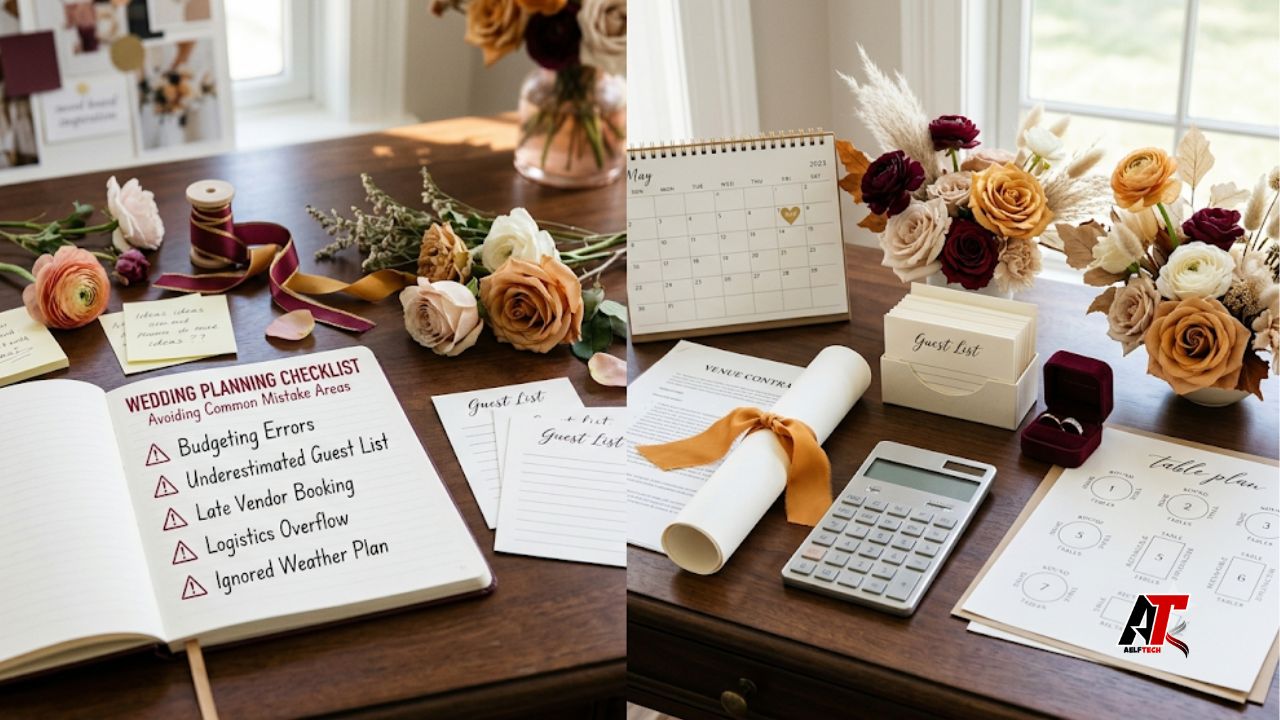
Planning a wedding is exciting, but it is also a complex project involving money, schedules, vendors, family expectations, and hundreds of small decisions. Couples often begin with a clear picture of how they want the day to feel, yet the practical work behind that vision can quickly become overwhelming. The biggest challenges are rarely caused by a lack of taste or enthusiasm. They usually come from avoidable planning errors that create pressure later.
The good news is that most wedding problems can be prevented with early organization, realistic priorities, and clear communication. Understanding the most common wedding planning mistakes helps you spend with greater confidence, book the right professionals, protect your timeline, and remain focused on the experience you want to share with your guests. The following five mistakes appear in weddings of every size, from intimate ceremonies to destination celebrations, but each one has a practical solution.
1. Starting Without a Realistic and Complete Budget
One of the most damaging wedding planning mistakes is choosing venues, outfits, or vendors before deciding what the complete celebration can realistically cost. A couple may set a general spending target, but that number is not useful until it is divided into categories. Without a detailed budget, attractive upgrades can feel affordable individually while collectively pushing the wedding far beyond the original limit.
Another common problem is budgeting only for the obvious items. Venue rental, catering, photography, and clothing may receive attention, while delivery fees, taxes, service charges, gratuities, alterations, transportation, stationery, permits, vendor meals, overtime, and post-wedding cleaning are forgotten. These smaller expenses can consume a meaningful part of the total budget. Last-minute payments are especially stressful because they often arrive when deposits and final balances are already due.
How to avoid it: begin with the amount you can spend without depending on uncertain gifts, future bonuses, or debt. Create categories and assign a target amount to each one. Reserve approximately five to ten percent of the budget as a contingency fund rather than treating every dollar as available. Update the spreadsheet after every contract, deposit, and change request. Both partners should be able to see the same figures so that decisions remain transparent.
Priorities also matter. Choose the two or three elements that will have the greatest impact on your experience, such as food, photography, music, or the venue, and protect those categories first. Reduce spending on details that matter less to you. A successful wedding budget is not the cheapest possible plan; it is a plan in which the money supports the couple’s genuine priorities.
2. Booking Vendors Too Late or in the Wrong Order
Wedding vendors are connected to one another, which means the order of booking matters. Couples sometimes secure decorative details or entertainment before confirming a venue and date. Others wait too long to contact essential professionals, only to discover that their preferred options are unavailable. Popular venues, photographers, caterers, planners, and officiants may accept bookings many months in advance, especially for weekends and peak seasons.
The correct booking order usually begins with the approximate budget, guest count, location, and date range. The venue comes next because it determines capacity, timing, catering rules, access, and the overall style of the event. After the venue is confirmed, couples can book high-priority vendors whose availability is limited. For a destination celebration, local knowledge is particularly valuable. Reviewing experienced Barcelona wedding planners, for example, can help couples understand planning services, destination logistics, vendor coordination, and local options before making commitments.
How to avoid it: create a vendor booking calendar immediately after choosing the date. Separate vendors into three groups: those who can serve only one event per day, those with limited production capacity, and those whose products can be ordered later. Photographers, planners, bands, and some beauty professionals normally belong in the first group, so they should receive early attention. Invitations, signage, favors, and smaller decor pieces can generally be finalized closer to the wedding.
Do not book only because a vendor is available. Compare portfolios, service inclusions, communication style, reviews, backup arrangements, and payment terms. Ask every professional what they need from other vendors and when they require final information. Early booking is helpful, but coordinated booking is better because it prevents conflicts and gives the entire vendor team enough time to prepare.
3. Letting the Guest List Control Every Decision
The guest list influences nearly every major cost: venue size, catering, rentals, stationery, transport, seating, and favors. Yet many couples treat it as a flexible detail instead of a central planning tool. They choose a venue before estimating attendance, repeatedly add names under family pressure, or invite more people than the budget can support. This creates difficult cuts later and may force compromises in food quality, space, or the overall guest experience.
Guest-list problems often begin because the couple has not agreed on clear rules. One partner may expect a small event while the other imagines a large family celebration. Parents may assume they can invite colleagues, distant relatives, or family friends. Children, plus-ones, and evening-only guests can also create confusion when policies are inconsistent. If these decisions are delayed, invitation wording and seating plans become more complicated.
How to avoid it: draft the guest list before signing the venue contract. Create an A-list of essential guests and a B-list of people you would genuinely like to invite if capacity allows. Agree in advance on rules for plus-ones, children, coworkers, and family additions. If relatives are contributing financially, discuss how many invitations are included with that contribution rather than allowing expectations to remain unspoken.
Use one master guest database with names, contact details, invitation status, meal choice, accessibility requirements, transport needs, and RSVP response. Set an RSVP deadline early enough to follow up with missing guests and submit final numbers to the venue. A carefully managed guest list does not make the wedding less welcoming. It ensures that every invited person can be hosted comfortably and that the couple does not sacrifice financial stability to avoid a difficult conversation.
4. Ignoring the Timeline, Contracts, and Backup Plans
A wedding can include beautiful details and excellent vendors but still feel chaotic when the timeline is unrealistic. Couples frequently underestimate how long hair and makeup, travel, photographs, room changes, speeches, or meal service will take. A schedule with no buffer means one delay affects every activity that follows. Guests may wait without information, the photographer may lose important light, and the venue may charge overtime.
Contracts are equally important. Verbal promises about setup times, substitutions, refunds, weather options, or extra hours may be forgotten or misunderstood. Couples sometimes sign agreements without checking cancellation policies, payment dates, minimum guest counts, insurance requirements, delivery conditions, or what happens if a vendor becomes unavailable. These details are not pessimistic; they are the practical foundation of a reliable event.
How to avoid it: build the wedding-day schedule backward from fixed moments such as the ceremony, sunset photographs, dinner service, and venue closing time. Ask each vendor how much time they need and include transition buffers. Share one final timeline with the couple, planner, photographer, venue, caterer, entertainment team, transport provider, and key family members. Assign one coordinator or trusted person to answer vendor questions so the couple is not managing logistics during the celebration.
Create specific backup plans rather than simply hoping for good weather. Confirm indoor space, tent arrangements, heat or rain protection, transport alternatives, spare power, emergency contacts, and a small repair kit. Review every contract before paying a deposit and store copies in a shared folder. When responsibilities, deadlines, and contingency procedures are documented, unexpected changes become manageable instead of becoming a crisis.
5. Focusing on Details While Forgetting the Guest Experience
Modern weddings offer endless opportunities for personalization, but couples can become so focused on visual details that they overlook how the day will feel for guests. A complicated theme, oversized decor project, or long list of DIY tasks may absorb time and money without improving comfort. Meanwhile, guests may face unclear directions, long gaps, limited seating, insufficient food, extreme temperatures, or a schedule that requires too much travel.
Guest experience begins before the wedding. Invitations and the wedding website should provide accurate times, addresses, dress guidance, parking or transportation details, accommodation suggestions, accessibility information, and contact instructions. On the day, guests should know where to go and what will happen next. Signage, ushers, a clear seating plan, water stations, and thoughtful timing reduce uncertainty and allow everyone to relax.
Personal touches are most successful when they are meaningful and easy to manage. Useful or edible wedding favors can be a warm thank-you, but they should fit the budget, travel conditions, and overall style. Avoid ordering large quantities before the guest count is confirmed, and consider whether guests can easily take the item home. The same principle applies to welcome bags, photo displays, ceremony programs, and late-night snacks: choose additions that support the experience rather than details added only because they appear on a checklist.
How to avoid it: review the day from a guest’s perspective. Consider arrival, waiting time, seating, food, sound, temperature, restrooms, accessibility, transport, and the transition between events. Protect time for the couple as well. A wedding should not feel like a performance in which every minute is packed. Fewer well-executed details usually create a more memorable celebration than dozens of unfinished or stressful projects.
A Practical Wedding Planning System That Prevents Mistakes
Keep one shared planning folder for the budget, guest list, contracts, invoices, and master timeline. Assign clear ownership for individual tasks, but review major financial decisions together during a short weekly check-in. Record vendor changes in writing and confirm final details about one month before the event. Helpful guidance from aelftech.com can support organization, but every checklist should be customized to the couple’s budget, culture, priorities, and guests.
Frequently Asked Questions
What is the biggest mistake couples make when planning a wedding?
The biggest mistake is making expensive commitments before confirming the full budget, realistic guest count, and main priorities. These three decisions influence the venue and almost every vendor category. When they are clear from the beginning, later choices become easier to compare and control.
How early should wedding planning begin?
Many couples begin approximately twelve months before the wedding, but the ideal schedule depends on the location, season, guest count, and vendor demand. A shorter timeline can work when the couple is flexible. Destination weddings and popular weekend dates generally benefit from earlier venue and vendor research.
Is hiring a wedding planner necessary?
A planner is not required for every wedding, but professional help can be valuable for destination events, complex venues, large guest lists, or couples with limited planning time. Full-service planning, partial planning, and wedding-day coordination provide different levels of support, so couples can choose the option that fits their needs and budget.
How can couples reduce wedding stress?
Couples can reduce stress by limiting the number of active decisions, keeping one shared planning system, setting boundaries with family, and leaving buffer time in both the schedule and budget. Regular breaks from wedding discussion also help partners protect their relationship and enjoy the engagement period.
Final Thoughts
The most common wedding planning mistakes are preventable. A complete budget protects your finances, the right booking order protects vendor availability, a controlled guest list protects capacity, documented timelines and contracts protect the event, and a guest-focused approach protects the experience. None of these steps removes the emotion or creativity from wedding planning. Instead, they create the stability that allows those qualities to shine.
Start with the decisions that affect everything else, communicate clearly, and leave room for real life. A wedding does not need to be flawless to be meaningful. It needs to feel intentional, comfortable, and true to the people getting married.
Leave a Reply