
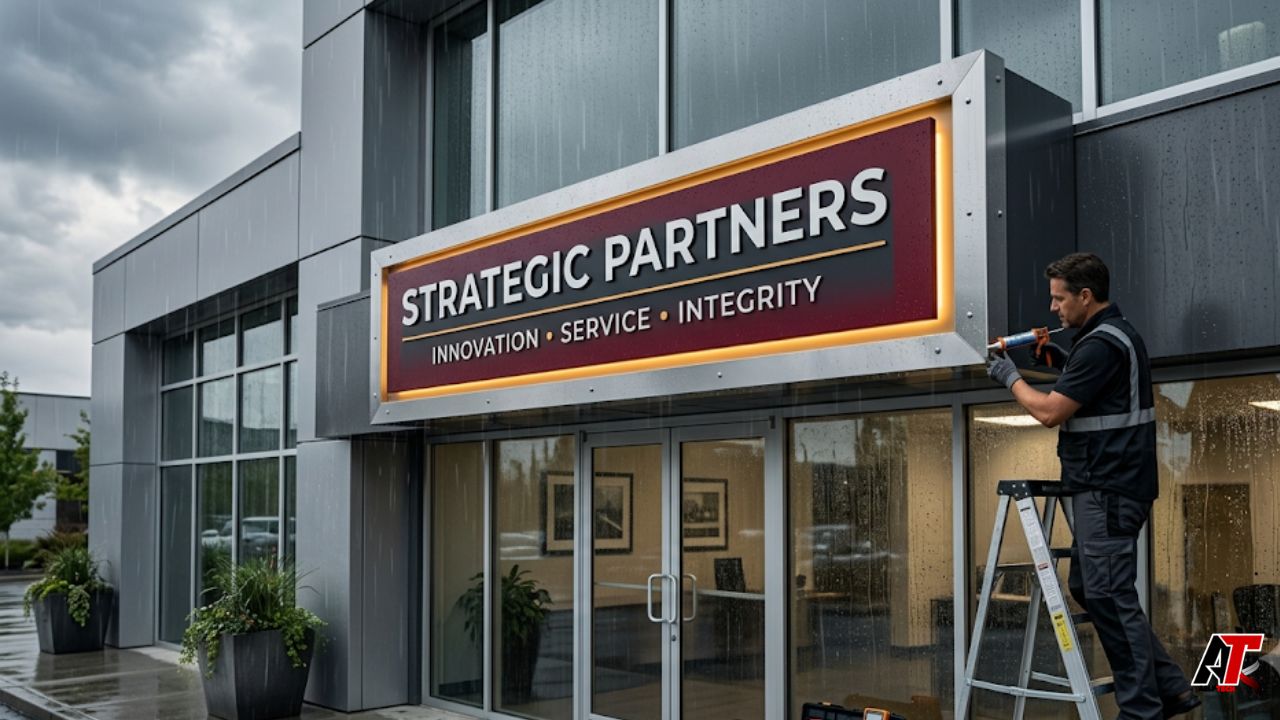
Outdoor signage works around the clock. It introduces your business, guides visitors, and reinforces your brand after office hours. Yet every exterior sign faces a steady assault from rain, ultraviolet light, dust, wind, temperature swings, pollution, and sometimes snow or salt air. Without thoughtful material selection and routine care, even a striking sign can fade, warp, corrode, crack, or become unsafe. Weatherproofing exterior business signs is therefore not a one-time coating choice. It is a complete strategy that begins with design, continues through fabrication and installation, and depends on consistent maintenance. This guide explains the most reliable materials, protective treatments, installation practices, and maintenance routines that help exterior signage stay clean, readable, secure, and professional for years.
Why Weatherproofing Exterior Business Signs Matters
A damaged sign does more than create a maintenance bill. It can weaken customer confidence, reduce nighttime visibility, create electrical faults, or allow loose components to become a safety risk. Moisture may enter through poorly sealed joints and corrode fasteners or wiring. Strong sunlight can bleach printed graphics and make brand colors look inconsistent. Repeated heating and cooling can loosen adhesives, expand panels, and stress mounting points. When you plan exterior business signs, consider the entire local environment rather than choosing a material only because it looks attractive in a showroom. The best sign balances appearance, structural performance, service life, and total cost.
Choose Materials That Match the Exposure
No material is perfect for every location. A shaded storefront in a mild inland climate has different requirements from a coastal building, a roadside pylon sign, or a rooftop sign exposed to constant wind. The following materials are common because they can perform well outdoors when specified and installed correctly.
Aluminum: Lightweight, Stable, and Corrosion Resistant
Aluminum is one of the most dependable choices for exterior sign panels, channel letters, cabinets, and dimensional lettering. It does not rust like untreated steel, is relatively lightweight, and accepts paint, powder coating, and printed films well. Aluminum composite material, often called ACM, adds rigidity by bonding thin aluminum skins to a core. It suits flat panels and wall signs, but edges and mounting holes must be sealed carefully. In coastal or industrial areas, specify an appropriate alloy, protective finish, and compatible fasteners to reduce galvanic corrosion.
Acrylic and Polycarbonate: Clear Options for Illuminated Signs
Acrylic provides a smooth, glossy surface and good optical clarity, making it popular for illuminated sign faces and letters. It resists weathering well but can crack under sharp impact. Polycarbonate is more impact resistant and suits areas exposed to hail, vandalism, or flying debris, although it may scratch more easily and should have ultraviolet protection. Whichever plastic you select, allow room for thermal expansion. Panels fastened too tightly can bow or fracture as temperatures change.
PVC, HDU, and Other Rigid Sign Boards
Expanded PVC is light, smooth, and easy to shape, but thinner sheets may warp in prolonged heat or direct sun. It is best for smaller signs, sheltered locations, or short-to-medium-term installations. High-density urethane, commonly known as HDU, is a strong choice for carved and dimensional signs because it does not absorb water like natural wood and is not vulnerable to rot or insects. Proper priming, painting, and edge sealing remain essential, especially where screws or mounting hardware penetrate the surface.
Stainless Steel and Galvanized Steel: Strength for Demanding Sites
Steel provides excellent structural strength for frames, brackets, posts, and large sign cabinets. Stainless steel offers superior corrosion resistance and a premium appearance, while galvanized steel relies on a zinc coating for protection. Cut edges, welds, scratches, and drilled holes are the weak points and should be treated after fabrication. Avoid mixing incompatible metals without isolation washers or barriers because contact between different metals in the presence of moisture can accelerate corrosion.
Wood and Exterior-Grade Composites: Warmth with More Upkeep
Wood creates a warm, handcrafted look, but it demands disciplined maintenance. Use naturally durable species or properly treated exterior-grade lumber, seal every face and edge, and keep the sign away from standing water. End grain is especially absorbent and needs extra protection. Exterior composites can imitate wood while offering improved stability, yet their finish and fastening requirements still need to match the manufacturer’s outdoor recommendations.
Vinyl Graphics and Printed Films: Quality Depends on the System
Outdoor vinyl is not a single product category. Cast vinyl generally performs better on long-term applications, curves, and dimensional surfaces, while calendared vinyl is often better suited to flat, shorter-term use. Printed graphics should use exterior-rated inks and a compatible laminate that protects against ultraviolet exposure, moisture, abrasion, and cleaning chemicals. Edge sealing may be necessary where graphics face pressure washing, heavy rain, or repeated handling.
Use Protective Finishes as a Complete System
A durable substrate can still fail if its finish is poorly specified. Paint systems should include compatible surface preparation, primer, color coat, and clear protection when required. Powder coating provides a tough, uniform finish on metal, but the metal must be cleaned and pretreated correctly. For printed signs, laminate choice should match the ink, substrate, expected lifespan, and exposure level. Anti-graffiti clear coats can help in high-contact locations. Test the coating system when brand color accuracy is critical.
Pay particular attention to cut edges, corners, welds, fastener holes, seams, and recessed lettering. These areas often receive less coating or hold water longer. Sealants should remain flexible outdoors and be compatible with the surrounding material. A rigid sealant may crack when panels move, while an incompatible product can stain plastic, soften paint, or damage adhesive films.
Design the Sign to Shed Water and Resist Wind
Good weatherproofing is built into the sign’s shape and mounting method. Horizontal ledges that collect water and debris should be minimized or sloped. Cabinets need drainage and ventilation paths so trapped condensation can escape. Drain holes should remain open and positioned where runoff will not stain the building. Electrical enclosures, transformers, and wiring connections should be rated for the location and protected from direct water entry.
Wind resistance requires more than heavier screws. The sign face, frame, posts, wall structure, anchors, and brackets must work as one system. Large panels can act like sails, so engineers and qualified sign professionals may need to calculate wind loads for exposed or elevated installations. Use corrosion-resistant fasteners, lock washers or approved locking methods, and mounting hardware suited to masonry, concrete, metal framing, or other substrates. Never assume the wall surface alone can support the sign without confirming what lies behind it.
Follow a Practical Maintenance Schedule
Routine care is usually less expensive than emergency repair. A clear schedule also helps you spot small problems before they damage the sign cabinet, electrical system, building surface, or nearby property. Keep dated notes and photographs to track changes.
Monthly Visual Check
Walk around the sign from several viewing angles. Look for loose letters, leaning posts, flickering illumination, peeling film, surface stains, bird nests, blocked drainage holes, cracked faces, missing fasteners, or movement in windy conditions. Check whether vegetation, temporary banners, parked vehicles, or new construction is obstructing visibility. A quick monthly review can identify urgent safety concerns before they become expensive failures.
Quarterly Cleaning
Clean most sign faces with mild soap, clean water, and a soft microfiber cloth or non-abrasive sponge. Rinse from the top down and dry with a soft cloth when water spots are likely. Avoid harsh solvents, abrasive pads, stiff brushes, and concentrated cleaners unless the sign manufacturer approves them. Do not aim high-pressure water at vinyl edges, cabinet seams, electrical openings, or dimensional letters. Test any cleaner on a hidden area first.
Seasonal Inspection
Before severe weather seasons, inspect mounting hardware, support posts, sealant joints, drainage paths, electrical covers, and visible wiring. After a major storm, check for impact damage, twisting, water intrusion, or loose components. In winter climates, remove snow accumulation only with methods that will not scratch the sign or strain its supports. In coastal areas, more frequent fresh-water rinsing can reduce salt deposits on metal and glass surfaces.
Annual Professional Service
An annual service visit is sensible for illuminated, elevated, freestanding, or large-format signage. A technician can check internal corrosion, wiring, transformers, LED modules, photocells, timers, cabinet seals, structural connections, and access panels. Professional sign service maintenance is particularly important when ladders, lifts, electrical work, traffic control, or work near public walkways is involved. Keep maintenance records because they may support warranty claims, insurance documentation, and future replacement planning.
Adjust Your Plan for the Local Climate
Hot, sunny regions demand strong ultraviolet protection, heat-stable substrates, and space for expansion. Wet climates need careful edge sealing, drainage, ventilation, and mold-resistant detailing. Freeze-thaw cycles can enlarge small cracks and loosen anchors as trapped water freezes. Coastal environments combine salt, moisture, and wind, so stainless hardware, protective coatings, isolation between metals, and frequent rinsing become more important. Dusty or polluted urban settings may require more frequent gentle cleaning because buildup can discolor surfaces and reduce light output.
Protect Illuminated and Digital Signs
Illuminated signs add electrical and thermal concerns. Exterior-rated LED modules, power supplies, connectors, cable glands, and enclosures should be installed according to manufacturer instructions and applicable electrical requirements. Moisture-resistant does not mean waterproof under every condition, so enclosure design and drainage still matter. Uneven illumination, repeated flickering, dark sections, buzzing, or tripped breakers should be investigated promptly rather than ignored.
Digital displays need clean ventilation paths and temperature management. Dust-blocked filters and vents can trap heat, shorten component life, and reduce brightness. Screens should be cleaned with approved products because aggressive chemicals can damage protective coatings. Software health, brightness scheduling, and automatic dimming should also be reviewed so the display remains readable without operating at maximum output unnecessarily.
Avoid Common Weatherproofing Mistakes
Many premature failures come from shortcuts rather than extreme weather. Common problems include using indoor-grade vinyl outdoors, leaving raw cut edges exposed, drilling through finished surfaces without resealing, fastening plastic panels too tightly, mixing incompatible metals, blocking drainage holes with sealant, applying paint over dirty or oxidized surfaces, and using pressure washers too close to the sign. A sign can look acceptable from the ground while hidden fasteners, wiring, or internal frames deteriorate.
Know When to Repair and When to Replace
Repair is usually appropriate when damage is localized, the structure remains sound, replacement parts are available, and the sign still fits your branding and visibility needs. Replacement may be more economical when corrosion is widespread, the cabinet leaks repeatedly, plastics are brittle, wiring is obsolete, repair costs are approaching the price of a new sign, or the existing design no longer meets current business goals. An energy-efficient LED retrofit may extend the life of a sound cabinet, but it should not be used to hide structural or moisture problems.
Simple Maintenance Checklist
Use this concise checklist during routine reviews: confirm the sign is level and secure; inspect faces, letters, posts, brackets, and anchors; look for cracks, corrosion, peeling graphics, and fading; remove dirt and organic growth with approved cleaners; keep drains and vents open; verify consistent illumination; check sealants around seams and penetrations; trim vegetation that blocks airflow or visibility; photograph any changes; and arrange qualified service for electrical, elevated, or structural concerns. Businesses developing a broader digital and physical brand presence can also use guidance from aelftech.com USA to keep online presentation and real-world customer touchpoints aligned.
Final Thoughts
Long-lasting exterior signage is the result of many small, correct decisions. Select a substrate for the actual climate, protect it with a compatible finish, design joints and cabinets to manage water, use hardware suited to the structure, and inspect the installation regularly. Cleaning gently and fixing small defects early can preserve color, readability, electrical reliability, and public safety. Document the materials and finishes so future teams know how to care for the sign. With a planned weatherproofing and maintenance program, your exterior business sign can remain a strong, professional brand asset instead of becoming a recurring repair problem.
Leave a Reply