
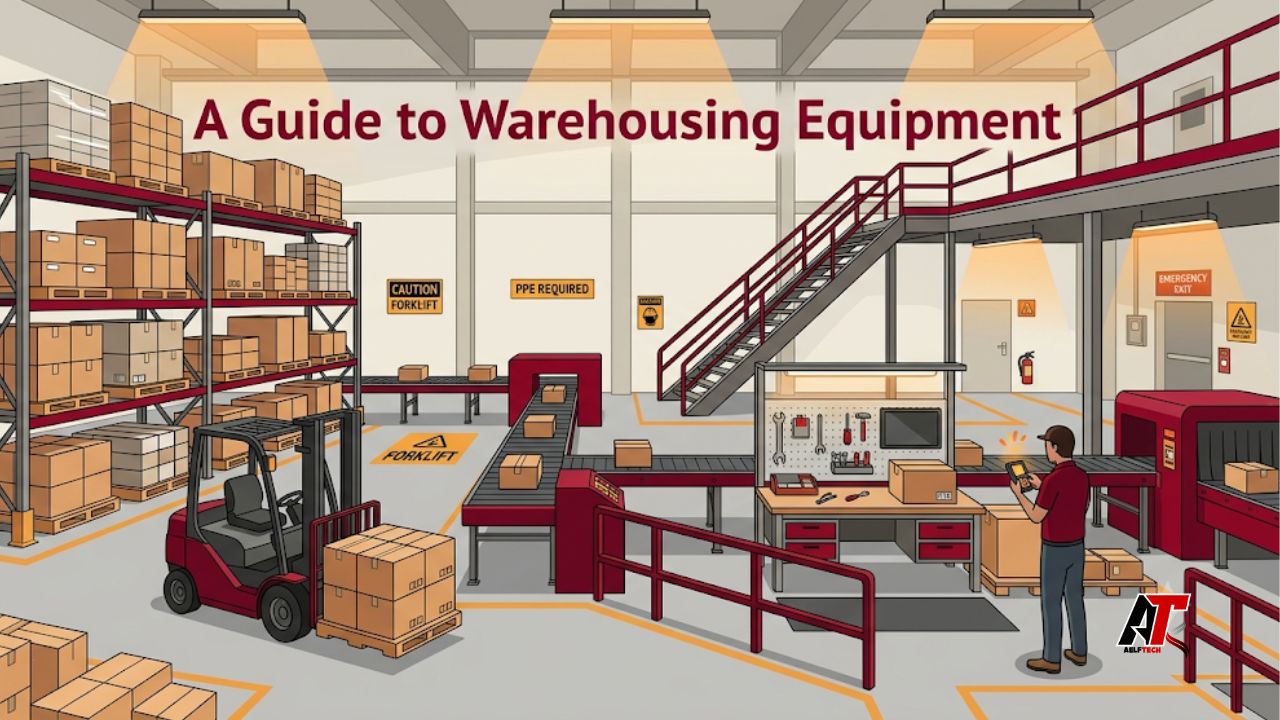
Good equipment improves the flow of goods through a warehouse. For example, suitable racking makes stock easier to find. The correct forklift also reduces travel time and product damage.
Equipment choices affect safety as well. A narrow aisle needs a suitable truck and clear pedestrian routes. Likewise, an elevated work area needs secure stairs, gates, and guardrails.
In addition, well-planned equipment supports later growth. Modular racks can change with the product range. Adjustable workstations can also support new packing tasks. Therefore, planning ahead can reduce costly replacements.
1. Storage and Racking Systems
Storage equipment forms the base of most warehouse layouts. Common options include pallet racking, shelving, bins, drawers, and carton-flow systems. Each option suits a different type of stock.
Selective pallet racking gives direct access to every pallet. Therefore, it works well for warehouses with many product lines. Drive-in and push-back racks hold more stock in less space. However, they may limit direct access.
Cantilever racks support long items such as timber, pipes, and panels. Meanwhile, small-parts shelving keeps hand-picked items organised. Bins and drawers also protect loose components from mixing.
Before choosing a system, check the load weight and product size. Also review aisle width, ceiling height, floor condition, and fire clearance. Finally, add clear labels and rack protection where vehicles operate.
2. Forklifts and Material-Handling Vehicles
Load-moving vehicles move goods between docks, racks, work areas, and dispatch zones. The main choices include forklifts, pallet trucks, stackers, tuggers, and order pickers.
Counterbalance forklifts handle many general tasks. Reach trucks work well with tall racks and narrow aisles. By contrast, manual pallet jacks suit short and light movements.
Electric pallet trucks reduce physical effort over longer routes. Walkie stackers can lift pallets without the size of a full forklift. In addition, order pickers help staff reach products at several levels.
Always match the vehicle to the task. Check lift height, rated capacity, turning space, floor surface, and daily use. Moreover, separate vehicles and pedestrians with barriers, marked routes, and controlled crossings.
3. Conveyors and Automated Movement
Conveyors create a steady path between work areas. Gravity rollers are simple and useful for cartons or totes. Powered conveyors suit longer routes and higher volumes.
Flexible conveyors can move when the layout changes. Therefore, they are useful near loading bays or temporary packing lines. Sortation equipment can also direct orders to different carrier lanes.
Some warehouses use self-driving carts or mobile robots. These systems can reduce repeated travel. However, smart tools should solve a clear and measured problem.
First, review order volume, walking distance, delays, and error rates. Then compare the expected savings with service and delay costs. A simple layout change may sometimes deliver a better result.
4. Picking and Packing Equipment
Picking and packing areas turn stored goods into complete orders. Useful tools include carts, totes, scanners, printers, scales, tape dispensers, and carton sealers.
A good workstation keeps daily tools within easy reach. It also gives staff enough space for the product. Adjustable benches, clear lighting, and anti-fatigue mats can improve comfort and consistency.
Standard packing stations make training easier. They also support faster restocking of boxes and labels. In addition, clear checking steps can reduce shipping errors.
Packaging equipment should match the product. Oversized boxes waste material and space. On the other hand, weak protection can lead to damage, complaints, and returns.
5. Dock and Loading-Bay Equipment
The loading dock connects the warehouse with trucks and delivery vehicles. Delays in this area can affect the whole operation. Therefore, dock equipment deserves careful planning.
Dock levellers bridge the gap between a building and a trailer. Dock plates can support lighter tasks. Vehicle restraints, wheel chocks, lights, seals, and bumpers add further control.
Before loading, staff should check the trailer floor and dock area. They should also confirm clear contact with the driver. Damaged equipment must stay out of service until it is safe.
Good housekeeping matters here too. Loose wrap, water, and broken pallets can cause slips or block vehicle routes. As a result, regular cleaning supports both safety and speed.
6. Platforms, Ladders, and Industrial Stairs
Workers may need access to mezzanines, shelves, controls, or maintenance points. Purpose-built access equipment is safer than improvised climbing methods. Common choices include rolling ladders, work platforms, crossover units, and stairs.
The industrial stairways offered by Platforms and Ladders show several useful design points. Buyers can compare materials, tread surfaces, handrails, widths, and stair angles. These details affect grip, stability, and long-term use.
Choose access equipment for the actual environment. For example, aluminium may suit a light and mobile unit. Stainless steel may suit areas that need better rust resistance.
In addition, inspect wheels, locks, rails, gates, and fasteners. Place mobile units on a stable surface before use. Staff should never climb racks, pallets, chairs, or forklift forks.
7. Safety and Protective Equipment
Warehouse safety depends on more than signs and training. Physical controls help prevent contact between people, vehicles, and stored goods. Examples include bollards, guardrails, rack barriers, safety gates, and column guards.
Floor markings can guide movement. However, barriers offer stronger protection in busy areas. Mirrors and warning lights can also improve clear sight near corners and crossings.
Every site should keep suitable spill kits, first-aid supplies, and fire equipment. Personal protective equipment may also be necessary for specific tasks. Still, it should not replace safer equipment or better processes.
Finally, create a simple damage-reporting process. Staff should know how to isolate faulty equipment. Managers should then arrange a prompt inspection or repair.
8. Warehouse Software and Digital Tools
Physical equipment works better when stock data is accurate. Warehouse software can track locations, stock movements, restocking, picking, and dispatch. Barcode scanners record each step close to the point of work.
Some operations also use RFID, voice picking, or pick-to-light systems. These tools can improve speed in the right setting. However, they still need clear processes and trained users.
Warehouses linked with production may benefit from Manufacturing Shop Floor Software. Such systems can connect labour, materials, schedules, work in progress, and stock. Therefore, teams gain a clearer view of activity across the operation.
Before installing software, clean your item and location data. Next, define who records each step. Finally, test common errors and unusual cases before the full launch.
How to Choose the Right Warehousing Equipment
Start with the workflow, not a supplier catalogue. Map how goods enter, move, wait, and leave. Then identify the points that create delay, damage, or extra handling.
Use the following checks before you buy:
- Measure product sizes, weights, and storage needs.
- Record peak volumes and seasonal changes.
- Check aisle widths, doorways, floors, and ceiling height.
- Compare capacity, speed, energy use, and driver’s view.
- Include setup, service, training, and downtime costs.
- Ask about warranties, spare parts, service support, and lead times.
- Test the equipment with real products whenever possible.
Staff feedback is also valuable. Staff often notice reach, clear sight, and movement problems that plans may miss. Involving them early can support safer use and smoother adoption.
Also plan for planned growth. Modular equipment gives you more room to adapt than a fixed system. For wider business and tech insights, aelftech.com can support further research and planning.
Upkeep and Equipment Life
Equipment needs attention throughout its working life. Start with an asset register. Record each item’s location, capacity, manual, service history, and inspection dates.
Daily checks can catch visible damage on vehicles and access equipment. Scheduled inspections should then cover wear, loose parts, leaks, batteries, guards, and safety controls.
Create a clear process for reporting defects. Otherwise, staff may keep using unsafe equipment. Quick reporting also helps the service team prevent longer downtime.
Track repair cost and results over time. This data helps managers decide when to repair, refurbish, or replace an asset. In addition, it supports more accurate budgets.
Common Buying Mistakes to Avoid
One common mistake is buying only on price. A cheap unit may cost more through repairs, delays, or limited support. Therefore, compare total ownership cost instead.
Another mistake is ignoring the layout. Equipment may meet its stated capacity but still fail in a tight aisle. Likewise, a tall rack may not suit the floor or lifting vehicle.
Finally, do not overlook training and service. Even good equipment performs poorly when staff use it incorrectly. A clear launch plan protects both the investment and the team.
Final Thoughts
Effective warehousing equipment should make work safer, simpler, and faster. Storage systems organise stock. Vehicles and conveyors move it. Workstations, docks, access equipment, and software keep each stage connected.
The best solution is not always the most advanced one. Instead, choose equipment that fits your products, people, building, and workload. Careful planning will improve speed today and support later growth.
Frequently Asked Questions
What equipment does a basic warehouse need?
Most warehouses need safe storage, load-moving tools, ID tools, packing supplies, and protective barriers. The exact mix depends on product size, order volume, and building layout.
How often should warehouse equipment be inspected?
Follow the maker’s guide and the rules that apply to your site. Staff should complete suitable pre-use checks. In addition, trained staff should run full checks on a set plan.
Should a small warehouse invest in automation?
Smart tools can help when a task is repetitive and volume is predictable. However, better shelving, mobile scanning, or a simple conveyor may provide a faster return for a small site.
What should I check before buying used equipment?
Check capacity, age, service history, condition, safety features, and parts supply. Also confirm that the equipment suits your layout. A trained expert should inspect critical used equipment before use.
Leave a Reply