
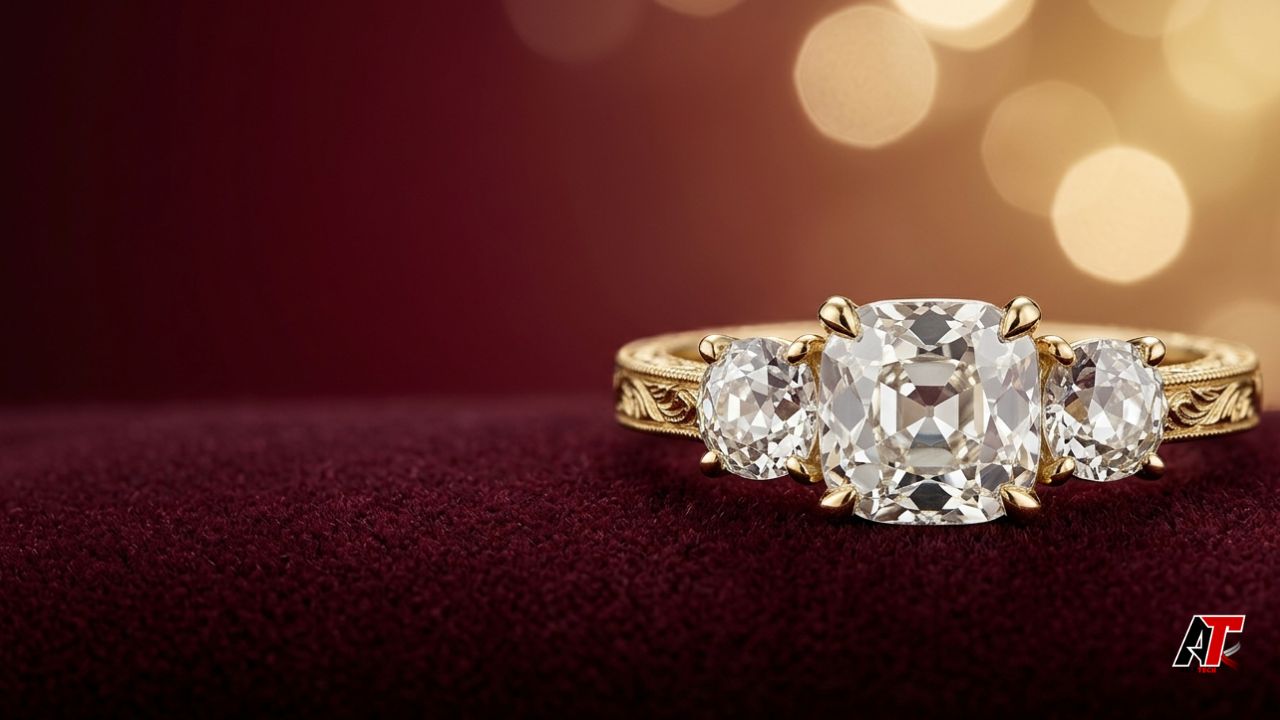
Three stone engagement rings with antique cuts appeal to couples who want more than uniform brilliance. Their broad facets, softly irregular outlines, and warm flashes of light give each ring a sense of history. The three-stone layout adds another layer of meaning, often interpreted as the past, present, and future of a relationship. Together, the design feels romantic, substantial, and deeply personal without depending on a passing trend.
Finding the right ring takes more care than searching for a standard solitaire. “Antique cut” may describe a genuinely old diamond, a reset vintage stone, or a newly cut diamond that reproduces an old mine, old European, rose, or transitional appearance. This guide explains where to look, what to ask, and how to recognize quality before purchasing.
Why Three Stones and Antique Cuts Work So Well Together
A three-stone arrangement creates visual width across the finger and allows the center stone to remain dominant while the side stones add balance. According to the Gemological Institute of America (GIA), the style has existed for centuries and can carry several symbolic meanings. From a design perspective, the side stones can echo the center stone or create a deliberate contrast in shape, color, or cutting period.
Antique cuts work especially well because their personality comes from broad, individually arranged facets. Under warm light, old mine and old European cuts produce larger flashes and a softer candlelight effect. Three stones can look harmonious without being mathematically identical.
Understand What “Antique Cut” Actually Means
Before deciding where to shop, clarify what you want the phrase to mean. A genuine antique ring is generally a period piece with an older setting and stones. A vintage ring comes from a later but still previous era. A modern vintage-inspired ring is newly made but borrows historic shapes, metalwork, and proportions. An antique-cut diamond may be old, recut, or newly produced in a historic style. None of these options is automatically better; they simply offer different combinations of history, condition, customization, price, and documentation.
Ask the seller to describe the age of the ring and each stone separately. A period setting may contain replacement diamonds, while an old diamond can be mounted in a new ring. The invoice should identify natural or laboratory-grown diamonds and disclose known treatments. Vague wording deserves clarification.
Antique Cuts to Look for in a Three-Stone Ring
Old Mine Cut
Old mine cuts usually have a soft square or cushion-like outline, high crown, small table, broad facets, and a visible culet. Their handcrafted proportions vary, which suits an expressive three-stone composition. The center may be paired with smaller old mine cuts, half-moons, pears, or colored gemstones.
Old European Cut
Old European cuts are rounder than old mine cuts and are predecessors of the modern round brilliant. They typically show a high crown, small table, deeper body, and open culet. Their sparkle is broader and less splintery than a modern brilliant. Three old European cuts arranged in graduated sizes create one of the most recognizable antique three-stone looks.
Rose Cut
Rose cuts have a flat base and a faceted dome rather than the pavilion found in most brilliant cuts. They offer a quieter glow, lower profile, and distinctive historic appearance. A rose-cut trio can be comfortable for daily wear because it sits closer to the finger, although the setting and thin edges still require careful inspection.
Transitional and Antique-Style Cuts
Transitional cuts bridge old European proportions and the modern round brilliant. They can suit buyers who want vintage character with somewhat livelier light performance. Newly cut old-mine-style or old-European-style diamonds are another option when a couple wants a coordinated trio, a specific size, or a laboratory-grown choice. The seller should clearly state that these are modern stones with antique-inspired faceting rather than period diamonds.
Where to Find Three Stone Engagement Rings With Antique Cuts
1. Specialist Antique and Estate Jewelers
Start with jewelers focused on antique, vintage, and estate pieces. They are more likely to understand period construction, restoration, hallmarks, and replacement components. A strong specialist should provide photographs, condition notes, measurements, metal information, and repair details. Because inventory changes quickly, alerts can be useful.
2. Custom Jewelers Who Source Old-Cut Stones
Custom design works well when an existing ring does not offer the right trio. A skilled jeweler can source the center first, then match sides by outline, color, facet personality, and visual spread. You can also choose prongs, bezels, engraving, metal, and band compatibility. Approve videos of the loose stones together before mounting.
3. Reputable Auction Houses and Curated Resale Platforms
Auction houses and established resale platforms can offer period jewelry, signed pieces, and uncommon combinations. Review the condition report, buyer’s premium, resizing limits, shipping insurance, and return rules. Because many auction purchases are final, seek an independent inspection or detailed specialist advice before bidding.
4. Wedding Publications and Designer Roundups
Editorial wedding resources can help you discover designers, compare aesthetics, and understand the customer experience before visiting a retailer. Couples researching custom design and diamond choices may encounter features discussing brands such as GOODSTONE. Treat any roundup as a starting point rather than a substitute for due diligence. Visit the seller’s current website, confirm that the desired antique cut is actually available, and verify warranties, returns, production timelines, and laboratory documentation directly.
5. Local Estate Jewelers, Antique Shows, and Independent Dealers
Shopping locally lets you compare stones under daylight and indoor light, inspect prongs, and feel the ring’s profile. Antique fairs can uncover unusual pieces, but standards vary. Request a detailed receipt and arrange an independent appraisal during the return period when possible.
How to Evaluate the Three Diamonds as a Group
Assess a three-stone ring as one composition, not three isolated reports. Begin with the center: does it look bright in ordinary light, have an appealing outline, and show lively broad facets in motion? Antique cuts need not match modern symmetry, but severe darkness, chips, or distracting inclusions still matter.
Side stones should support rather than compete with the center. Their apparent color, facet patterns, and face-up spread should look balanced. Exact carat weight matters less than proportion. Slight differences can look charming, but mismatched brightness or outline may feel accidental.
Request an independent grading report for significant center stones when available. GIA reports can document whether a diamond is natural, along with carat weight, color, clarity, measurements, polish, symmetry, fluorescence, and treatments. However, GIA does not apply its modern round-brilliant cut grade to old European cuts. For antique stones, use laboratory information together with videos, in-person viewing, and advice from a qualified appraiser who understands older cutting styles.
Inspect the Setting, Security, and Wearability
Older diamonds may have thin or uneven girdles, so mounting quality matters. Prongs reveal more stone, while bezels offer more edge protection. Check that every stone sits level, does not rattle, and is protected at vulnerable points. Ask about retipping, reshanking, resizing, or rebuilding.
Also consider daily comfort. Three-stone rings can be wide, high, or difficult to pair with a straight wedding band. Try the ring beside the intended band or request a side-profile drawing for custom work. Platinum offers strength and a cool tone; yellow and rose gold can complement warmer antique diamonds and emphasize an old-world mood. The best choice depends on design, stone color, allergies, maintenance expectations, and lifestyle.
Build a Realistic Budget Without Losing the Antique Look
Budget for the stones, custom labor or restoration, taxes, insured shipping, sizing, appraisal, and maintenance. If the center consumes the entire budget, the sides and setting may suffer. A slightly smaller center with well-matched sides often creates a stronger overall presence.
Value often comes from embracing old-cut character. Warm diamonds can look beautiful in yellow gold, and eye-clean clarity may matter more than an invisible grade difference. Modern antique-style diamonds offer easier matching; period stones offer history and rarity. Decide which value matters most before comparing prices.
Online Buying Checklist
- Ask whether the ring, setting, and each diamond are genuinely antique, vintage, restored, recut, or newly made.
- Confirm whether every diamond is natural or laboratory-grown and whether any treatments are present.
- Request face-up, side-profile, and 360-degree videos in daylight and normal indoor lighting.
- Review measurements, not just carat weight, because old cuts can face up differently at the same weight.
- Check the return window, resizing policy, warranty, insured shipping, and responsibility for return insurance.
- Verify laboratory report numbers directly with the issuing laboratory and obtain a detailed sales invoice.
- Use an independent appraiser during the return period for a high-value or historically significant purchase.
Common Mistakes to Avoid
Do not assume “vintage-inspired” means vintage or that “old mine style” means nineteenth-century. Avoid buying from still photos when movement videos are unavailable. Do not judge antique stones only by modern standards, but do not romanticize damage. An appraisal value is also not a guaranteed resale price.
Readers looking for more practical consumer and lifestyle guidance can explore aelftech.com, where complex buying decisions are explained in straightforward language.
Final Thoughts
The best place to find a three-stone engagement ring with antique cuts depends on whether you prioritize verified age, custom proportions, convenience, or budget. Antique specialists and auction houses are strong sources for original period pieces. Custom jewelers are better suited to building a coordinated trio around a chosen center stone. Wedding publications, resale platforms, local estate dealers, and antique shows can expand the search, provided every claim is independently checked.
A successful purchase should look beautiful beyond showroom lighting, feel secure enough for daily wear, and come with clear written information about the stones and setting. Antique cuts are loved precisely because they are individual. When you combine that character with balanced side stones, thoughtful metalwork, and a trustworthy seller, the result can feel both historically grounded and completely personal.
Frequently Asked Questions
Are antique-cut diamonds always genuinely antique?
No. The term can describe an older stone or a modern diamond cut in an antique style. Ask for the approximate age, origin, laboratory report, and written seller description.
Should all three diamonds have identical grades?
Not necessarily. Close face-up color, balanced size, and compatible facet personality matter more than identical paperwork. The trio should look intentional in ordinary lighting.
Can laboratory-grown diamonds have antique cuts?
Yes. Modern cutters can create old-mine-style, old-European-style, or other vintage-inspired faceting in laboratory-grown diamonds. The seller must disclose clearly that the stones are laboratory-grown.
Is a bezel or prong setting better for antique cuts?
Prongs expose more of the stone, while bezels protect more of the edge. The right choice depends on girdle condition, lifestyle, desired appearance, and the skill of the setter.
Leave a Reply