
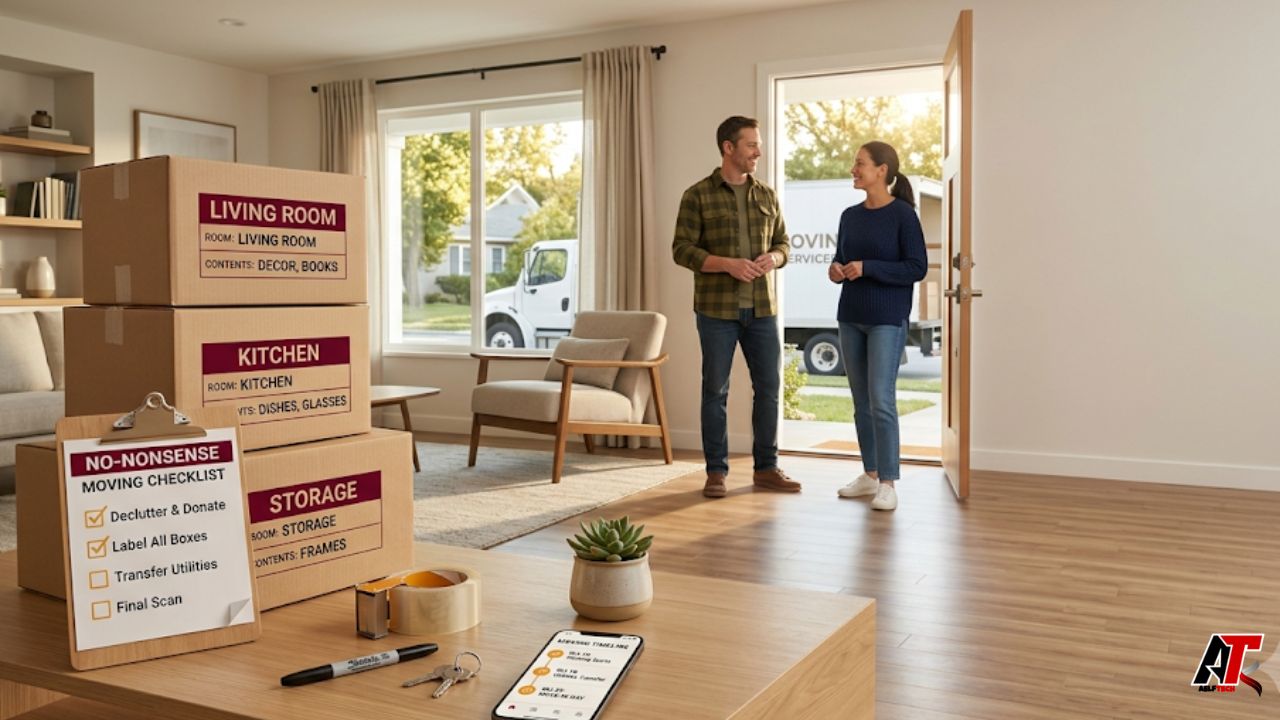
Moving becomes chaotic when dozens of small decisions arrive at the same time. Boxes need labels, utilities need dates, movers need access, documents need protection, and everyone still expects daily life to continue. The answer is not a perfect color-coded system. It is a clear sequence that tells you what must happen first, what can wait, and what should never be left until moving day.
This checklist focuses on the tasks that prevent expensive mistakes and last-minute confusion. It works for local, family, downsizing, and interstate moves. Adjust the timing, but keep the order: confirm the move, reduce what you own, book help, protect information, and pack by priority.
1. Lock the Move Date and Work Backward
Start with the date you must leave your current property and the earliest date you can enter the new one. These dates control every other decision. Confirm lease deadlines, closing dates, elevator reservations, loading restrictions, key collection, building access, and any overlap between properties. A one-day gap can create hotel, storage, and extra transportation costs, so identify it early rather than discovering it after the truck is booked.
Create one master calendar and work backward. Eight to six weeks out, compare movers and declutter. Five to four weeks out, order supplies and confirm storage. Three to two weeks out, pack low-use rooms and update addresses. During the final week, prepare essentials, clean, and confirm arrival times. Share the calendar with everyone involved.
☐ Confirm move-out, move-in, key, elevator, and parking dates.
☐ Create a shared calendar with deadlines and responsible people.
2. Build a Realistic Moving Budget
The truck or mover quote is only one part of the cost. Add packing materials, deposits, cleaning, fuel, tolls, tips, temporary accommodation, pet care, childcare, utility connection fees, storage, insurance, and replacement costs for items that cannot be moved. Include a contingency amount for problems such as delayed keys, extra stairs, long carries, oversized furniture, or an additional day of labor.
Record every expense and mark whether it is quoted, estimated, paid, or refundable. Compare the total cost of full-service and do-it-yourself options, including equipment, time away from work, repairs, and extra trips. Budget around the entire move, not one invoice.
3. Hire Movers Carefully, Not Quickly
Collect written estimates from several companies and provide each one with the same inventory, access details, dates, and service requirements. Ask whether the company is the actual mover or a broker, what could change the price, how claims are handled, and what protection applies if an item is lost or damaged. For an interstate move, confirm that the mover is authorized and insured and review its U.S. DOT information and complaint history.
Read the estimate, inventory, bill of lading, cancellation terms, and payment schedule before signing. Be cautious when a company refuses to inspect or discuss your belongings, demands a large cash deposit, uses vague paperwork, or will not provide a physical address and registration details. Keep copies of every document and take screenshots of important messages. A trustworthy mover should make the process clearer, not pressure you to decide before you understand the agreement.
☐ Compare at least three written estimates using the same inventory.
☐ Verify registration, insurance, address, reviews, and claims procedures.
☐ Keep the estimate, inventory, receipts, and bill of lading together.
4. Declutter Before You Pay to Move It
Packing is faster when you first decide what is worth taking. Work room by room and sort items into keep, sell, donate, recycle, and discard categories. Begin with storage areas, seasonal items, duplicates, damaged furniture, unused appliances, expired products, and clothing that no longer fits your life. Set deadlines for selling items so unsold pieces do not remain in the hallway on moving morning.
Create a simple inventory as you declutter. Photograph valuable items, record serial numbers where relevant, and note their condition. The inventory improves mover estimates, helps you identify missing boxes, and supports an insurance claim if something is damaged. It also reveals whether large furniture will fit through the new doorway, hallway, elevator, or staircase. Measure before paying someone to transport a sofa that cannot enter the new home.
5. Decide Early Whether You Need Storage
Storage can solve a timing or space problem, but it should not replace decluttering. Identify what will be stored, for how long, and why. Compare unit size, access, climate control, security, insurance, deposits, and cancellation terms. For people relocating around Phillipsburg, New Jersey, these storage units provide an example of a facility offering controlled access, cameras, elevator access, temperature-controlled options, online payment, and flexible month-to-month arrangements.
Pack storage items differently from boxes going straight into the new home. Use sturdy containers, keep an itemized list, label every side, and place frequently needed items near the front. Avoid storing passports, legal records, medication, irreplaceable jewelry, cash, food, hazardous materials, or anything you may need urgently. Sensitive items such as photographs, documents, electronics, wooden furniture, and musical instruments may benefit from a more stable indoor environment.
6. Verify the New Address and Access Details
Do not assume the address in a text message is complete. Confirm the exact street format, apartment or unit number, ZIP code, building entrance, loading area, parking restrictions, gate code, elevator process, and the name that should appear on deliveries. Test the route at the time of day you expect the truck to arrive. Low bridges, narrow streets, school traffic, construction, and restricted loading zones can change the plan.
To cross-check publicly available property information or confirm an address connection, a reverse address lookup may provide another reference point. Use it lawfully: public records may be incomplete or outdated and cannot replace a lease, title record, property manager, or government source. Never use lookup data for harassment, stalking, unauthorized screening, or invasive purposes.
7. Update Your Address in the Right Order
Mail forwarding is a safety net, not a complete address-change plan. Submit your change through the official postal service and then update organizations directly. Prioritize banks, credit cards, insurance, employers, tax agencies, driver licensing, vehicle registration, voter registration, schools, healthcare providers, subscriptions, online retailers, professional licenses, benefits, and any court or immigration matters that require a current address.
Track every organization you contact and save confirmations. Avoid services that imitate official change-of-address sites and charge unnecessary fees. Remove the old address from shopping, delivery, and browser profiles. Do not publicly post your full schedule or announce that the old home is empty.
☐ Submit official mail forwarding and save the confirmation.
☐ Update financial, government, medical, school, and insurance records.
☐ Remove the old address from shopping and delivery accounts.
8. Pack by Priority, Not by Panic
Begin with items you will not need before the move: seasonal decor, books, guest-room contents, archived files, spare linens, collectibles, and rarely used kitchenware. Pack daily-use areas last. Give each box a room, a short contents description, and a priority level such as open first, normal, or storage. Number the boxes and keep a matching list on your phone or in your moving folder.
Use small boxes for heavy objects, larger boxes for light items, and strong tape on every bottom seam. Fill empty space, wrap fragile pieces, and mark the upright side. Photograph electronic connections. Put furniture hardware in labeled bags attached to the item or in one hardware box. Never pack prohibited hazardous materials.
Prepare a separate valuables bag that stays with you, not in the truck. Include identification, keys, medication, important documents, jewelry, chargers, payment cards, essential work equipment, and anything irreplaceable. A useful planning hub can also include digital copies of the inventory, estimates, and confirmations; resources from aelftech.com can be bookmarked alongside your other moving documents so key information remains easy to access.
9. Schedule Utilities and Protect Important Records
Arrange electricity, gas, water, internet, waste service, and security systems for the correct dates. Avoid shutting off essential utilities before the final cleaning and walkthrough. Ask whether equipment must be returned, transferred, or installed, and keep tracking details for routers, remotes, and access devices. At the new home, confirm who is responsible for setup and whether a technician needs building access.
Create one moving folder in both paper and digital form. Include leases or closing documents, mover paperwork, insurance, inventory, receipts, utility confirmations, storage contracts, pet records, school records, medical information, and emergency contacts. Store digital copies securely and avoid placing the only copy of a vital document in a packed box. This folder should travel with you and remain accessible until the move is fully settled.
10. Pack a First-Night Kit for Each Person
The first-night kit prevents you from opening twelve boxes to find toothpaste. Pack clothes, toiletries, towels, bedding, medication, chargers, toilet paper, basic cleaning supplies, snacks, water, simple meals, pet food, child essentials, a flashlight, a small toolkit, scissors, trash bags, and paper towels. Add coffee or tea supplies if they matter to your morning. Label this kit clearly and transport it separately.
Prepare a home-opening box with soap, cleaning supplies, light bulbs, basic kitchen items, and tools for assembling beds. Set up sleeping and bathroom essentials before decor.
11. Use the Final 72 Hours for Confirmation, Not Major Packing
By the final three days, most packing should be finished. Confirm the mover’s arrival window, address, contact person, payment method, parking, elevator reservation, and services included. Check weather conditions and prepare floor protection if rain or snow is expected. Empty and defrost appliances according to manufacturer guidance, dispose of prohibited materials, charge phones, refill prescriptions, and keep enough food and clothing for unexpected delays.
Photograph the condition of furniture, electronics, walls, floors, appliances, and meter readings. Back up essential computer files. Return borrowed items, collect spare keys, and arrange care for children or pets if the environment will be unsafe or distracting. Tell one trusted person your schedule, especially for a long-distance drive. Avoid sharing the truck’s contents or exact departure time publicly.
12. Control Moving Day With a Simple Handover System
Choose one adult to communicate with the moving crew and another to manage children, pets, documents, and last-minute cleaning. Walk through the inventory before loading. Point out fragile, high-value, do-not-move, and first-off items. Keep walkways clear, protect floors, and do not allow people to carry loads beyond their ability. Hydration, gloves, closed-toe shoes, and regular breaks reduce preventable injuries.
Before leaving, inspect every room, closet, cabinet, attic, garage, balcony, and outdoor area. Check appliances, windows, water fixtures, lights, keys, remotes, and trash. Photograph the empty property and confirm the key-return process. At the destination, verify box numbers and visible damage before the crew leaves. Note problems on the delivery paperwork and follow the mover’s claims process promptly rather than relying only on a phone conversation.
The No-Nonsense Pre-Move Checklist
☐ Confirm dates, keys, access, parking, and elevator reservations.
☐ Create a budget with a contingency amount.
☐ Compare movers and verify credentials before signing.
☐ Declutter, measure furniture, and build a photo inventory.
☐ Reserve storage only after confirming size, access, security, and terms.
☐ Verify the full destination address and truck route.
☐ Submit official mail forwarding and update organizations directly.
☐ Pack by room, contents, priority, and box number.
☐ Keep valuables, medicine, documents, and essentials with you.
☐ Schedule utilities and preserve all confirmations.
☐ Photograph both properties and record meter readings.
☐ Complete a final walkthrough before returning keys.
A Better Move Is Mostly Decided Before Moving Day
A calm move comes from making important decisions while there is time to compare, correct, and simplify. Confirm dates, move fewer belongings, hire carefully, protect records, pack logically, and keep essentials close. Give every task a deadline and an owner, and moving day becomes a controlled handover rather than an emergency.
Frequently Asked Questions
How early should I start preparing for a move?
For most households, six to eight weeks gives enough time to compare movers, declutter, arrange storage, update records, and pack gradually. A smaller local move may need less time, while an interstate, international, or large family move may require more.
What should I pack first?
Start with low-use belongings such as seasonal items, books, decorations, guest-room contents, archived files, and spare linens. Leave medication, work equipment, daily clothing, toiletries, basic cookware, bedding, and cleaning supplies until the final stage.
What should never go in the moving truck?
Keep identification, important documents, medication, cash, payment cards, jewelry, keys, irreplaceable items, chargers, and first-night essentials with you. Movers may also prohibit flammable, explosive, corrosive, or otherwise hazardous materials.
Is mail forwarding enough after a move?
No. Forwarding helps redirect some mail, but you should update banks, insurers, government agencies, employers, healthcare providers, schools, subscriptions, and other important organizations directly.
When is a storage unit useful during a move?
Storage is useful when move-out and move-in dates do not align, the new home is smaller, renovations are incomplete, or you need time to sort inherited or seasonal belongings. Compare total cost, access, environmental protection, security, and contract terms before renting.
Leave a Reply