
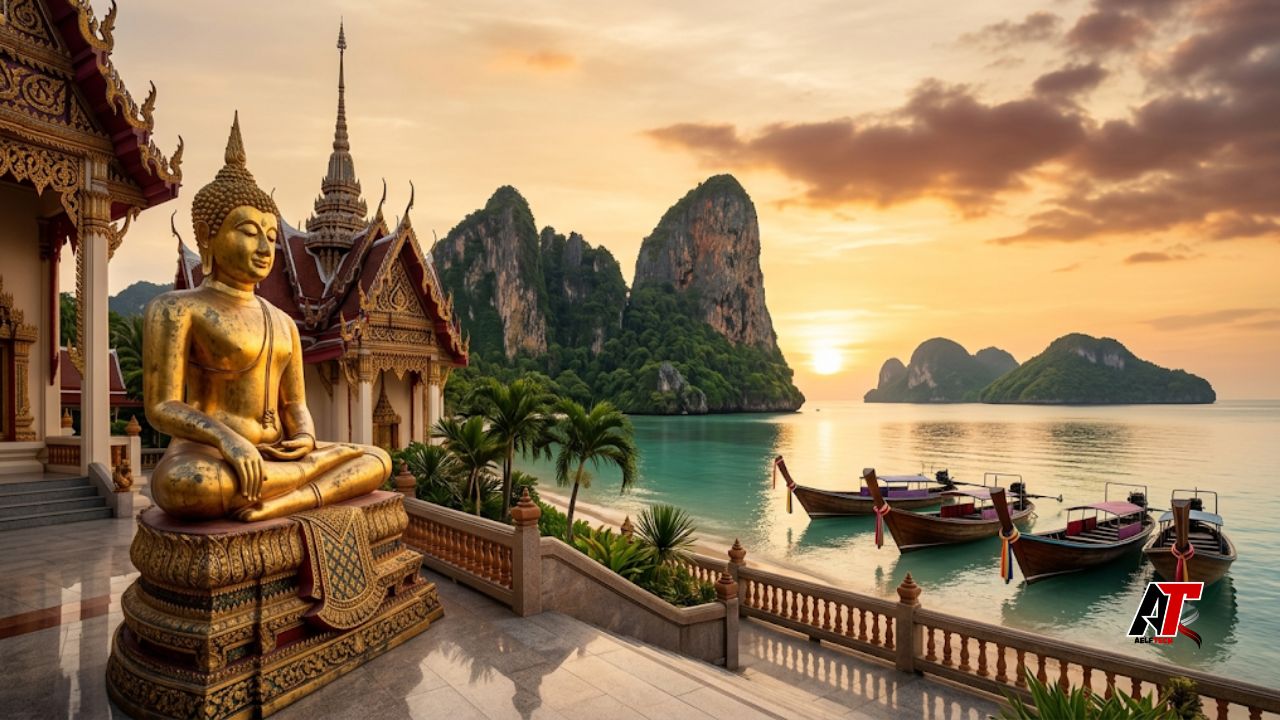
Thailand is a country of warm temples, soft sea views, busy markets, and quiet moments. A traveler can stand before a golden Buddha in the morning and watch the sun fall behind a tropical island by evening. That simple mix is what makes Thailand feel so special.
This guide explores Thailand through two strong travel experiences: sacred Buddhist culture and peaceful island getaways. It is written for people who want more than fast sightseeing. It will help you understand the places, plan the route, and enjoy the country with respect.
If you are comparing tours to Asia, Thailand is a strong choice for first-time visitors and repeat travelers. It offers history, nature, food, beaches, city life, and spiritual beauty in one easy-to-love destination.
Why Thailand Feels Spiritual and Welcoming
Thailand’s spiritual life is easy to notice. Temples are not only famous tourist stops. They are living community spaces where people pray, offer flowers, light incense, and make merit. You may see monks in saffron robes, families visiting a shrine, or locals sitting quietly before a Buddha image.
The Thai word for temple is “wat.” Every wat has its own mood. Some temples are royal and grand. Others are small, simple, and local. Gold is used often because it represents respect, purity, wisdom, and light.
A good temple visit should be slow. Do not rush from one photo spot to the next. Look at the roofs, murals, bells, lotus flowers, guardian statues, and carved details. These small things tell you how deeply art and faith are connected in Thailand.
- Dress modestly at temples.
- Cover shoulders and knees when required.
- Remove shoes before entering sacred buildings.
- Speak softly and avoid touching Buddha images.
- Take photos only where photography is allowed.
Golden Buddha at Wat Traimit: Bangkok’s Hidden Treasure
Wat Traimit in Bangkok is one of the most meaningful places to start your journey. It is home to the famous Golden Buddha, a large statue known for its beauty and remarkable history. The statue was once covered in plaster, and its true golden surface was discovered later.
This story gives the Golden Buddha deeper meaning. It reminds visitors that real value is sometimes hidden under a plain surface. Thailand can feel the same way. At first, you may see traffic, bright markets, and crowded streets. When you slow down, you discover kindness, tradition, faith, and quiet beauty.
Wat Traimit is also close to Bangkok’s Chinatown. After the temple visit, you can explore food lanes, gold shops, herbal stores, and old community streets. This area shows how Thai and Chinese culture have lived side by side for generations.
Bangkok: Temples, Rivers, Markets, and City Life
Bangkok is busy, but it also has a calm spiritual side. The Grand Palace and Wat Phra Kaew show royal design and sacred art. Wat Pho is known for the Reclining Buddha and traditional Thai massage heritage. Wat Arun stands by the Chao Phraya River and looks beautiful at sunrise and sunset.
Try not to treat Bangkok like a checklist. Start early, because the weather can get hot and famous sites can become crowded. Plan short breaks between temples. A river boat ride, fresh coconut, bowl of noodles, or visit to a flower market can make the day more enjoyable.
Bangkok also teaches an important lesson about Thailand. Spiritual life and daily life exist together. A temple can stand beside a market. A quiet shrine can sit near a busy road. This balance gives the city its unique energy.
Ayutthaya: A Walk Through Thailand’s Ancient Soul
Ayutthaya is a short trip from Bangkok and a must-see place for history lovers. It was once a powerful Siamese capital. Today, its ruins, stupas, towers, and Buddha images tell the story of a kingdom that shaped Thai culture.
The beauty of Ayutthaya is different from Bangkok. It feels older, quieter, and more open. You may see broken walls, weathered temples, tree roots around sacred images, and wide spaces where royal life once took place. It is not perfect, and that is why it feels so real.
A half-day trip can work, but a full day is better. With more time, you can move slowly, avoid heat, and understand the place more deeply. Ayutthaya shows that Thailand’s spirit is not only golden and bright. It is also strong, patient, and resilient.
Island Getaways: Thailand’s Peaceful Side
After temples and old cities, Thailand’s islands offer another kind of peace. The calm comes from warm water, slow boats, beach walks, palm trees, and evenings shaped by the tide. Every island has a different personality.
Phuket is a popular starting point because it is easy to reach and has many hotels, beaches, restaurants, and tours. Patong is lively and social. Kata, Karon, Kamala, and Mai Khao can feel more relaxed depending on the season and area. Phuket works well for travelers who want comfort and many options.
Krabi feels more dramatic and natural. Limestone cliffs, long-tail boats, and blue water create a classic Thailand view. Railay Beach feels like an island because you reach it by boat. Ao Nang is a useful base for food, tours, and island hopping.
- Choose Phuket for comfort, nightlife, and easy travel.
- Choose Krabi for cliffs, views, and island hopping.
- Choose quieter islands if you want rest and fewer crowds.
- Check ferry times before booking hotels.
- Keep one flexible day in your plan for weather changes.
Phi Phi Islands and Similan Islands
The Phi Phi Islands are among the most famous island groups in Thailand. They are known for limestone cliffs, clear water, snorkeling, boat tours, and dramatic bays. Phi Phi Don has hotels and restaurants, while Phi Phi Leh is known for natural scenery.
Because Phi Phi is very popular, planning matters. Visit early when possible. Avoid leaving trash. Follow local rules in protected areas. The goal is to enjoy the islands without harming the places that make them beautiful.
The Similan Islands are another dream for sea lovers. They are known for clear water, coral reefs, marine life, diving, and snorkeling. Access can be seasonal, so always check current opening dates and park rules before booking.
For a smoother trip, Tours to Thailand can help travelers compare cultural routes, island stays, and guided options. A strong Thailand itinerary should balance movement with rest. Do not fill every hour with activities. Leave space to enjoy the country.
Food, Markets, and Everyday Thai Culture
Thailand’s culture is also found in food. Thai meals often mix sweet, sour, salty, spicy, and creamy flavors. Popular dishes include pad Thai, tom yum soup, green curry, papaya salad, grilled seafood, and mango sticky rice.
Markets make travel more personal. In Bangkok, night markets and street food lanes are full of energy. On islands, markets may be smaller but still offer fruit, seafood, snacks, clothes, and handmade items. These places show real daily life in a simple way.
Try to support local businesses when you can. Eat at family-run restaurants. Choose local guides. Buy from small shops. This makes your trip more meaningful and helps communities benefit from tourism.
For more helpful travel and lifestyle content, aelftech.com shares reader-friendly guides and digital inspiration for people who want useful information in a simple format.
Best Time to Visit Thailand
Thailand can be visited in every season, but your experience will change with the weather. In many central and northern areas, November to February is popular because the weather is usually cooler and drier. This makes temple visits, markets, and city walking more comfortable.
March to May can feel very hot, especially in cities. The rainy season can bring heavy showers, but it can also bring greener views, fewer crowds, and better hotel prices. Rain does not always ruin a trip, but it does require flexible planning.
Island weather needs extra care. The Andaman coast and the Gulf of Thailand may have different weather patterns. Phuket, Krabi, Phi Phi, and the Similan Islands are often planned around the drier months, but conditions can change. Always check local weather, ferry updates, and marine park rules before fixing your dates.
Simple Thailand Itinerary for First-Time Travelers
A simple route is usually best for a first trip. Begin in Bangkok for temples, food, markets, and river life. Add Ayutthaya for history and culture. Then finish in Phuket or Krabi for beaches and island time.
If you have more days, add Chiang Mai for mountains, old temples, elephant sanctuaries with ethical standards, and northern culture. You can also add Koh Samui if you want a Gulf island experience. The best itinerary is not the one with the most stops. It is the one that gives you enough time to enjoy each place.
- 3 to 4 days: Bangkok and Ayutthaya.
- 6 to 7 days: Bangkok, Ayutthaya, and Phuket or Krabi.
- 10 to 12 days: Bangkok, Ayutthaya, Chiang Mai, and one island area.
- 14 days or more: Add slower beach days and smaller local stops.
Responsible Travel Tips for Thailand
Respect is the most important travel rule in Thailand. Temples and historic places are meaningful to local people, so behave with care. Do not climb on ruins or Buddha images. Do not make loud jokes in sacred areas. Small actions show respect.
On islands, protect nature. Do not touch coral. Do not take shells from protected places. Reduce plastic use when possible. Use reef-safe sunscreen if available. Follow boat safety rules and national park instructions.
Travel with patience. Traffic, ferry delays, hot weather, rain, and crowds can happen. A calm attitude helps you enjoy Thailand more. Smile, learn a few Thai words, and remember that travel is not only about where you go. It is also about how you act when you are there.
Final Thoughts
Golden Buddhas and island getaways may look like two different sides of Thailand, but together they explain the country beautifully. Temples show devotion, patience, history, and art. Islands show freedom, rest, nature, and joy.
To explore the spirit of Thailand, look beyond the surface. See gold as a symbol of faith, not only decoration. See beaches as living natural spaces, not only holiday backgrounds. When you travel this way, Thailand becomes more than a destination. It becomes an experience that stays with you.
Leave a Reply