
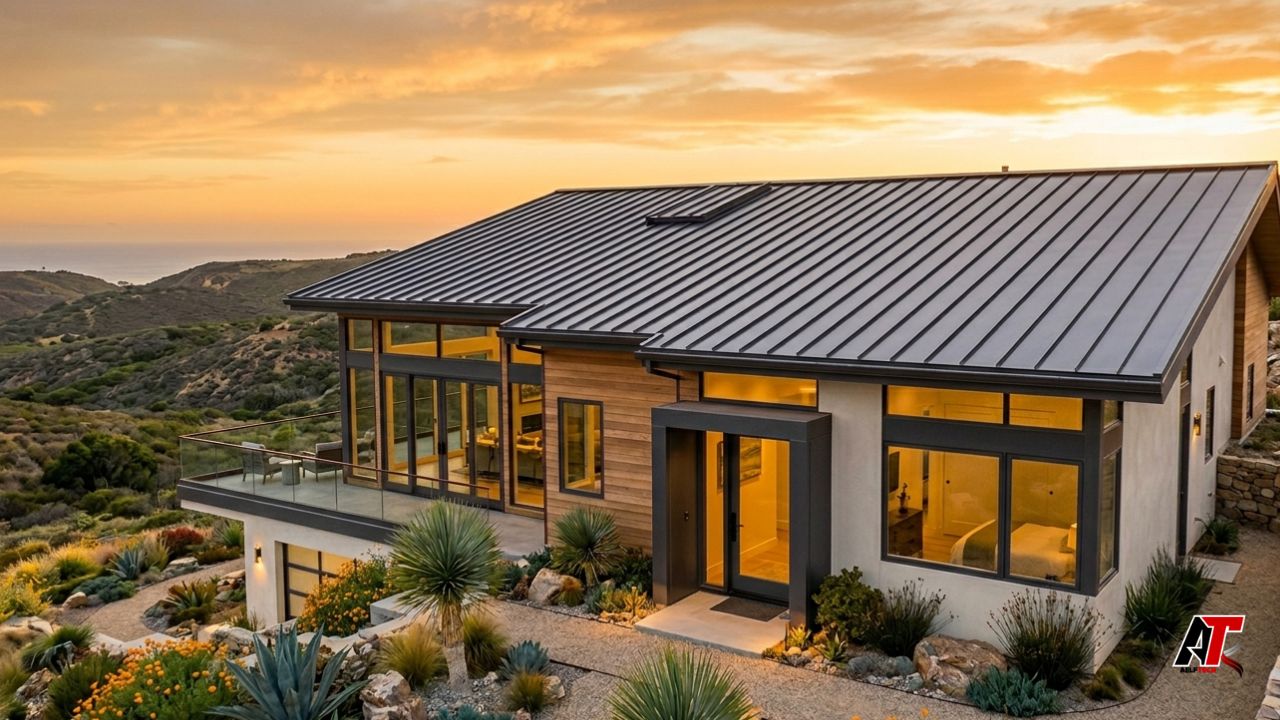
A roof in San Diego must do more than keep out rain. It faces intense sunlight, seasonal heat, coastal air in many neighborhoods, strong wind events, and the growing need for wildfire-aware home design. Asphalt shingles remain common and can perform well, but more owners are looking beyond the lowest initial price and considering the roof’s full service life.
That is where standing seam metal roofing has gained attention. Its clean vertical lines, concealed fastening system, reflective finish options, and noncombustible metal surface make it attractive for long-term renovations. The switch is not right for every property, but San Diego homeowners increasingly want roofing that combines resilience, energy-conscious performance, architectural style, and less frequent replacement.
What Makes a Standing Seam Metal Roof Different?
A standing seam roof uses long metal panels that run from ridge to eave. Raised seams join adjacent panels, while clips or fastening flanges are usually concealed beneath the surface. This differs from exposed-fastener systems, where screws penetrate the visible panel face. Concealed attachment reduces exposed fastener points and helps properly designed panels accommodate temperature-driven movement.
The details matter more than the label. Panel profile, metal type, gauge, coating, underlayment, deck condition, flashing, clip spacing, and installation method all influence performance. Homeowners should compare complete tested assemblies and contractor qualifications rather than choosing by color or a broad promise that “metal lasts longer.”
1. Wildfire-Conscious Homeowners Want a Stronger Roof Strategy
Wildfire preparation is a major concern in parts of Southern California, especially where homes meet canyons, slopes, brush, or other wildland fuels. CAL FIRE uses Fire Hazard Severity Zones to classify hazard using factors such as fuels, terrain, and weather. San Diego also publishes local mapping and building guidance for designated areas. Before planning a reroof, owners can check whether the property falls within a Fire Hazard Severity Zone on the CAL FIRE map. The map describes hazard conditions rather than predicting whether an individual home will burn. [1][2]
Metal is noncombustible, but homeowners should not assume that every metal roof automatically provides the same fire performance. Fire classification applies to the roof assembly, not merely the outer panel. Decking, underlayment, insulation, gaps, edge conditions, and installation all matter. IBHS guidance recommends a Class A roof as one part of a larger wildfire-resilience plan, while also emphasizing clean gutters, ember-resistant vents, defensible space, and other home-hardening measures. Many asphalt shingles are also available as Class A systems, so the best comparison is between documented assemblies rather than between material names alone. [3]
2. Reflective Finishes Can Help Control Solar Heat Gain
San Diego’s sunshine is a benefit for daily life, but it can create high roof-surface temperatures. The U.S. Department of Energy explains that cool roofs reflect more sunlight and absorb less solar energy than conventional dark roofs. Reflective roofing can reduce heat flow into a building, lower air-conditioning demand, and improve comfort, although actual savings depend on climate, insulation, roof design, color, orientation, and household energy use. [4]
Standing seam panels are available with factory-applied finishes formulated for solar reflectance and thermal performance. Homeowners do not have to choose a bright white industrial appearance; many “cool color” coatings provide deeper architectural tones while reflecting more solar energy than conventional dark surfaces. Product data should be reviewed rather than judging efficiency by color alone. A well-insulated attic, effective ventilation, sealed ductwork, and a reflective roof can work together as a more complete heat-management strategy.
3. Concealed Fasteners Reduce Exposed Penetrations
One of the clearest differences between standing seam roofing and basic exposed-fastener panels is how the roof is attached. In many standing seam systems, clips are hidden under the seams. This creates a cleaner surface and reduces the number of fastener heads directly exposed to ultraviolet light, moisture, and temperature cycling. It also helps the panel system move as temperatures rise and fall.
That movement is not a minor detail. Metal expands when heated and contracts as it cools. The Metal Construction Association and roofing-industry guidance stress that clip selection, anchorage, panel length, seam formation, and manufacturer instructions must account for thermal cycling. Incorrect fastening can cause distortion, loose components, worn holes, or leaks. The concealed-fastener advantage is therefore valuable only when the roof is engineered and installed correctly. [5]
4. Long Panels Create a Clean, Modern Architectural Look
Standing seam roofs are easy to recognize because of their continuous vertical ribs and minimal visual clutter. The profile works especially well on contemporary homes, modern farmhouses, accessory dwelling units, coastal renovations, and properties that combine stucco, stone, wood, or fiber-cement siding. It can also provide a deliberate contrast on traditional architecture when the color and seam proportions are chosen carefully.
5. Homeowners Are Thinking Beyond the Next Replacement Cycle
Asphalt shingles are familiar, repairable, and usually less expensive to install. However, their condition can be affected by ultraviolet exposure, heat, ventilation problems, foot traffic, wind, and workmanship. Standing seam metal systems resist cracking, shrinking, and erosion in ways that differ from asphalt-based materials. With a suitable substrate, finish, detailing, and maintenance plan, a metal roof may remain serviceable for decades. The financial case is strongest when owners compare installed cost, maintenance, warranty terms, future reroof disruption, and how long they intend to keep the property. [7]
6. Standing Seam Can Work Well With Solar—When Planned Correctly
San Diego homeowners frequently consider rooftop solar at the same time as a roof replacement. Standing seams can provide convenient attachment points for compatible clamp-based mounting systems, potentially reducing the need for penetrations through the panel field. The exact solar attachment method must be tested and approved for the selected roof system, and the roof manufacturer’s warranty requirements should be reviewed before installation.
Coordination is essential. Panel seams, clip locations, roof loads, wire paths, fire setbacks, equipment access, and future maintenance should be resolved before both systems are installed. The City of San Diego notes that when existing photovoltaic panels are removed for reroofing, an electrical permit is required for reinstallation. Combining the projects may reduce duplicated labor, but homeowners should obtain coordinated scopes from the roofer, solar contractor, and any required design professional.
Standing Seam Metal Roofs vs. Asphalt Shingles
Neither roofing type wins in every category. Asphalt shingles remain practical for owners prioritizing a lower initial cost, easy access to contractors, and straightforward spot repairs. Standing seam roofing is often favored by owners who value concealed fasteners, strong architectural lines, reflective coating options, and a longer-term ownership strategy.
The comparison below is a planning guide, not a substitute for product specifications or a site inspection. Roof slope, deck condition, structural capacity, historic restrictions, ventilation, wildfire requirements, coastal exposure, and contractor experience can change the correct choice for an individual home.
| Factor | Standing Seam Metal | Asphalt Shingles |
| Initial cost | Usually higher | Usually lower |
| Attachment | Typically concealed clips or flanges | Nailed shingle courses |
| Cool-roof options | Many reflective factory finishes | Available in selected products |
| Fire performance | Depends on the tested roof assembly | Class A assemblies are widely available |
| Appearance | Crisp vertical seams and modern lines | Familiar textured residential look |
| Maintenance | Periodic inspection of seams, flashings, and coatings | Inspection for damage, aging, and granule loss |
What Homeowners Should Consider Before Switching
The first consideration is budget. Standing seam roofing normally costs more upfront because of specialized material, fabrication, trim, and labor. Complex geometry, dormers, skylights, valleys, and chimneys can raise cost further. A detailed estimate should identify panel type, thickness, finish, underlayment, flashings, ventilation, deck repairs, disposal, permits, and warranty coverage.
The second consideration is exposure. Homes close to the coast need careful material and coating selection because salt can accelerate corrosion. Fasteners, clips, gutters, flashings, and rooftop accessories must be compatible with the panels. Noise is another concern, but metal installed over solid decking, underlayment, insulation, and an attic sounds very different from bare panels over open framing.
Installation Quality Matters More Than Marketing Claims
Standing seam roofing is less forgiving of careless detailing than many homeowners expect. Long panels must be measured accurately, clips must allow intended movement, seams must be formed consistently, and flashing must direct water away from penetrations and transitions. Oil canning, a visible waviness in flat metal areas, may be cosmetic rather than structural, but panel design, substrate flatness, handling, and installation practices can influence its appearance.
Ask contractors for local standing seam projects, manufacturer training, insurance information, license details, written installation specifications, and examples of difficult flashing work. Confirm who will fabricate the panels and who is responsible for warranty claims. A low quote may exclude details that are difficult to add after the panels are locked together.
San Diego Permits, Fire Zones, and Historic Review
The City of San Diego’s January 2025 roofing bulletin explains that permit requirements depend on the scope of work. Structural framing changes, certain deck replacements, heavier replacement materials, and work involving designated historic resources can trigger permits or plan review. It also notes added fire-protection requirements for applicable structures in Very High Fire Hazard Severity Zones and possible California Energy Code requirements when roof coverings are replaced. [6]
Homeowners should confirm the rules for their exact address before signing a contract. A property may also require historic review if it contains a designated resource, lies in an adopted historic district, or meets age-related review conditions described by the city. The roofing contractor should identify expected approvals in writing, but the property owner should still verify requirements with the City of San Diego Development Services Department or the relevant local jurisdiction.
How to Choose the Right Standing Seam System
Start with the roof assembly, not the color chart. Request documentation for fire classification, wind resistance, minimum slope, substrate requirements, clip type, seam type, coating warranty, and approved details. Ask whether the metal and finish suit the home’s distance from the ocean. Review how valleys, ridges, eaves, wall intersections, skylights, vents, solar attachments, and gutters will be handled.
Compare warranties carefully because finish, material, weather-tightness, and workmanship coverage are different. Maintenance still matters: clear debris, limit unnecessary foot traffic, inspect sealants and penetrations, repair coating damage, and arrange professional checks after unusual weather or rooftop work.
Is a Standing Seam Metal Roof Right for Your San Diego Home?
A standing seam roof is a strong candidate when the home has a suitable slope and structure, the owner values long-term performance, and the budget supports experienced installation. It is especially appealing when roofing, insulation, solar, gutters, and exterior design can be coordinated. It may be less suitable when historic requirements favor another material or complex geometry makes fabrication uneconomical.
Compare complete proposals rather than broad categories. Ask each contractor to explain the tested assembly, fire classification, coastal suitability, cool-roof data, attachment method, deck preparation, flashing details, permit responsibility, maintenance plan, and warranty process. For more informative home-improvement and technology articles, readers can also explore aelftech.com.
Conclusion
San Diego homeowners are not considering standing seam metal roofs simply because metal looks modern. They are responding to a combination of practical pressures: intense sun, wildfire awareness, long-term maintenance concerns, solar planning, and the desire for durable exterior materials. Concealed fasteners, reflective finishes, noncombustible panels, and clean architectural lines make standing seam systems an attractive alternative to conventional shingles.
Still, the roof is only as reliable as its full assembly and installation. Asphalt shingles can remain a sound choice, including in Class A fire-rated assemblies, while metal roofs can underperform when poorly detailed or wrongly specified. Homeowners who verify the fire rating, local requirements, coastal compatibility, energy data, installer experience, and warranty terms are far more likely to receive the performance they expect.
Leave a Reply