
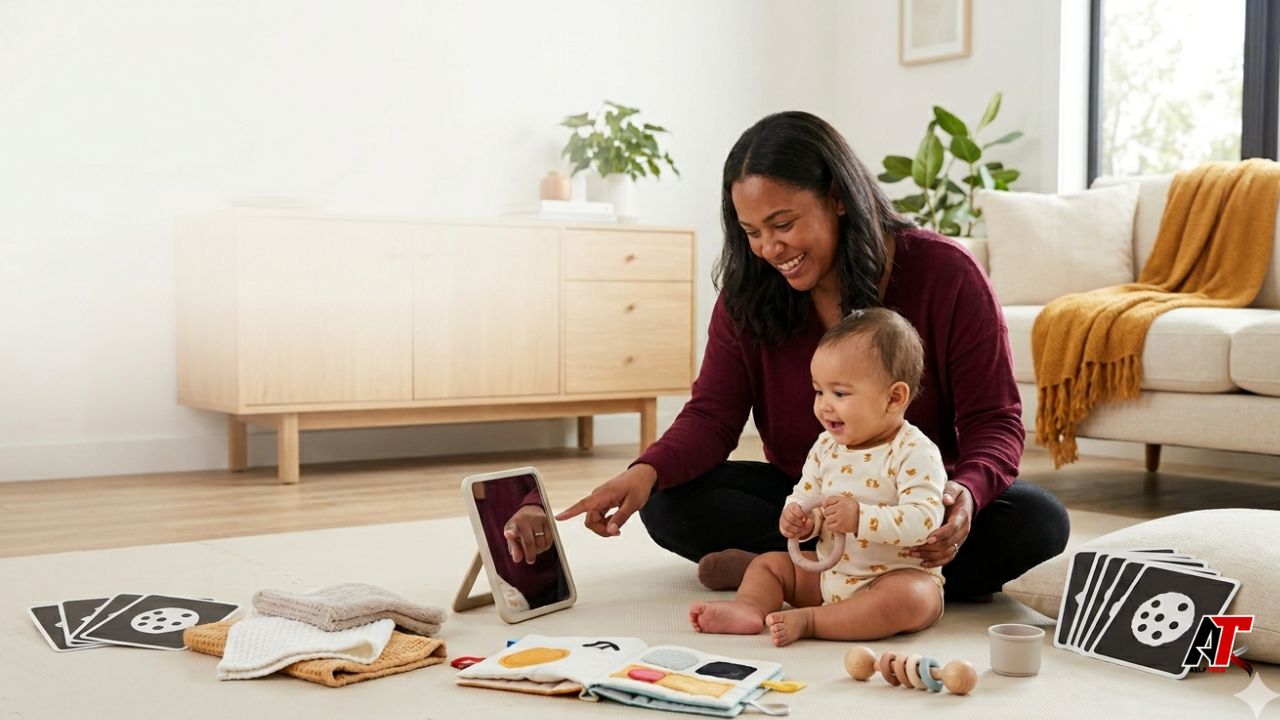
Babies learn through everyday experiences. A familiar voice, a soft washcloth, moving light, a wooden spoon, or the feeling of water on their toes can become a meaningful learning opportunity. Sensory play simply gives your baby safe ways to notice sights, sounds, textures, movement, smells, and, when developmentally ready, tastes.
The goal is not to fill every waking minute with activities or to push a baby toward milestones early. Good sensory play is responsive. You offer a simple experience, stay nearby, describe what is happening, and follow your baby’s signals. A few calm minutes can be more useful than an elaborate setup that leaves both parent and baby overwhelmed.
The following sensory activities for babies use inexpensive household items and can be adapted for different ages. Because babies develop at different rates, treat age ranges as general guidance. For a premature baby, a child with a medical condition, or any baby whose movement or feeding concerns you, ask your child health nurse, GP, paediatrician, or allied health professional for individual advice.
Start With Five Safety Rules
- Stay within arm’s reach and supervise continuously. Sensory play is for awake, alert babies, not for unsupervised time.
- Remove choking hazards. Avoid loose beads, coins, buttons, magnets, batteries, balloons, detachable toy parts, and anything small enough to fit fully inside a baby’s mouth.
- Keep water play hands-on. A baby can get into difficulty in very little water, so never step away, even briefly.
- Use clean, age-appropriate materials. Avoid sharp edges, hot objects, strong fragrances, essential oils, and items that can leak, splinter, or break.
- Stop when your baby has had enough. Turning away, arching, crying, yawning, rubbing eyes, stiffening, or becoming unusually quiet can mean it is time for a break.
1. Face-to-Face Songs and Sound Copying
Your face and voice are among your baby’s favourite sensory experiences. Hold your baby comfortably, make eye contact, and sing a slow nursery rhyme. Pause occasionally so your baby has time to move, smile, coo, or look away. When your baby makes a sound, copy it and wait. This simple back-and-forth introduces rhythm, facial expressions, language sounds, and social turn-taking.
For a newborn, keep the activity short and quiet. Older babies may enjoy clapping, gentle bouncing on your lap, or actions such as opening and closing your hands. You do not need a perfect singing voice. Your familiar tone and responsive attention matter more than the song.
2. Slow Visual Tracking With High-Contrast Objects
Young babies are often drawn to bold contrast. Place your baby on their back on a clear play mat and hold a black-and-white card, brightly coloured toy, or simple patterned cloth about a comfortable viewing distance away. Move it slowly from side to side, then gently up and down. Give your baby time to find and follow it.
Avoid flashing lights, rapid movement, or holding screens in front of your baby. A printed card, board book, or safe toy is enough. If your baby repeatedly looks away, stop and try again another day. This activity should feel interesting, not demanding.
3. Supervised Tummy Time With a Mirror
Place your awake baby on their tummy on a firm, clear surface while you remain beside them. Position an unbreakable baby mirror or your own face at eye level. Talk, smile, or place one safe toy within reach. Tummy time gives babies a different view of the room while helping strengthen the neck, shoulder, and arm muscles used for later movement.
Newborn sessions can be very short, including tummy time on a parent’s chest. Build gradually according to your baby’s tolerance. Tummy time should never happen during sleep, on a soft bed, or without direct supervision. If your baby becomes sleepy, move them to a safe sleep space on their back.
4. A Texture Treasure Basket
Create a small collection of clean objects with different textures: a smooth wooden spoon, a silicone teether, a soft cotton cloth, a textured ball made for babies, a large plastic cup, and a cloth book. Offer only two or three objects at a time so your baby can focus. Describe each item using simple words such as soft, bumpy, cool, smooth, or crinkly.
Inspect every object before and after play. It should be too large to swallow, free from loose parts, and safe if it reaches your baby’s mouth. Do not use decorative craft materials, water beads, dried beans, loose rice, or items with ribbons and buttons. For younger babies, gently touch a safe fabric to the hands or feet rather than expecting them to hold it.
5. Peekaboo With a Large Scarf or Tea Towel
Peekaboo combines sight, anticipation, movement, and social connection. Hide your own face behind a large, lightweight cloth, then reappear with a cheerful expression. Older babies can help pull the cloth away or hide a familiar toy underneath it.
Always keep the cloth in your hands and away from your baby’s nose and mouth. Never leave scarves, blankets, or fabric in a cot or with an unattended baby. The activity works best when it stays playful and predictable rather than startling.
6. Safe Sound Discovery
Offer a baby-safe rattle, crinkle toy, or two large objects that make different sounds when tapped. You might gently tap a wooden spoon against a plastic bowl, then pause and watch your baby’s response. Older babies can shake, bang, drop, and repeat the action, learning that their movement creates a result.
Keep sounds moderate. Loud music, sudden clanging, or toys placed close to the ear can be uncomfortable. Homemade shakers must be completely sealed and strong enough that the contents cannot escape, but a commercially made age-appropriate rattle is usually the simpler choice.
7. Cup-and-Water Play
For a baby who can sit with appropriate support, bath time can become a gentle sensory laboratory. Provide one or two large plastic cups for scooping, pouring, floating, and watching water move. Let your baby pat the surface, feel droplets on their hands, or watch a toy rise and sink.
Keep one hand ready to support your baby and stay beside the bath for the entire activity. Use comfortably warm water and check the temperature before your baby enters. Skip slippery oils, tiny bath toys, and anything that can trap water and grow mould. End the activity if your baby becomes cold or tired.
8. A Slow Outdoor Sensory Walk
A short walk in a garden, park, balcony, or shaded outdoor area offers changing light, birdsong, moving leaves, fresh air, and new textures. Name what your baby notices: a rough tree trunk, a cool breeze, a yellow flower, or a distant dog. You can let an older baby touch grass or a broad leaf while you hold and supervise them.
Choose a safe temperature, protect your baby from direct sun, and keep plants, soil, insects, animal waste, and small natural objects out of the mouth. The aim is calm observation, not collecting a basket of items that may create choking or allergy risks.
9. Food Texture Exploration When Your Baby Is Ready
Around the time a baby is developmentally ready for solid foods, mealtimes naturally become sensory experiences. Your baby can see, smell, touch, squash, and taste suitable foods while seated upright and closely supervised. Offer one manageable texture at a time, follow recognised infant-feeding guidance, and never pressure your baby to finish.
Once teeth begin to appear, sensory exploration and oral health go together. Clean the first teeth as advised by your health professional, avoid using sweet foods as constant play materials, and seek age-appropriate kids dental care when you need professional support. Australian health guidance recommends beginning dental care early and arranging a dental visit when the first tooth appears or by the first birthday.
10. Gentle Baby Massage and Body Awareness
Choose a warm, quiet time when your baby is awake, calm, and not immediately after a feed. With clean, warm hands, use slow strokes on the legs, feet, arms, hands, or back while talking softly. Pause between areas and watch whether your baby relaxes, moves toward your touch, or signals that they want you to stop.
Massage should be gentle and child-led. Avoid pressure on the spine, injured skin, the soft spot on the head, or any area that seems painful. Do not use essential oils. If you use a product, choose a simple baby-safe option and patch-test it first. Ask a health professional before massage if your baby was premature, is unwell, or has a medical or skin condition.
How to Build Sensory Play Into an Ordinary Day
Sensory play works best when it fits naturally around feeds, naps, nappy changes, baths, and floor time. You might sing during a change, offer a texture basket after a nap, try two minutes of tummy time before a feed, and name outdoor sounds during a pram walk. Repeating an activity is not boring for a baby. Familiar experiences help them notice new details and anticipate what happens next.
Keep sessions short and place only a few materials in view. Too many lights, sounds, and objects can make it harder for a baby to focus. Follow your baby’s lead: if they repeatedly reach for the same cloth or laugh at the same song, repetition is useful. If they turn away, reduce the stimulation or finish.
Families who want demonstrations, social connection, or a more structured environment can explore baby sensory classes and check the provider’s current schedule and availability. A class can provide ideas, but home play does not need specialist equipment. Your attentive presence remains the most important part.
When to Ask for Individual Advice
Every baby has preferences. Some enjoy movement and music; others prefer quiet voices and soft touch. Speak with your child health nurse, GP, or paediatrician if your baby rarely responds to sound or faces, seems unusually distressed by everyday touch or movement, has persistent feeding difficulty, loses a skill, or is not meeting milestones you have discussed with your healthcare team. Early questions are welcome; you do not need to wait until a concern feels serious.
For more clear, practical family and technology content, readers can also visit aelftech.com.
Final Thoughts
The best sensory activity is not the messiest or most expensive. It is the one that is safe, simple, enjoyable, and matched to your baby’s current abilities. Singing, tummy time, water, textures, outdoor observation, food exploration, and gentle touch can all become rich learning moments when a trusted adult is present and responsive.
Choose one activity, try it for a few minutes, and watch what your baby tells you. Their gaze, movements, sounds, and pauses are part of the conversation. By following those cues, you create sensory play that supports curiosity while protecting comfort, connection, and safety.
Leave a Reply