
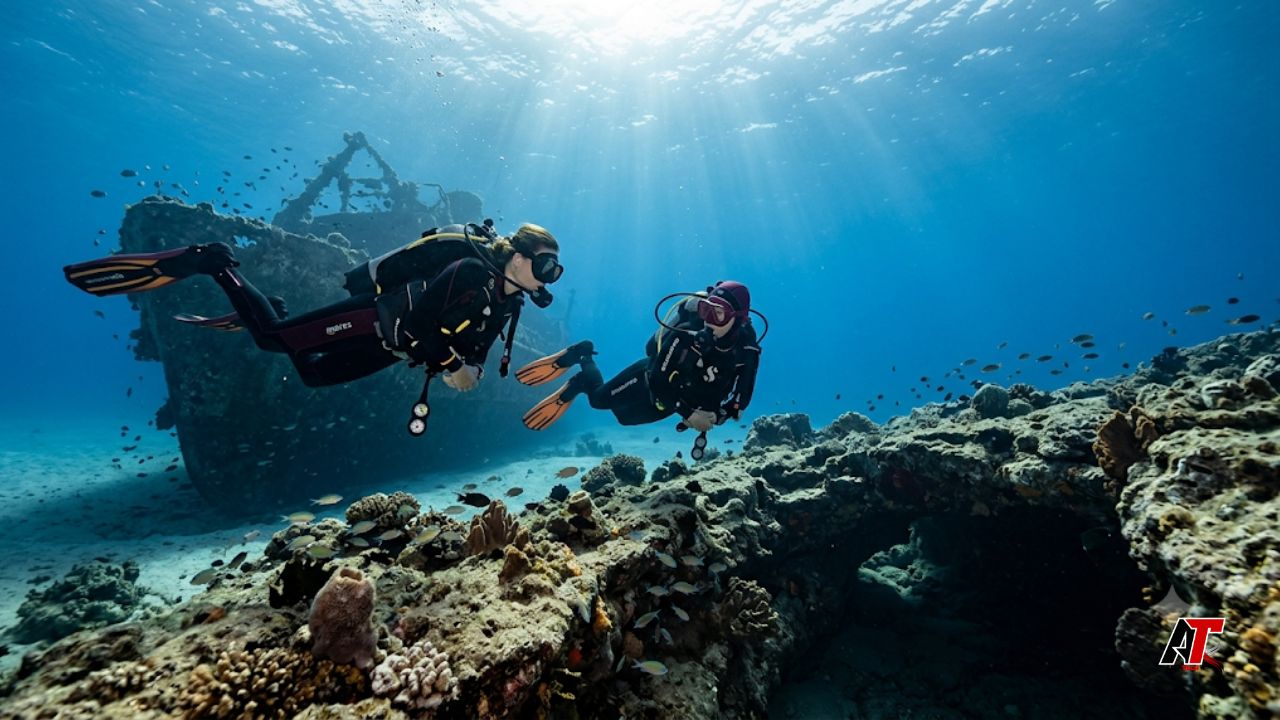
Malta may look small on a map, but its underwater world feels surprisingly large. The Maltese Islands offer clear Mediterranean water, dramatic limestone reefs, caves, arches, steep walls, and one of Europe’s most varied collections of wrecks.
A beginner can practise basic skills in a calm bay. An experienced recreational diver can explore a patrol boat or tugboat.
Malta Diving at a Glance
Malta, Gozo, and Comino each offer a different style of diving. Most visitors combine several areas during one trip.
- Best known for: wrecks, limestone caves, arches, walls, and shore diving
- Typical visibility: often around 20 metres or more in good conditions
- Suitable for: beginners, qualified recreational divers, wreck divers, and technical divers
- Main islands: Malta, Gozo, and Comino
- Diving season: possible throughout the year, with warmer and busier conditions in summer
Why Malta Is Such a Popular Diving Destination
The first major advantage is visibility. Malta often has clear water, which helps divers see reef shapes, entry points, buddies, and wreck structures from a greater distance.
Malta is different from a tropical coral destination. Divers do not come mainly for colourful coral gardens.
Shore diving is another strong point. Many famous sites have practical entry areas, steps, ladders, or established paths.
The islands also suit mixed-interest travellers. Divers can spend the morning underwater and explore Valletta, Mdina, or a coastal town later in the day. For convenience, many book their Malta holidays as a package and arrange diving with a licensed centre before arrival.
Best-Known Dive Areas in Malta
Cirkewwa: Reefs, an Arch, and Two Famous Wrecks
Cirkewwa sits near Malta’s northwestern tip and is one of the country’s best-known shore-diving areas. A single entry point can lead to several routes, so divers can choose a plan that matches their certification, experience, and gas supply.
The area includes reef walls, a natural arch, the patrol boat P29, and the tugboat Rozi. The wrecks attract photographers because their shapes are easy to recognise in clear water.
Cirkewwa can become busy, especially during the warmer months. Divers should follow the guide’s instructions for parking, entries, exits, surface-marker buoys, and boat traffic.
Wied iz-Zurrieq and the Um El Faroud
Wied iz-Zurrieq, on Malta’s south coast, is the main access point for the Um El Faroud. This large tanker is about 115 metres long and was scuttled in 1998.
Um El Faroud lies off Zurrieq, and divers usually reach it after entering from shore and swimming across the reef. The distance and depth make careful planning essential. Divers need to monitor their gas, no-decompression time, current conditions, and route back to the exit.
The wreck’s exterior offers plenty to see, including the stern, propeller, deck, bridge area, and memorial plaque. Barracuda, bream, moray eels, cuttlefish, and smaller reef fish may gather around the structure.
Gozo: The Blue Hole, Inland Sea, and Dramatic Geology
Gozo has a quieter atmosphere than the main island and some of the archipelago’s most dramatic underwater scenery. Dwejra is home to the Blue Hole, a natural rock pool connected to the sea.
The nearby Inland Sea offers a very different experience. Divers enter a sheltered lagoon and pass through a long tunnel before reaching the open sea.
Gozo also has reefs, caves, and wrecks for different experience levels. Some shore entries involve uneven rocks or a longer equipment carry.
Comino and the Santa Maria Caves
Comino is famous for the Blue Lagoon, but divers visit the island for clear water, reefs, and caves. The Santa Maria Caves are among the most popular sites.
Small fish often gather near the cave entrances, and sunlight produces attractive patterns on the limestone. This makes the area especially appealing to underwater photographers.
What Marine Life Can Divers See?
Malta is not a destination where every dive includes sharks, turtles, or other large animals. Its marine life is often smaller and more subtle. Divers who slow down and look closely usually see much more.
Common sightings include octopus hiding in limestone cracks, moray eels looking out from holes, cuttlefish above sandy areas, and scorpionfish using excellent camouflage. Groupers may patrol reef edges, while bream, bogue, damselfish, and barracuda often gather around wrecks.
Macro photographers can search for nudibranchs, small crustaceans, colourful worms, sponges, and seahorses in suitable habitats. Night dives reveal a different side of the islands. Crabs, squid, octopus, and hunting morays become more active after dark.
The strongest underwater moments in Malta often come from the full scene rather than one animal. A wreck may slowly appear from the blue.
Best Time of Year for Scuba Diving in Malta
Diving is possible throughout the year, but each season feels different. Summer brings the warmest water, long daylight hours, and the widest choice of tourism services.
Late summer and early autumn are popular because the sea stays warm after the busiest holiday period. Spring offers pleasant air temperatures and fewer visitors, although the water can still feel cool.
Water temperature can reach about 28°C in the warmest part of summer and fall to roughly 14°C during the coldest months. These are general figures, and conditions vary by depth and location.
For many recreational divers, May to June and September to October offer a good balance. The weather is usually comfortable, the water is suitable for longer dives, and crowd levels may be lower than in peak summer.
Is Malta Good for Beginner Divers?
Yes. Malta has sheltered bays, shallow reefs, clear water, and many established training centres.
Clear water can help new divers feel more comfortable because they can see the instructor, seabed, and nearby environment. However, clear water does not remove normal diving risks.
New divers should focus on breathing, equalisation, buoyancy, buddy awareness, and gas checks. A responsible instructor will choose a calm site and build skills step by step.
How to Choose a Dive Centre
Malta regulates recreational dive centres through the Malta Tourism Authority. Before booking, confirm that the operator is licensed and ask which training agency it represents.
Share accurate information about your certification, number of logged dives, most recent dive, medical history, and equipment needs. A diver who has not been underwater for a year or more may benefit from a refresher.
A good dive briefing should clearly explain:
- Entry and exit points
- Maximum depth and planned route
- Gas or turn-pressure rules
- Buddy separation procedure
- Possible current, surge, and boat traffic
- Safety-stop and surface-marker-buoy procedures
- Emergency communication and pickup arrangements
Divers should stay within their training, follow no-decompression limits, ascend slowly, and complete safety stops. They should never enter a cave or wreck without the correct qualification.
Practical Tips for Planning a Malta Dive Holiday
Start by deciding how important diving is within the trip. A dive-focused traveller may prefer accommodation near a centre that offers equipment storage, drying areas, early transfers, and multi-day packages.
Malta is compact, but traffic can make short journeys take longer than expected. Leave extra time for morning pickups and do not plan a tight schedule after a dive.
Bring the following essentials:
- Certification card and logbook or digital dive record
- Dive-specific travel insurance details
- Any required medical form or doctor’s clearance
- A well-fitting personal mask
- A familiar dive computer and its charger
- Reef-safe sun protection, water, and a light jacket for boat trips
Rental cylinders and weights are easy to arrange. DIN valves are common, and many centres can provide yoke adaptors. Photographers should bring spare O-rings, batteries, chargers, moisture alarms, and a safe way to rinse and dry equipment.
Finally, leave enough time before flying. Follow the guidance from your training agency, dive computer, and medical professionals.
Responsible Diving in Malta
Malta’s wrecks and reefs are shared environments. A wreck may be an artificial reef, a historical object, and a memorial at the same time.
Do not chase marine animals for a photograph. Give octopus, morays, cuttlefish, and other wildlife enough space to behave naturally. Spearfishing while using scuba equipment is prohibited, and extra rules may apply around protected areas or historic wrecks.
Responsible behaviour continues above water. Use marked access paths, keep ladders and roads clear, follow parking rules, reduce disposable plastic, and support operators that teach conservation.
Frequently Asked Questions
How many days should I plan for diving in Malta?
Three diving days can provide a useful introduction, but five or six days allow more variety. A longer schedule also gives the dive centre room to change sites when weather affects one coast.
Can beginners dive on Malta’s wrecks?
Some wrecks have sections within recreational depth ranges, but many require advanced certification, good buoyancy, and recent experience. Beginners should start with sheltered reefs and progress only when an instructor or guide considers them ready.
Is shore diving difficult in Malta?
Some entries are easy, while others involve ladders, rocks, or a longer walk with equipment. A local guide will explain the safest route and can select a more comfortable site when mobility or fitness is a concern.
Final Thoughts
The scuba scene in Malta stands out because it offers more than one signature attraction. Divers can train in sheltered water, explore limestone caves and arches, visit Comino by boat, experience Gozo’s dramatic geology, and discover wrecks from different periods.
The best trip combines ambition with flexibility. Choose a licensed centre, describe your experience honestly, accept site changes when the weather demands them, and stay within your limits.
For more clear and practical travel guides, visit aelftech.com. Malta rewards careful planning, but it also rewards curiosity. Once divers see its wrecks, blue water, and limestone landscapes, many start thinking about a return visit before the first holiday has ended.
Leave a Reply