
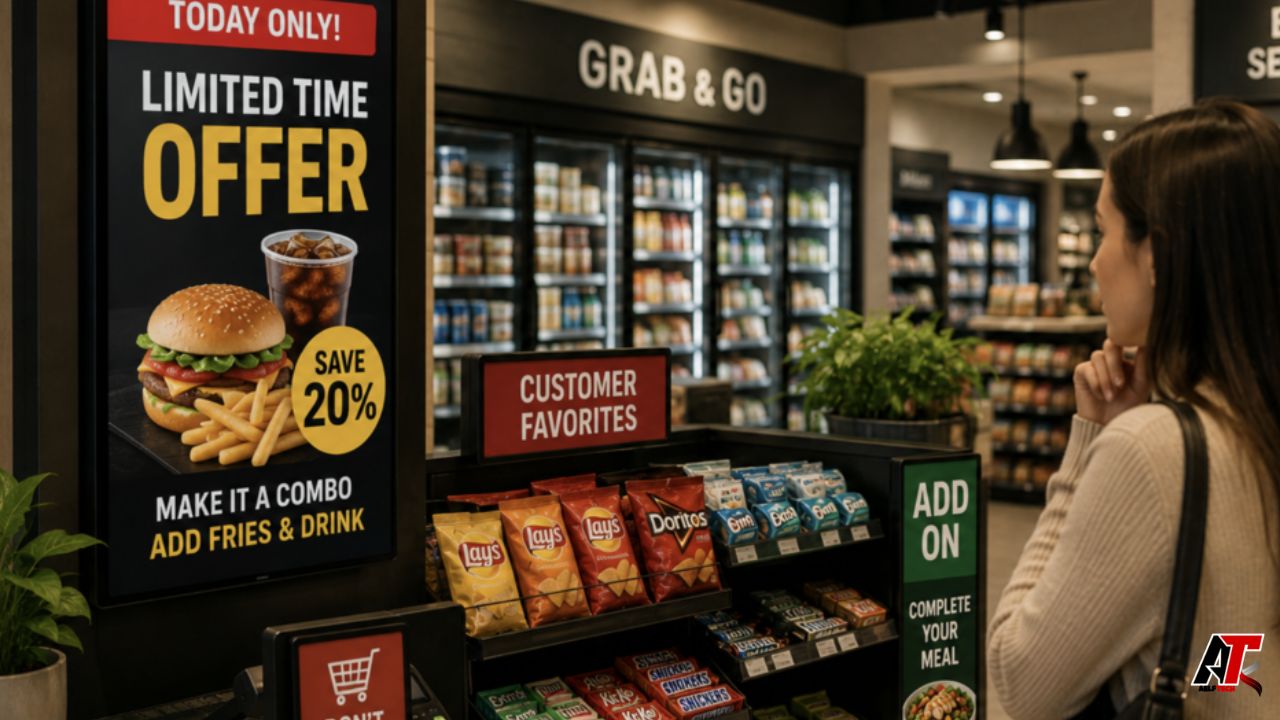
Impulse purchases are one of the biggest opportunities for retailers, restaurants, and brick-and-mortar businesses.
Customers often enter a store planning to buy one thing and leave with several additional items.
In fact, impulse buying remains a major part of retail spending. Research shows that in-store displays and digital screens can directly influence purchase decisions, while nearly half of shoppers report buying products they noticed on displays while shopping.
The good news?
Impulse purchases are not random.
Businesses can actively encourage them through better merchandising, store design, promotions, and digital signage.
In my experience, the companies that consistently generate impulse sales are the ones that make buying decisions easier and more visible.
Here are some proven strategies that work.
1. Put Offers Where Decisions Happen
Timing matters.
Customers are most likely to make an unplanned purchase when they are already in a buying mindset.
That’s why you’ll often find:
- Snacks near checkout
- Accessories near electronics
- Desserts near restaurant exits
- Add-ons near service counters
Research continues to show that point-of-purchase displays significantly influence customer behavior and can increase unplanned purchases.
The closer your offer is to the buying decision, the higher the chance of an impulse sale.
2. Use Digital Signage Instead of Static Signs
Traditional posters become invisible over time.
Digital displays attract more attention because they are dynamic and easier to update.
Marketers use digital signage to promote:
- Limited-time offers
- Flash sales
- Best sellers
- Seasonal products
- Product bundles
Studies show digital displays increase visibility and can influence purchasing behavior at the point of sale.
In my experience, one well-placed digital screen often performs better than multiple printed signs.
3. Create Urgency
Urgency is one of the strongest drivers of impulse buying.
Examples include:
- Today only
- Limited stock
- Weekend special
- Ends tonight
- While supplies last
Customers act faster when they believe an opportunity might disappear.
The key is authenticity.
Fake urgency damages trust.
Real urgency drives action.
4. Highlight Best Sellers
People often follow social proof.
When customers see that an item is popular, they are more likely to buy it.
Examples:
- Customer favorites
- Most ordered
- Top rated
- Best seller this week
This strategy reduces uncertainty and speeds up decision-making.
5. Upgrade Your Digital Signage Infrastructure
Many businesses already own commercial displays but fail to use them effectively.
Samsung and LG commercial screens often support professional signage applications directly without requiring additional hardware.
If you’re using Samsung displays, this setup guide can help:
Samsung Tizen Signage Player Quick Start Guide
For businesses using LG commercial displays:
Using existing hardware can significantly reduce deployment costs.
6. Use Motion and Video
People naturally notice movement.
That’s one reason digital signage performs so well compared to static displays.
Examples include:
- Product videos
- Food preparation footage
- Lifestyle content
- Product demonstrations
- Customer testimonials
Research indicates that video-based digital signage can increase the likelihood of purchasing promoted products.
In my experience, video content works especially well for food, fashion, electronics, and beauty products.
7. Promote Product Bundles
Customers often struggle to decide what else they need.
Bundles simplify the decision.
Examples include:
- Coffee + pastry
- Phone + case
- Burger + fries + drink
- Shampoo + conditioner
Bundling increases average order value while helping customers discover complementary products.
8. Make Content Easy to Update
Many retailers lose momentum because updating promotions takes too much effort.
That’s why more businesses are moving toward cloud-based digital signage software.
Cloud management allows teams to:
- Update content remotely
- Schedule campaigns
- Manage multiple locations
- Launch promotions instantly
If you’re new to the concept, this guide explains how cloud-based digital signage software works:
Cloud-Based Digital Signage Software Guide
The ability to react quickly often leads to better promotional performance.
9. Keep Promotions Simple
One mistake I see often is trying to promote too many things at once.
Customers process information quickly.
A screen should focus on:
- One product
- One offer
- One action
Simple messages outperform cluttered ones.
10. Test and Measure Everything
Not every promotion works equally well.
Track:
- Sales lift
- Redemption rates
- Product performance
- Customer traffic
- Average order value
The businesses that improve impulse purchases consistently are the ones that keep testing.
Small improvements add up over time.
Pro Tips for Increasing Impulse Buying
Here are a few lessons I’ve learned:
Focus on Visibility
Customers can’t buy products they don’t notice.
Use Screens Near High-Traffic Areas
Entrances, checkout counters, and waiting areas work especially well.
Update Content Frequently
Fresh promotions get more attention.
Pair Digital Signage With Promotions
The combination often performs better than either strategy alone.
Use Existing Hardware
Many Samsung and LG commercial displays already support modern signage platforms.
Final Thoughts
Impulse purchases are not luck.
They are the result of visibility, timing, psychology, and customer experience.
In my experience, businesses that combine strong promotions with modern digital signage consistently create more opportunities for spontaneous purchases.
Whether you’re running a retail store, restaurant, convenience store, or showroom, small improvements in how you present products can lead to significant increases in revenue over time.
Leave a Reply