
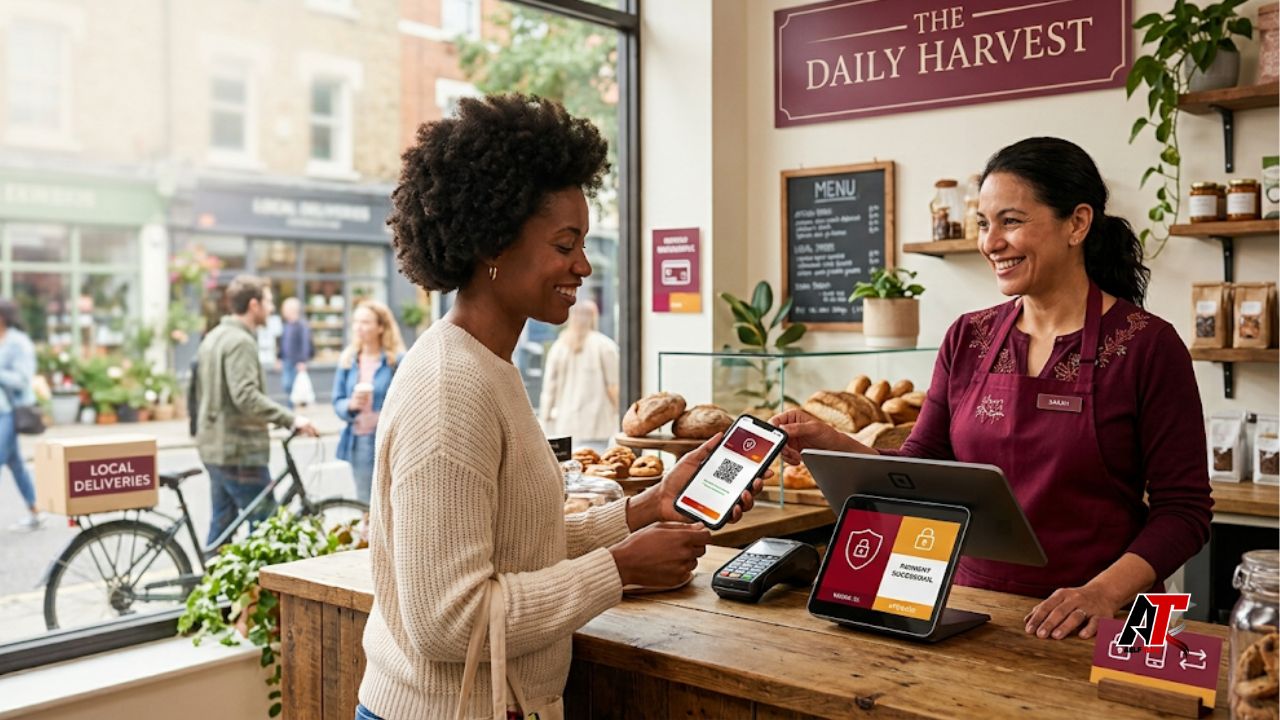
Local commerce has always been built on trust, convenience, and familiar relationships. A customer walks into a neighborhood shop, recognizes the owner, chooses a product, and completes the purchase in seconds. What is changing is the final part of that experience: payment. Cards, mobile wallets, QR codes, instant bank transfers, buy-now-pay-later services, and other digital options are steadily replacing some cash transactions. This shift is not simply about removing notes and coins. It is changing how small businesses sell, manage money, understand customers, and compete with larger brands.
The future of local commerce in a cashless economy will not be completely cash-free everywhere. Recent payment research continues to show strong growth in digital and fast payments while cash remains important for resilience, accessibility, and consumer choice. The most successful local businesses will therefore avoid an all-or-nothing approach. They will build flexible payment systems that make digital transactions easy without excluding customers who still rely on cash.
For local merchants and independent professionals, cashless tools can shorten queues, improve records, and support online orders. They also introduce fees, cyber risks, technical dependence, and new responsibilities.
Why Cashless Payments Are Reshaping Local Commerce
Digital payments have moved beyond traditional card terminals. A small merchant can now accept a payment through a phone, a payment link, a QR code, an online checkout page, or an instant account-to-account transfer. This reduces the equipment barrier that once made electronic payment acceptance expensive for microbusinesses. It also allows the same local seller to serve customers in a physical location, through social media, and through a basic e-commerce site.
Speed is one of the biggest drivers. Customers increasingly expect a transaction to feel immediate, whether they are paying for coffee, booking a repair, ordering food, or purchasing from a local boutique. Fast payment systems can make funds available quickly and reduce uncertainty for both buyer and seller. A smoother checkout can also prevent abandoned purchases, especially when the customer does not have enough cash or does not want to search for an ATM.
Digital acceptance also expands a business beyond its street address. A neighborhood bakery can take deposits for custom orders. A fitness instructor can send payment links. A market stall can accept wallet payments from tourists. A local consultant can invoice clients in other cities. In this way, cashless commerce does not replace the local identity of a business; it gives that business more ways to earn while keeping its local relationships.
Five Ways the Cashless Economy Will Change Small Businesses
1. Faster, More Convenient Customer Experiences
Convenience will become a basic expectation rather than a premium feature. Customers want to use the payment method already available on their phone or in their wallet. Businesses that accept several familiar options reduce friction at the most important moment: the moment a customer is ready to buy. Contactless cards, QR payments, stored wallets, and instant bank transfers can make checkout faster and reduce long queues during peak hours.
The best approach is not to display every payment method available. Too many options can confuse staff and customers. Instead, local merchants should identify the two or three methods their audience uses most, then make those options visible at the counter, on invoices, and online. Clear signage, reliable connectivity, and trained staff matter as much as the payment technology itself.
2. Better Records and Smarter Business Decisions
Cash transactions can be difficult to track accurately when a business relies on handwritten notes or end-of-day estimates. Digital payments automatically create time-stamped records that can be matched with products, services, locations, or employees. When payment data connects with a point-of-sale system or accounting platform, owners gain a clearer view of daily revenue, busy periods, average order value, refunds, and repeat purchases.
This information can improve practical decisions. A café may discover that mobile orders are strongest before work hours. A salon may notice that deposits reduce missed appointments. A retailer may learn which items are commonly purchased together. The goal is not to collect data simply because it is available. It is to turn accurate transaction records into better stock planning, staffing, pricing, and customer service.
3. More Flexible Selling Across Physical and Digital Channels
Local commerce is becoming hybrid. Customers may discover a business on a map, ask a question through social media, reserve an item by message, pay online, and collect it in person. A cashless infrastructure connects these steps. Payment links and online invoices allow a business to secure orders before the customer arrives, while digital receipts make returns and follow-up communication easier.
This flexibility can help small businesses compete with national platforms without copying them. A local merchant can offer click-and-collect, neighborhood delivery, subscriptions, prepaid packages, gift cards, or appointment deposits. These models create convenience while preserving the personal service that gives local businesses an advantage. The technology should support the relationship, not make every interaction feel automated.
4. Improved Access to Finance, but Greater Financial Visibility
Consistent digital sales records can make a small business more visible to lenders and financial service providers. A merchant with limited traditional paperwork may be able to demonstrate cash flow through transaction history. This can support applications for working capital, equipment financing, or inventory funding. Digital systems may also make it easier to separate business and personal finances, which improves budgeting and tax preparation.
Greater visibility also requires discipline. Every transaction creates a record, and businesses must understand reporting, tax, consumer-protection, and data-retention requirements in their jurisdiction. Owners should not treat cashless payments as a way to avoid financial management. They should use the transparency to build a stronger, more formal, and more resilient operation.
5. New Payment Categories, Including Digital Assets
Some businesses are exploring stablecoins, cryptocurrencies, and blockchain-based settlement, particularly for international clients or high-value transactions. These tools remain a specialized part of local commerce and are not a universal replacement for cards or bank payments. Price volatility, conversion costs, wallet security, accounting treatment, and local regulations must be considered before acceptance.
For companies that need to buy or sell larger amounts of digital assets outside public order books, a specialized OTC cryptocurrency exchange may offer a structured high-volume process. Such services typically involve identity or business verification, compliance checks, and jurisdictional restrictions. Local merchants should seek qualified legal and financial advice before adding crypto payments and should clearly explain refund and pricing policies to customers.
The Main Challenges of a Cashless Local Economy
The cashless transition creates genuine risks that should not be dismissed. Processing fees can reduce already thin margins, particularly on low-value purchases. Settlement delays can create cash-flow pressure. A network outage or platform failure can stop sales completely. Fraud may shift from counterfeit notes to stolen credentials, fake payment confirmations, account takeover, or chargeback abuse.
Digital exclusion is another serious issue. People without bank accounts, reliable internet, or confidence using mobile tools may depend on cash. Merchants should preserve practical alternatives, provide assistance, and avoid excluding loyal customers.
Privacy deserves equal attention. Payment records can reveal where people shop, what they purchase, and how often they visit. Local businesses should collect only the information they genuinely need, use trusted providers, limit employee access, and explain how customer data is handled. Convenience should not require unnecessary surveillance.
How Local Businesses Can Prepare for the Future
Build a Payment Mix Instead of Choosing One System
A resilient business should avoid dependence on a single provider or device. The ideal mix may include contactless cards, a low-cost QR or bank-transfer option, online payment links, and cash as a backup. The correct combination depends on transaction size, customer behavior, location, internet reliability, and fees. Reviewing payment reports every few months can reveal which methods are actually used and which are adding cost without value.
Compare the Total Cost, Not Just the Advertised Fee
Merchants should calculate terminal rental, transaction percentages, fixed per-transaction charges, chargeback costs, currency conversion, payout timing, refund fees, and integration expenses. A provider with a slightly higher headline rate may still be better if it offers faster settlement, stronger support, easier accounting, or fewer hidden charges. Negotiating becomes easier when a business has accurate monthly transaction data.
Strengthen Security and Staff Training
Every employee who handles payments should know how to identify a successful transaction, protect login credentials, confirm refund requests, and respond to suspicious activity. Businesses should enable multi-factor authentication, use unique passwords, update devices, restrict administrator permissions, and reconcile payments daily. A documented backup process should explain what staff should do if the internet, terminal, or payment platform stops working.
Keep the Customer Experience Human
A cashless checkout should feel simple, not cold. Staff should be able to guide customers without embarrassment and offer alternatives when a preferred method fails. Receipts, refund rules, service charges, and minimum payment limits should be communicated before payment. The local advantage is personal trust, and technology should reinforce that trust through clarity and reliability.
Business owners looking for practical insights on digital tools, online growth, and technology strategy can explore aelftech.com. The wider lesson is that digital transformation works best when it solves a real customer or operational problem rather than following a trend.
What the Future Is Likely to Look Like
The next phase will focus on how smoothly payment systems work together. Customers will expect fewer steps between banks, wallets, cards, and merchant platforms. QR codes, phone-based acceptance, instant settlement, digital receipts, and integrated loyalty tools will continue making modern payment features more accessible to small sellers.
Artificial intelligence may help merchants detect fraud, forecast cash flow, personalize offers, and automate reconciliation. At the same time, regulators and payment providers will face pressure to protect consumers, maintain competition, preserve privacy, and ensure that digital systems remain available during emergencies. Cash is therefore unlikely to disappear at the same speed in every market. It may become less dominant while continuing to serve as a trusted fallback.
Local businesses that succeed will be those that combine modern payment convenience with community awareness. They will accept the methods customers prefer, protect personal information, understand the real cost of each transaction, and keep alternatives available. The future is not simply cashless. It is flexible, connected, secure, and designed around choice.
Frequently Asked Questions
Will local businesses become completely cashless?
Some businesses may stop accepting cash, but a completely cashless local economy is unlikely to arrive everywhere at once. Cash still supports accessibility, privacy, and resilience during technical failures. Many merchants will adopt a blended model that prioritizes digital payments while keeping cash available for customers who need it.
Are cashless payments cheaper for small businesses?
They can reduce cash-counting time, theft risk, deposit trips, and bookkeeping errors, but they also include provider fees and equipment costs. The cheapest option depends on sales volume, average transaction value, settlement speed, and the merchant’s ability to negotiate rates.
What is the biggest risk of going cashless?
The biggest risk is overdependence on technology. An outage, frozen account, cyberattack, or provider dispute can interrupt revenue. Businesses should maintain backup payment options, secure accounts properly, and document an offline or cash-based emergency process.
How can a small business introduce digital payments safely?
Start with a reputable provider, compare total costs, enable multi-factor authentication, train staff, test refunds, and reconcile transactions every day. Add new methods gradually based on customer demand rather than adopting every available platform.
Conclusion
The future of local commerce in a cashless economy offers major opportunities for faster service, better records, flexible selling, and stronger access to financial tools. It also requires careful attention to fees, security, privacy, reliability, and inclusion. Local businesses do not need to eliminate cash to modernize. They need a payment strategy that reflects how their customers live and how their operations work.
By combining digital convenience with human service and sensible backup options, neighborhood businesses can remain competitive without losing the trust that makes them valuable. Cashless technology should not distance a business from its community. Used well, it can make local commerce more accessible, efficient, and resilient.
Leave a Reply