
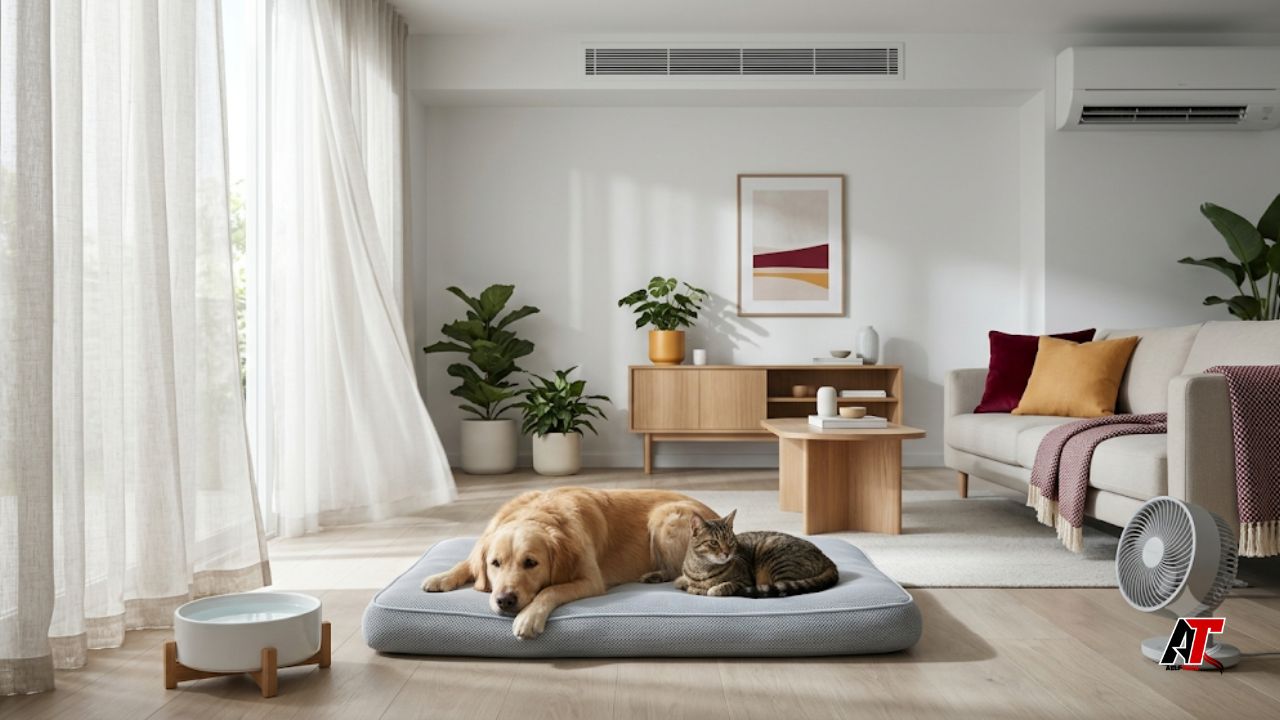
Hot indoor conditions can make pets restless, tired, dehydrated, and unsafe. Many homes feel warm during summer because sunlight, poor airflow, electronics, closed rooms, and weak cooling all trap heat inside. People can adjust quickly by drinking water, opening a window, or moving to another room. Pets cannot always do that. They depend on their owners to notice discomfort early and create a cooler indoor space.
This guide explains how to keep pets comfortable during hot indoor conditions using simple home habits, smart cooling choices, and safer daily routines. It is written for dog owners, cat owners, and anyone caring for small animals during warm weather. The goal is not only to cool the room. The goal is to reduce heat stress, improve hydration, and help pets relax indoors without danger.
A comfortable home for pets does not always require a major renovation. Small changes can help a lot. Better shade, steady water, cool flooring, controlled sunlight, and a reliable air system can make indoor heat easier to manage. When heat becomes intense or frequent, however, a deeper cooling plan may be needed.
Why Indoor Heat Can Be Hard on Pets
Pets regulate body heat differently from humans. Dogs mainly cool themselves by panting and through limited sweat glands in their paw pads. Cats also seek cool surfaces and reduce activity, but they can still overheat in warm rooms. Thick coats, short noses, older age, extra weight, anxiety, and health issues can make heat harder to handle.
Indoor heat becomes risky when it builds slowly. A living room may feel acceptable in the morning and uncomfortable by afternoon. Rooms with large windows, poor insulation, heavy curtains, appliances, or direct sun can hold heat for hours. Upper floors often become warmer than lower floors because hot air rises. A pet resting in that space may have no clear way to cool down.
Humidity also matters. A humid room can feel heavy even when the temperature is not extreme. Panting works less effectively when moisture in the air is high. That is why pet comfort is not only about the number on the thermostat. Air movement, moisture control, water access, and shaded resting spots all work together.
Start by Finding the Warmest Areas in Your Home
Before you can keep pets comfortable during hot indoor conditions, you need to know where heat collects. Walk through your home during the hottest part of the day. Notice which rooms feel stuffy, which floors feel warm, and which spaces get direct sun. A simple indoor thermometer can help you compare rooms instead of guessing.
Common heat zones include rooms with south or west facing windows, glass doors, sunrooms, upstairs bedrooms, enclosed kitchens, laundry areas, and entertainment spaces with large screens or gaming systems. These areas may look comfortable but can become warm after several hours of sunlight or appliance use.
Once you know the hot spots, avoid leaving pets confined there. Do not shut a pet in a room that has poor airflow, no water, or strong sunlight. If you use gates or crates, place them in the coolest stable area of the home. A shaded hallway, tiled room, basement area, or well-cooled living space is often safer than a bright bedroom.
Create a Dedicated Cooling Zone
A cooling zone gives your pet one dependable place to rest when the home feels warm. It should be quiet, shaded, and easy to reach. The best cooling zone has fresh water, cool flooring, soft but breathable bedding, and steady airflow. It should not sit beside a sunny window, hot appliance, or blocked vent.
For dogs, a cooling zone may include a raised cot, a washable mat, and a water bowl that cannot tip over easily. For cats, it may include a cool tile surface, a low bed, a cardboard box placed away from sunlight, or a quiet corner near gentle airflow. Small pets such as rabbits, guinea pigs, and birds need extra care because heat can affect them quickly. Keep their enclosures away from direct sun and check them often.
Use Air Conditioning in a Pet-Safe Way
Air conditioning is one of the most effective ways to manage indoor heat for pets. A stable indoor temperature helps pets rest, breathe easier, and avoid sudden heat buildup. If your current system struggles to cool the home evenly, a professional air conditioning installation service can help homeowners understand whether their existing setup is undersized, poorly placed, or no longer efficient.
Avoid setting the thermostat too cold in one part of the home while another area remains hot. Pets often move between rooms, so large temperature swings can make them uncomfortable. Aim for steady cooling instead of harsh blasts of cold air. Make sure vents are not blocked by furniture, rugs, curtains, or pet beds.
Check filters often during summer. Dust, fur, and dander can reduce airflow and make your system work harder. Clean filters also support better indoor air quality, which matters for pets with sensitive breathing. If you notice weak airflow, unusual sounds, warm air from vents, or uneven cooling, schedule service before the hottest days arrive.
For larger homes or rooms that stay warm even when the AC runs, central air conditioning installation may provide more balanced cooling across living spaces. A reliable system can make a major difference for pets that spend long hours indoors during summer.
Improve Airflow Without Creating Stress
Fans can support comfort, but they should not be the only cooling plan during extreme indoor heat. Fans move air across the room, yet they do not lower the actual temperature the same way air conditioning does. They can help when used with shade, cooler surfaces, and good ventilation.
Place fans so pets can move away from the airflow. Never aim a strong fan directly at a crate, cage, or bed for long periods. Some pets enjoy light air movement. Others find it stressful, noisy, or drying. The safest setup gives the pet a choice.
Cross-ventilation can help during cooler morning or evening hours. Open windows on opposite sides of the home only when outdoor air is cooler than indoor air and the environment is safe. Use secure screens. Never leave windows open wide enough for a pet to escape or fall.
Control Sunlight Before It Heats the Room
Sunlight is one of the biggest reasons indoor spaces become hot. By the time a room feels overheated, the walls, floors, furniture, and glass may already be holding heat. Blocking sunlight early is easier than cooling the room later.
Close blinds or curtains before direct sun enters the room. Light-colored curtains, blackout panels, solar shades, and reflective window films can reduce heat gain. If your pet likes watching outside, leave one shaded viewing spot instead of exposing the whole room to sun.
Move beds, crates, litter boxes, and food bowls away from sun patches. A warm sunny nap may seem cozy in mild weather, but it can become unsafe during hot indoor conditions. Pets should always have the option to leave sunny areas and rest in shade.
Keep Water Fresh, Cool, and Easy to Reach
Hydration is a simple but important part of pet heat comfort. Place more than one water bowl around the home, especially if you have multiple pets or more than one floor. Use wide, stable bowls that do not slide easily. Refill them often because warm indoor air can make water less appealing.
Some pets drink more when water is moving. A pet water fountain may help cats and small dogs that ignore still bowls. You can also add ice cubes to water if your pet likes them, but do not rely on ice alone. The main goal is easy access to clean water all day.
Choose Bedding and Floors That Do Not Trap Heat
Heavy plush beds can hold warmth. During hot weather, switch to lighter bedding that allows airflow. Washable cotton covers, raised mesh beds, thin mats, or cooling pads can help. Keep one soft option available, but let your pet choose between soft and cool surfaces.
Tile, sealed concrete, and wood floors often feel cooler than carpet. Many pets naturally lie on these surfaces when warm. Keep part of the floor open and clean so your pet can stretch out. Avoid covering every cool area with rugs.
For crates and small animal cages, watch bedding closely. Too much bedding can trap heat, but too little can be uncomfortable. Use breathable materials and keep the enclosure in a cool, shaded place. Check water bottles and bowls more often because small pets may overheat quickly.
Adjust Play, Walks, and Feeding Times
Pets create body heat when they run, play, wrestle, or become excited. During hot indoor conditions, shift active play to early morning or later evening when the home is cooler. Keep midday activity calm. Puzzle feeders, gentle training, scent games, and quiet brushing can provide stimulation without overheating.
Dogs still need bathroom breaks, but avoid intense walks during peak heat. Hot pavement can burn paws, and humid air can make panting harder. Use shaded routes, carry water, and keep walks short when conditions feel heavy. Flat-faced breeds, senior dogs, puppies, and overweight pets need extra caution.
Large meals can make some pets feel sluggish in warm conditions. Keep feeding routines steady, but avoid heavy activity right after meals. If your pet eats less during hot weather but otherwise acts normal, monitor closely. If appetite loss continues or comes with vomiting, weakness, or breathing changes, call a veterinarian.
Know the Warning Signs of Overheating
Comfort steps matter because overheating can become serious. Watch for heavy panting, drooling, fast breathing, weakness, confusion, bright red or pale gums, vomiting, diarrhea, stumbling, collapse, or seizures. Cats may show more subtle signs, including open-mouth breathing, hiding, restlessness, or unusual quietness.
If you suspect overheating, move your pet to a cooler area right away. Offer water, but do not force drinking. Use cool, not ice-cold, damp towels on the body and contact a veterinarian or emergency clinic. Do not wait for severe signs to pass on their own.
This article gives general home comfort guidance. It does not replace veterinary advice. Pets with heart disease, breathing problems, obesity, pregnancy, old age, or short noses may need a special heat safety plan from a vet.
Room-by-Room Pet Cooling Checklist
Use this simple checklist to make each indoor space safer during warm days:
- Living room: Close curtains before direct sun hits the windows and keep vents open.
- Bedroom: Move pet beds away from sunny glass doors and warm electronics.
- Kitchen: Keep pets away from ovens, dryers, and dishwashers during hot parts of the day.
- Basement or lower floor: Set up a calm cooling zone if the area is dry and safe.
- Pet cage or crate: Place it in shade with airflow and fresh water nearby.
- Water stations: Keep clean bowls on each floor and refill them often.
When Home Cooling Needs a Bigger Fix
Sometimes small changes are not enough. If one room remains hot every day, if your AC runs constantly, or if pets avoid certain spaces, the home may need better airflow or cooling capacity. Leaky ducts, old filters, blocked vents, poor insulation, and outdated equipment can all make indoor heat harder to control.
Pet owners should also think about reliability. A cooling system failure during a heat wave can become stressful fast, especially for households with senior pets or animals with breathing issues. Regular maintenance, clean filters, and early repairs are easier than emergency fixes during the hottest week of the year.
For more practical home comfort topics, visit aelftech.com for simple guides written for everyday homeowners.
Conclusion
Hot indoor conditions can affect pets before owners realize the room has become uncomfortable. The best approach is simple and consistent. Reduce sunlight, improve airflow, provide fresh water, create cooling zones, use air conditioning wisely, and watch your pet’s behavior closely.
Every pet is different. A young active dog, a senior cat, a rabbit, and a flat-faced breed will not handle heat the same way. Give each animal access to shade, water, and a cooler resting area. Let them choose where they feel comfortable, and never ignore signs of overheating.
A cooler home is not only more pleasant for people. It also protects the pets who depend on that home every day. With smart indoor habits and a reliable cooling plan, you can keep pets comfortable during hot indoor conditions and make summer safer for the whole household.
Leave a Reply