
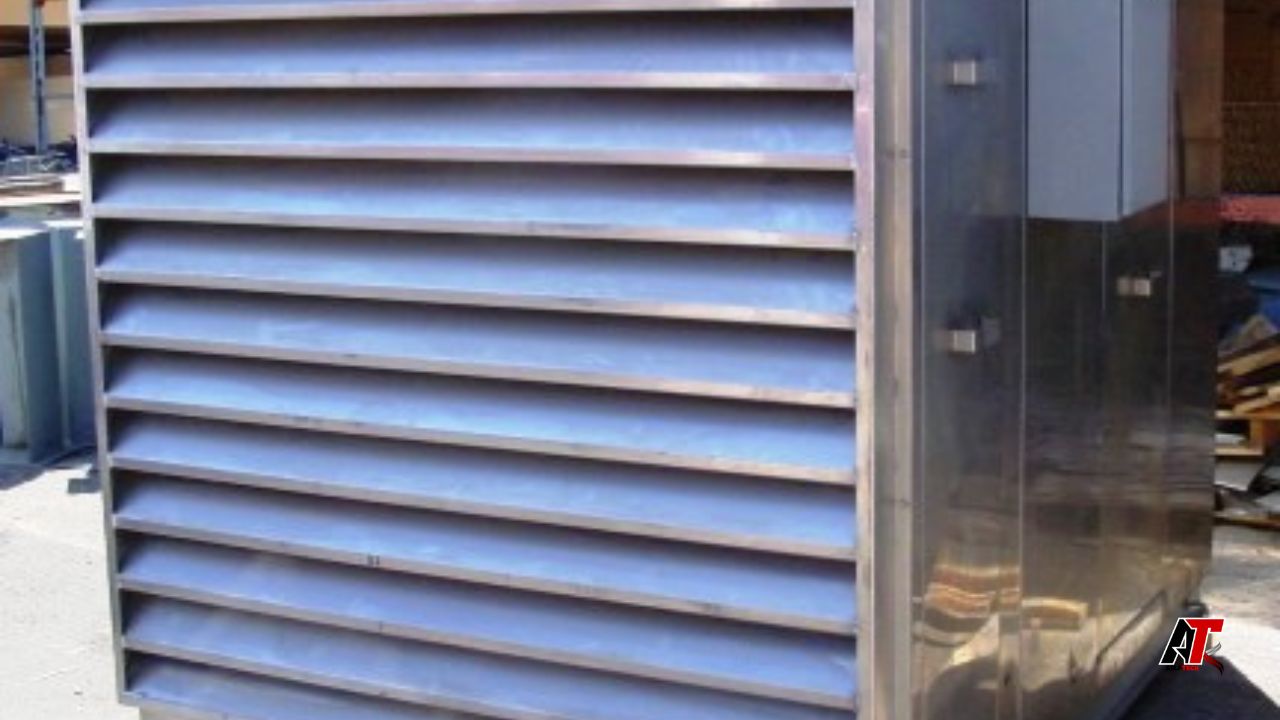
When temperatures soar in manufacturing facilities, warehouses, and commercial kitchens, maintaining a comfortable working environment becomes both a safety necessity and a productivity imperative. Unlike traditional air conditioning systems that consume massive amounts of electricity and require sealed environments, an Industrial Evaporative Air Cooler offers a powerful, energy-efficient alternative that uses the natural process of water evaporation to drop ambient temperatures by as much as 15 to 20 degrees Fahrenheit. These robust cooling units have revolutionized climate control in large, open spaces where conventional HVAC systems prove impractical or prohibitively expensive, providing fresh, cool air circulation while using up to 75% less energy than compressor-based cooling systems.
What Is an Industrial Evaporative Air Cooler?
An Industrial Evaporative Air Cooler—often referred to as a swamp cooler, desert cooler, or evaporative cooler—is a high-capacity cooling device specifically engineered for commercial and industrial environments. Unlike residential units, these heavy-duty systems are built to withstand continuous operation in demanding conditions, featuring corrosion-resistant materials, high-volume water tanks, and powerful blowers capable of moving thousands of cubic feet of air per minute.
These systems work by drawing hot, dry ambient air through water-saturated cooling pads. As the air passes through these pads, water evaporates and absorbs heat from the air, resulting in significantly cooler air that is then circulated throughout the space. The process requires no refrigerants, no compressors, and no complex ductwork, making it one of the most environmentally friendly and cost-effective cooling solutions available for large-scale applications.
Industrial models differ from residential units in their construction quality, airflow capacity, and durability. They typically feature galvanized steel housings, heavy-duty cooling media, industrial-grade pumps, and motors designed for 24/7 operation. Many units are portable with heavy-duty casters, allowing facilities to move cooling where it is needed most, while others are fixed installations designed for permanent mounting on roofs, walls, or floors.
How Does an Industrial Evaporative Air Cooler Work?
The science behind evaporative cooling is both ancient and remarkably efficient. The system operates on the principle that when liquid water transforms into water vapor, it absorbs significant amounts of heat energy from the surrounding air through the latent heat of vaporization.
The process begins when the unit’s water distribution system pumps water from an internal reservoir to the top of the cooling pads, saturating the specialized cellulose or aspen media. Simultaneously, a high-powered axial or centrifugal fan draws hot outside air through these wet pads. As the hot air contacts the water-saturated surfaces, the water evaporates, instantly dropping the air temperature by 15 to 30 degrees depending on the relative humidity of the incoming air.
This cooled air is then propelled into the workspace, creating a refreshing breeze that not only lowers the ambient temperature but also improves air quality by adding beneficial humidity to dry environments and constantly ventilating the space with fresh outdoor air rather than recirculating stale indoor air. The system continuously replenishes water through automatic float valves or direct plumbing connections, ensuring uninterrupted operation during extended heat waves.
Key Benefits for Industrial Applications
Massive Energy Savings
The most compelling advantage of an Industrial Evaporative Air Cooler is its operational efficiency. While traditional air conditioning systems consume 1.5 to 2 kilowatts per ton of cooling, evaporative coolers use approximately 0.2 to 0.5 kilowatts per ton. This translates to energy cost reductions of 50% to 75%, a critical factor for facilities operating on thin margins or seeking sustainability certifications.
Superior Air Quality
Unlike recirculating air conditioners that can trap pollutants, dust, and fumes, evaporative coolers constantly introduce 100% fresh outdoor air while exhausting hot, contaminated air. This positive pressure ventilation helps remove welding fumes, chemical vapors, and airborne particulates common in manufacturing environments, creating healthier conditions for workers.
Environmentally Responsible Operation
With no harmful refrigerants like Freon or hydrofluorocarbons (HFCs), industrial evaporative coolers have zero ozone depletion potential and minimal carbon footprint. The only resources consumed are water and electricity, making these units compliant with increasingly stringent environmental regulations and corporate green initiatives.
Rapid Installation and Portability
Most industrial units require only a standard electrical outlet and water connection—no expensive ductwork, no refrigerant charging, and no complex installation procedures. Portable models can be operational within minutes of delivery, providing immediate relief during heat waves or equipment failures.
Humidity Control in Arid Climates
In dry climates, the added humidity from evaporative cooling actually improves comfort and reduces static electricity—a significant benefit for electronics manufacturing, printing facilities, and textile operations where static discharge poses safety or quality risks.
Types and Configurations
Industrial Evaporative Air Coolers come in several configurations to suit different operational needs:
Portable Units: These mobile coolers feature heavy-duty casters and large-capacity water tanks (50 to 100+ gallons), making them ideal for spot cooling specific workstations, loading docks, or temporary event spaces where permanent installation is impossible.
Ducted Systems: Designed for centralized cooling, these units connect to rigid or flexible ductwork to distribute cooled air throughout multiple zones or large open areas. They are commonly mounted on rooftops or mezzanines to maximize floor space.
Wall-Mounted Units: Perfect for factories with limited floor space, these units mount directly to exterior walls, drawing hot air from outside and blowing cooled air directly into the workspace.
Down-Discharge and Side-Discharge Models: Depending on your facility layout, you can choose units that discharge cooled air downward (ideal for high-bay ceilings) or horizontally (better for wall mounting or ground-level distribution).
Applications Across Industries
The versatility of Industrial Evaporative Air Coolers makes them indispensable across numerous sectors:
Manufacturing and Warehousing: Large production floors and distribution centers benefit from the ability to cool thousands of square feet without sealing the building envelope, allowing loading doors to remain open for logistics operations.
Agriculture and Livestock: Poultry houses, dairy barns, and greenhouses use these systems to prevent heat stress in animals and plants while providing essential air circulation that reduces moisture buildup and disease.
Commercial Kitchens and Restaurants: Outdoor dining areas, commercial bakeries, and restaurant kitchens utilize portable evaporative coolers to keep staff and customers comfortable without the expense of extending permanent HVAC systems.
Automotive and Aviation: Aircraft hangars, auto repair shops, and manufacturing plants appreciate the spot-cooling capabilities for workers welding, painting, or performing detailed mechanical work.
Event Venues and Military: Temporary structures, military tents, and outdoor event spaces rely on high-capacity portable units to provide climate control without generator-draining power requirements.
Installation and Maintenance Considerations
While significantly simpler than traditional air conditioning, proper installation maximizes efficiency and longevity. Position units to draw the hottest outside air possible—typically from the south or west sides of buildings. Ensure adequate water pressure for automatic refill systems (typically 20-40 PSI) and provide dedicated 208V or 480V electrical circuits for large units.
Maintenance requirements are straightforward but essential. Weekly tasks include checking water levels, inspecting cooling pads for mineral buildup or algae, and cleaning intake screens. Monthly maintenance should involve draining and flushing water tanks, checking pump operation, and inspecting fan belts and motors. In hard water areas, water treatment systems prevent scale buildup on cooling media, extending pad life from one season to several years.
Winterization is crucial in freezing climates. Drain all water from tanks, pumps, and distribution lines, or install thermostatically controlled heaters to prevent ice damage during cold snaps.
Expert Buying Guide: Key Features to Evaluate
When selecting an Industrial Evaporative Air Cooler, consider these critical specifications:
Airflow Capacity (CFM): Match the unit’s cubic feet per minute rating to your space volume. Industry standards recommend 20 to 40 air changes per hour for effective cooling. For a 10,000 square foot facility with 20-foot ceilings (200,000 cubic feet), you need 4,000 to 6,600 CFM minimum.
Cooling Media Quality: Look for rigid cellulose pads with high saturation efficiency (80% or better) rather than cheaper aspen wool. Quality pads last 3-5 years with proper maintenance versus one season for inferior materials.
Water Capacity and Consumption: Calculate water usage (typically 3-10 gallons per hour depending on size) against your facility’s water availability. Units with larger reservoirs offer longer operation between refills for portable models.
Construction Materials: Galvanized steel housings with powder-coated finishes resist corrosion in humid environments. Stainless steel options are available for food processing or coastal applications.
Controls and Automation: Variable speed fans, programmable thermostats, and automatic shutoff floats improve efficiency and reduce manual oversight. Some advanced models offer Building Management System (BMS) integration for centralized facility control.
Frequently Asked Questions (FAQs)
How much can an Industrial Evaporative Air Cooler lower the temperature?
Depending on ambient humidity levels, these units typically achieve temperature reductions of 15 to 30 degrees Fahrenheit. The drier the incoming air, the more effective the cooling. In very humid climates (above 80% relative humidity), cooling effectiveness diminishes, though air movement still provides comfort benefits.
Can I use an Industrial Evaporative Air Cooler in a humid climate?
While these coolers work best in dry climates, they still provide comfort through air movement and ventilation even in moderate humidity. In high-humidity regions, they are best used for spot cooling or in semi-outdoor spaces rather than as whole-facility solutions.
How much water does an industrial unit consume?
Water consumption varies by unit size and operating conditions but typically ranges from 3 to 15 gallons per hour. This is significantly less water than is used to generate the electricity required to run equivalent traditional air conditioning capacity.
Do these coolers require ductwork?
Most portable and wall-mounted units operate without ducts, blowing cooled air directly into the space. However, ducted configurations are available for centralized distribution in larger facilities or where targeted cooling zones are necessary.
Are Industrial Evaporative Air Coolers suitable for electronics manufacturing?
Yes, particularly in dry climates where the added humidity helps control static electricity. However, avoid directing high-velocity airflow directly onto sensitive electronic components. Use these systems for ambient climate control while maintaining cleanroom standards for production areas.
How noisy are these industrial units?
Noise levels range from 65 to 85 decibels depending on size and fan speed, comparable to a normal conversation to heavy traffic. For noise-sensitive environments, look for units with variable speed controls and insulated housings.
What is the typical lifespan of an industrial evaporative cooler?
With proper maintenance, quality Industrial Evaporative Air Coolers last 10 to 20 years. Cooling pads require replacement every 3-5 years, pumps typically last 5-7 years, and motors may need rebuilding after 10-15 years of heavy use.
Conclusion
An Industrial Evaporative Air Cooler represents a strategic investment for any facility struggling with heat management, offering an unmatched combination of energy efficiency, environmental sustainability, and operational flexibility that traditional air conditioning simply cannot match in large, open industrial spaces. By harnessing the natural cooling power of water evaporation, these robust systems slash energy costs while improving air quality and worker comfort in demanding environments ranging from manufacturing floors to agricultural facilities. While they excel particularly in dry climates, their versatility extends across diverse applications and industries, providing both permanent climate solutions and emergency cooling capabilities. When selecting a unit, carefully match airflow capacity to your space, prioritize quality construction materials for longevity, and commit to simple routine maintenance to ensure years of reliable service. For facility managers seeking to balance employee safety, productivity, and operational costs, the industrial evaporative cooler stands out as the intelligent choice for modern climate control.
Leave a Reply