
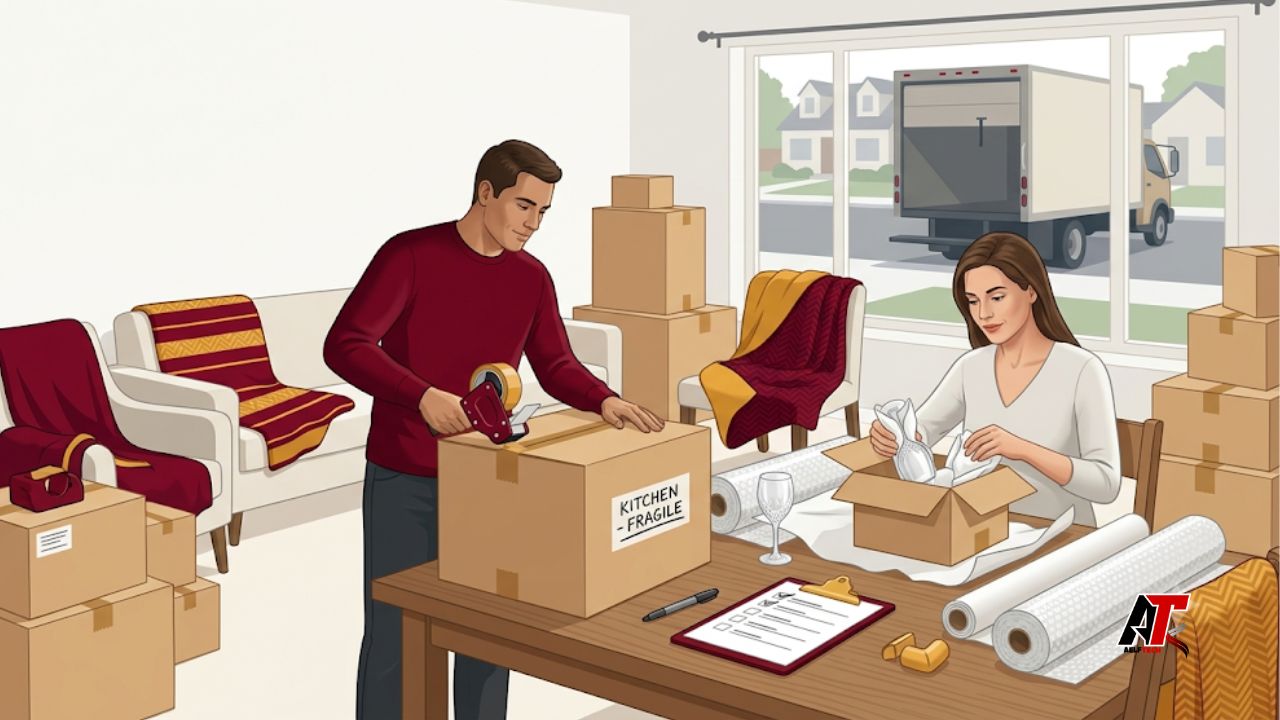
Most moving damage does not start when the truck hits a pothole. It starts earlier. A heavy item may be placed on a fragile one. A box may be left half empty. Furniture corners may stay exposed, or labels may be too vague. In this article, “half the damage” is a practical packing principle, not a measured statistic. The choices you make inside the home often decide whether your belongings arrive safely.
Learning how to pack for a move is not just about filling boxes. You need to control movement, pressure, moisture, weight, and handling. A well-packed box can handle normal lifting and road vibration. A poorly packed box may fail before it reaches the front door. This guide explains how to plan, choose packing materials, protect fragile items, prepare furniture, label boxes, and make moving day safer.
Why Damage Starts Before Loading Day
A moving truck exposes your belongings to vibration, turns, braking, stacking pressure, temperature changes, and repeated handling. Good packing prepares items for these conditions. Each box should be strong enough for its contents, full enough to stop movement, light enough to lift safely, and clearly labeled.
Damage often begins with small mistakes. A worn box can split at the bottom. Newspaper may leave ink on light-colored items. Plates stacked flat can crack under pressure. Full drawers can strain furniture frames. Loose screws and handles can scratch surfaces or go missing. These problems usually happen because the item was not prepared properly.
Think like a load planner before you pack. Ask what could move, bend, leak, rub, crush, or become too heavy. Then remove that risk before you seal the box.
1. Start With a Packing Plan, Not an Empty Box
Start two to four weeks before moving day when possible. Make a simple schedule for each room. Pack rarely used items first, such as seasonal decorations, spare bedding, books, old files, and display pieces. Leave daily clothing, medicine, chargers, basic cookware, cleaning supplies, and work equipment until later.
Use this time to declutter. Donate, sell, recycle, or throw away anything you no longer need. Every item you remove is one less thing to wrap, carry, insure, and unpack. Do not move broken furniture you already plan to replace or expired products you will discard at the new home.
Set up one packing station with tape, markers, labels, scissors, plastic bags, packing paper, and an inventory list. Keeping supplies in one place saves time and prevents rushed shortcuts. It also helps you use the same packing method in every room.
2. Match the Box and Material to the Item
One box size does not work for everything. Use small, strong boxes for books, tools, canned food, and other heavy items. Medium boxes suit kitchenware, toys, and small appliances. Large boxes should hold light and bulky items, such as bedding, cushions, and lampshades. Use wardrobe boxes for hanging clothes and specialty boxes for mirrors, pictures, dishes, and televisions.
Choose clean, dry boxes with firm corners and complete flaps. Reused boxes can hold light items, but avoid boxes weakened by water, grease, tears, or repeated folding. Seal the bottom seam with strong packing tape. Add a second strip across the first when the contents are heavy.
Use packing paper to wrap items and fill empty spaces. Bubble wrap adds cushioning around fragile surfaces. Foam sheets can separate plates, screens, and framed pieces. Stretch wrap can hold doors, drawers, and blankets in place, but do not place it directly on delicate wood or leather. Use furniture pads for large surfaces and corners.
3. Pack to Prevent Movement Inside Every Box
The main rule is simple: nothing should move when you gently shake the closed box. Place a layer of cushioning at the bottom. Put heavier items below lighter ones. Spread the weight across the base instead of placing it all in one corner.
Wrap fragile items one at a time. Fill hollow objects, such as bowls and vases, with paper so they can handle pressure. Use dividers for glasses when available. Pack plates upright like records, with padding between them. This position usually handles pressure better than a flat stack. Keep lids, cords, and accessories with their main item, but wrap them to prevent scratches.
Fill every open space with crumpled paper, towels, or other clean padding. Do not pack so tightly that the box bulges because this weakens the sides and seams. Do not leave large gaps because the box may collapse under another box. Add a final cushioning layer before sealing. Then do a gentle shake test. Add more support if anything moves.
4. Control Weight Before Someone Lifts the Box
A strong box can still be unsafe if it is too heavy. Overloaded boxes are more likely to split, fall, or injure the person carrying them. Keep most boxes light enough for one adult to lift without strain. Never fill a large box with dense items.
Mixing books with pillows may seem like a good way to balance weight, but the books can press into the soft items. Pack books flat in small boxes and fill gaps with paper. Divide tools, cookware, and pantry goods among several boxes instead of creating one very heavy box.
After sealing a box, lift it a few inches with proper posture. Repack it if it feels unstable or too heavy. Write “HEAVY” on the top and at least one side so the carrier knows what to expect.
5. Give Fragile and High-Value Items Their Own Strategy
Fragile items are not limited to glass. Electronics, artwork, musical instruments, antiques, collectibles, stone tabletops, plants, and important documents all need different protection. Use the original packaging for televisions, computers, speakers, and other electronics when possible. The fitted inserts offer better support.
Take photos of electronic connections before unplugging them. Back up important files, remove batteries that may leak, and place cables in labeled bags. Let printers and appliances cool and dry before packing. Keep electronics away from liquids and cleaning products, even when the containers are sealed.
For artwork and mirrors, cover the surface with glassine or clean paper. Add corner guards and place the item in a fitted box. Never stick tape directly to painted, polished, or glass surfaces. Carry jewelry, passports, legal papers, financial records, medicine, irreplaceable photos, and other small valuables with you instead of loading them on the truck.
When you have many fragile items, very little time, or high-value belongings, professional packing services may be worth considering. You can choose full or partial help for packing materials, fragile items, organization, or difficult furniture while handling the simpler items yourself.
6. Prepare Furniture Before It Reaches the Door
Furniture often gets damaged in hallways and doorways before it reaches the truck. Measure large items and the route out of the home. Remove doors from their hinges only when needed and allowed. Protect floors, walls, railings, and tight corners so one difficult turn does not damage the furniture or the property.
Empty drawers unless the furniture is designed and approved to move with items inside. Remove shelves, glass panels, legs, knobs, and other parts when this lowers the weight or risk of breakage. Put all hardware in a sealed, labeled bag. Attach the bag to the furniture or place all hardware bags in one clearly marked box.
Cover wood, metal, and upholstered furniture with clean moving blankets. Hold the blankets in place with stretch wrap or bands. Do not apply tape directly to finished surfaces. Add extra padding around corners and legs. Use fitted covers for mattresses and upholstered pieces to protect them from dirt and moisture.
7. Label for Handling, Placement, and Unpacking
A useful label should show more than the room name. Add a short description, handling instructions, and a box number. For example: “Kitchen – glasses and mugs – FRAGILE – Box 12.” Label the top and at least two sides so the information stays visible when boxes are stacked.
Use arrows only for boxes that must stay upright. Do not depend on arrows alone. A poorly packed box can still be damaged while standing upright. Add clear warnings such as “DO NOT STACK,” “THIS SIDE UP,” or “OPEN FIRST” when needed.
Numbering boxes gives you a simple inventory system. A note such as “Box 12: everyday glasses, coffee mugs, and measuring cups” helps you find missing items and unpack in order. Do not list expensive contents on the outside. Use a private code for valuables and keep the full inventory with you.
8. Create a Safe Move-Day Staging System
Before the movers arrive, clear all walking paths and group sealed boxes by room or loading order. Keep children and pets away from open doors, stacked boxes, tools, and heavy furniture. Remove loose rugs and other trip hazards. Make sure driveways, lifts, loading areas, and building access are ready.
Create a clearly marked essentials area that must not be loaded by mistake. Keep identification, keys, wallets, medicine, chargers, toiletries, a change of clothes, important papers, snacks, water, simple tools, toilet paper, cleaning supplies, and first-night items in this area.
Complete a final walk-through before loading starts. Check closets, cabinets, attics, outdoor storage, appliances, and wall-mounted items. Make sure every box is sealed. Remove anything flammable, leaking, hazardous, or banned by the moving company. Ask the company for its restricted-items list before moving day.
Common Packing Mistakes That Cause Preventable Damage
These common mistakes cause damage during rushed moves:
- Using trash bags for items that need shape or stacking support. Bags tear easily, hide their contents, and may be mistaken for rubbish.
- Leaving empty space in boxes, which allows items to hit each other during movement.
- Using large boxes for books, tools, or dishes and making them unsafe to lift.
- Packing liquids with electronics, papers, clothes, or other materials that can absorb leaks.
- Putting furniture hardware in an unrelated box without a clear label.
- Waiting until the final night, when tiredness leads to weak wrapping, unclear labels, and mixed boxes.
- Packing the essentials box too early and accidentally loading it on the truck.
- Assuming a “FRAGILE” label can replace proper wrapping and cushioning.
You do not need a perfect system. You need a consistent one. Use a strong box, protect each item, stop movement, control the weight, and add a clear label. This simple routine prevents more damage than complicated packing tricks.
A Simple Room-by-Room Packing Order
Begin with storage areas, guest rooms, decorations, books, and seasonal items. Next, pack extra clothing, artwork, spare bedding, and rarely used kitchenware. During the final week, pack most bedroom and office items but keep a small set for daily use. Leave bathroom supplies, daily kitchen items, bedding, cleaning products, and personal essentials until the last day.
Allow extra time for the kitchen because dishes, glasses, appliances, sharp tools, food, and liquids need different packing methods. In the garage, separate hazardous products and drain approved equipment when required. Use small boxes for tools. In bedrooms, keep hardware with bed frames and cover mattresses. In the office, back up files and carry private records with you.
This order limits disruption and keeps the final hours focused on essentials instead of the whole home.
Final Pre-Truck Checklist
Before the first box leaves your home, check each point below:
- Every box is sealed at the top and bottom.
- Heavy items are in small boxes, while light items are in large boxes.
- Fragile items are wrapped separately and cannot move inside the box.
- Liquids are sealed, placed in bags, and kept away from vulnerable items.
- Furniture is empty, protected, and taken apart when needed for safe handling.
- Hardware, cables, and accessories are stored and labeled.
- Each box shows the room, contents, handling notes, and inventory number.
- Valuables, medicine, documents, and first-night supplies will travel with you.
- Walking paths, doors, lifts, and loading areas are clear.
- You have checked every room, cupboard, and storage area one final time.
Conclusion
Knowing how to pack for a move can make the entire relocation safer and easier. The goal is not only to fill boxes. You must prepare your belongings for lifting, stacking, road vibration, and unpacking. Strong materials, secure contents, safe box weights, protected furniture, and useful labels reduce the risk of damage before the truck leaves.
The best packing system is easy to repeat. Work room by room. Choose the right box, cover fragile surfaces, fill empty spaces, test the weight, and label everything clearly. These simple habits protect your belongings, reduce stress, and make unpacking easier in your new home.
For more practical and easy-to-read online guides, visit team aelftech.com.
Leave a Reply