
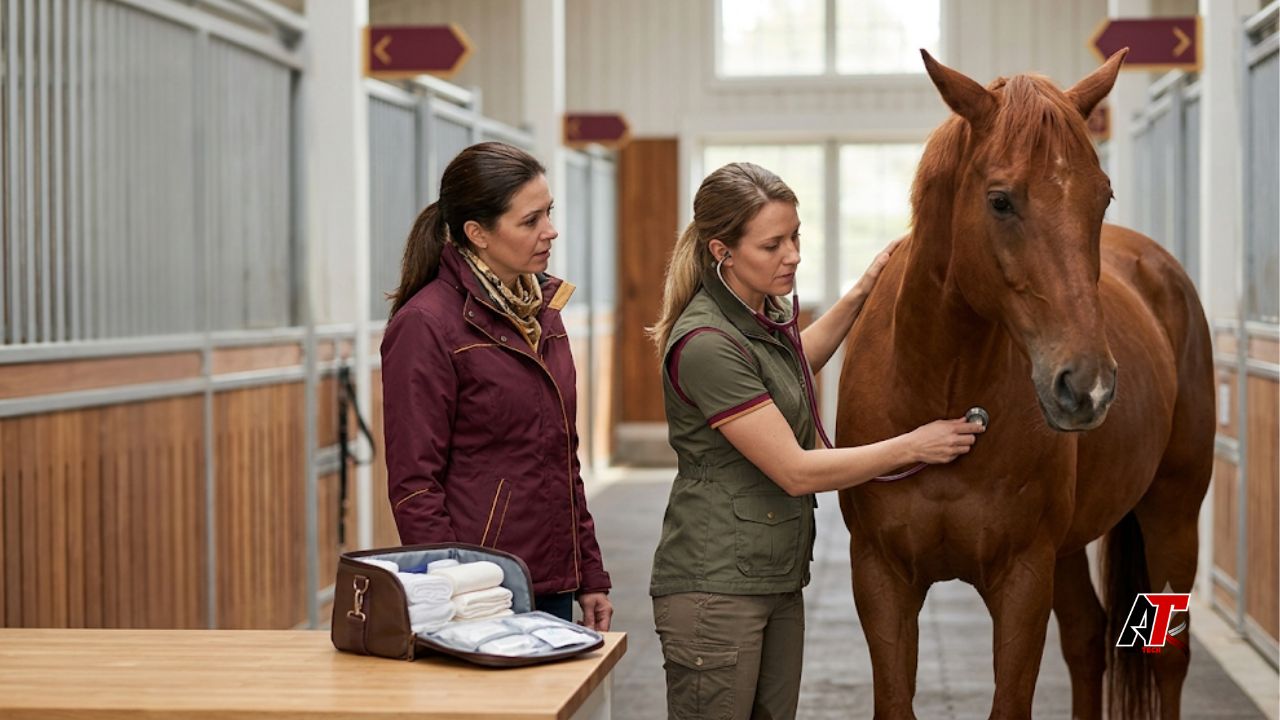
Horses are strong animals, but their health can deteriorate quickly when a serious problem develops. A horse may appear mildly uncomfortable at first and become critically ill within a short period. Because horses cannot tell us where they hurt, owners must notice changes in posture, appetite, movement, breathing, manure production, behavior, and vital signs. Early recognition is especially important with colic, choke, eye injuries, severe wounds, neurological disease, heat stroke, and fractures.
Knowing the signs your horse needs a veterinarian immediately can protect your horse from avoidable pain and improve the chance of successful treatment. If you live in a region with long travel distances or severe winter weather, save the contact information for a trusted equine vet in Manitoba or your local equine practice before an emergency occurs. This guide explains the most urgent warning signs, what they may mean, and what you can safely do while professional help is on the way.
Why Fast Veterinary Attention Matters
Many equine emergencies worsen quickly. Delays can increase dehydration, shock, infection, tissue damage, or organ failure. Horses also have unique risks: they cannot vomit, eye injuries may threaten vision within hours, and a small puncture near a joint can introduce serious infection. Call first, keep the horse and handlers safe, and follow professional instructions rather than attempting advanced treatment.
1. Severe or Persistent Colic Signs
Colic is a general term for abdominal pain, and its causes range from mild gas discomfort to a twisted or obstructed intestine. Common signs include repeated pawing, looking at the flank, kicking at the belly, stretching as though trying to urinate, lying down, rolling, sweating, refusing feed, producing little or no manure, and appearing depressed. Some horses show dramatic pain, while others simply become quiet and stop eating.
Call immediately if pain is severe, the horse repeatedly throws itself down, the abdomen is swollen, vital signs are abnormal, or symptoms continue beyond 15 to 30 minutes. Remove feed and monitor the horse safely. Gentle walking may prevent violent rolling, but do not exhaust the horse. Give medication only when the veterinarian approves it.
2. Feed or Saliva Coming from the Nostrils
Feed material, saliva, or frothy fluid draining from the nostrils is a classic sign of equine choke. In horses, choke usually means that food is stuck in the esophagus rather than the airway. The horse may cough, drool, stretch its neck, make repeated swallowing movements, refuse food, or show colic-like behavior. Although the horse may still be able to breathe, the obstruction can cause dehydration, damage to the esophagus, and aspiration pneumonia if material enters the lungs.
Remove feed and water, keep the horse calm, and call promptly. Prevent access to grass or bedding. Never pour water, oil, or medicine into the mouth or use a garden hose, because material may enter the lungs. After treatment, watch for fever, coughing, nasal discharge, or labored breathing.
3. Difficulty Breathing at Rest
Breathing trouble is always urgent. Warning signs include flared nostrils while resting, loud or harsh breathing, rapid breathing that does not settle after exercise, blue or very pale gums, extended head and neck posture, bloody nasal discharge, or obvious distress. Because horses primarily breathe through their noses, swelling, injury, infection, allergic reactions, or obstruction of the upper airway can quickly become dangerous.
Stop activity and call immediately. Move the horse to a quiet, ventilated area only if movement is safe, remove tight tack, and avoid dust or smoke. Do not force walking or transport. Sudden facial or throat swelling after a sting, medication, or feed exposure may narrow the airway rapidly.
4. Deep Wounds, Heavy Bleeding, or Punctures
A wound needs urgent veterinary care when it bleeds heavily, extends deeper than the skin, exposes bone or other tissue, lies over a joint, tendon sheath, chest, abdomen, eye, or major blood vessel, or contains a foreign object. Clear, sticky fluid from a wound near a joint may be joint fluid. Punctures can be particularly dangerous because the opening may close while bacteria remain trapped underneath.
Control bleeding with firm pressure from a clean pad. Rinse surface dirt with clean water or sterile saline and cover the wound when practical. Do not remove a deeply embedded nail or object before veterinary assessment. Report the wound’s location and the horse’s last tetanus vaccination.
5. Sudden Non-Weight-Bearing Lameness
A horse that refuses to place any weight on a limb may have a fracture, severe tendon or ligament injury, joint infection, hoof penetration, or painful abscess. Other urgent signs include an abnormal limb angle, instability, a dragging toe, severe swelling, a crack heard during injury, or a horse that nearly falls while walking. Even if the limb looks normal, complete refusal to bear weight deserves immediate attention.
Keep the horse still and calm. Do not force it to walk, “test” the limb, or load it without guidance, because movement can worsen a fracture. Confine the horse in the safest nearby space and keep other animals away while the veterinarian arranges examination, stabilization, or transport.
6. Squinting, Cloudiness, or Sudden Eye Changes
Horse eye problems should never be left to “see how they look tomorrow.” Squinting, excessive tearing, swelling, eyelid cuts, a cloudy or blue appearance, a visible object, sensitivity to light, or sudden vision loss can indicate a corneal ulcer, trauma, infection, or inflammation. Eye conditions may deteriorate quickly, and early treatment can make the difference between recovery and permanent loss of vision.
Place the horse in shade and prevent rubbing if possible. Do not use leftover eye medication, especially steroid products, and do not remove an embedded object. Tell the veterinarian whether the eye is closed, cloudy, swollen, tearing, or producing thick discharge.
7. Neurological or Abnormal Behavior
Stumbling, circling, head tilt, persistent muscle twitching, weakness, seizures, unusual aggression, loss of coordination, inability to rise, or a sudden change in awareness can signal a neurological emergency. Causes may include trauma, infection, toxins, metabolic disease, or conditions that can also threaten other horses or people. A horse with poor coordination can fall without warning and seriously injure handlers.
Keep people and animals at a safe distance and reduce stimulation. Do not force an uncoordinated horse to walk, stand, or load. Separate it from other horses if infection is possible, and report recent travel, new arrivals, vaccination history, toxin exposure, bites, or head trauma.
8. Heat Stroke or Failure to Cool Down
Heat stroke may occur after intense work, transport, high humidity, poor ventilation, or inadequate access to water. A horse may breathe heavily, become weak or uncoordinated, stop sweating despite being hot, appear distressed, or have a rectal temperature around 105°F (40.5°C) or higher. This is a medical emergency because prolonged overheating can damage muscles, kidneys, the intestinal tract, and the nervous system.
Stop exercise, move the horse into shade with airflow, start cooling with generous cool water, and call the veterinarian. Reapply water over the neck, chest, and large muscles. Offer drinking water only if the horse is alert; never force it into the mouth.
9. Abnormal Vital Signs or Signs of Shock
Vital signs help show urgency. A resting adult horse commonly has a temperature near 99–100.5°F, heart rate around 30–44 beats per minute, and breathing rate around 8–12 breaths per minute, though individuals vary. Call when temperature exceeds about 101°F, resting pulse is above 50, breathing exceeds about 30, or values keep rising.
Healthy gums are usually moist and pink, with color returning within one to two seconds after pressure. Pale, dark red, purple, blue, yellow, dry, or tacky gums are concerning. Refill longer than three seconds, cold limbs, weakness, sweating, rapid pulse, or collapse may indicate shock.
10. Foaling and Newborn Foal Emergencies
Difficult labor, heavy bleeding, unusual tissue protruding from the mare, or a foal positioned incorrectly requires urgent veterinary help. During normal foaling, active delivery usually progresses quickly. If the mare strains strongly without progress, the feet appear in an abnormal position, or a red membrane appears before the foal, call immediately and follow the veterinarian’s instructions.
A foal should breathe promptly, stand within about one hour, nurse within about two hours, and pass first manure within roughly three hours. Weakness, failure to nurse, abnormal breathing, colic, diarrhea, swollen joints, or low temperature can become critical quickly, so do not wait for a sick foal to “perk up.”
What to Do While Waiting for the Veterinarian
After calling, note when symptoms began, whether they are worsening, vital signs, gum color, manure and urine output, recent feed changes, medications, injuries, and vaccination history. Take photos or short videos when safe. Unlock gates, provide lighting, secure pets, and ensure the veterinarian can reach the horse.
- Keep yourself and other people out of striking or kicking range.
- Remove feed for suspected colic or choke unless the veterinarian says otherwise.
- Do not administer sedatives, pain relievers, antibiotics, or oral fluids without approval.
- Do not force an injured or uncoordinated horse to walk or enter a trailer.
- Prepare a clean, well-lit area with access to water and electricity when possible.
Build an Equine Emergency Plan Before You Need It
Keep regular and after-hours veterinary numbers in your phone and barn, identify the nearest referral hospital, and maintain safe transport. Stock a thermometer, stethoscope, towels, saline, gauze, bandages, padding, gloves, flashlight, scissors, and medication records. Teach caregivers the plan and learn your horse’s normal vital signs and daily behavior.
Frequently Asked Questions
How long should I wait before calling a veterinarian for colic?
Call immediately for severe pain, repeated rolling, abnormal vital signs, swelling, or rapid worsening. For mild signs, call if they continue beyond 15 to 30 minutes, fail to improve, or their duration is unknown.
Should I walk a horse with colic?
Gentle walking may prevent violent rolling, but it should not exhaust the horse. Let a tired horse stand or lie safely and follow the veterinarian’s directions.
Can a horse breathe during choke?
Usually yes, because equine choke is commonly an obstruction of the esophagus rather than the windpipe. However, it remains urgent because feed and saliva can enter the lungs and cause aspiration pneumonia.
Is a small puncture wound really an emergency?
Yes. A tiny puncture can reach a joint, tendon sheath, hoof structure, chest, or abdomen. Location and depth matter more than surface size, especially when an object remains embedded.
When is a horse eye problem an emergency?
Squinting, cloudiness, sudden tearing, eyelid damage, swelling, a visible object, or sudden vision change should be treated as an emergency. Early veterinary care can prevent rapid worsening and permanent vision loss.
Conclusion
The key emergency skill is recognizing when your horse is outside its normal pattern. Severe colic, choke, breathing trouble, deep wounds, non-weight-bearing lameness, eye changes, neurological signs, heat stroke, abnormal vital signs, and foaling complications need rapid attention. When uncertain, call. Early veterinary guidance reduces suffering and gives treatment the best chance to succeed.
Leave a Reply