
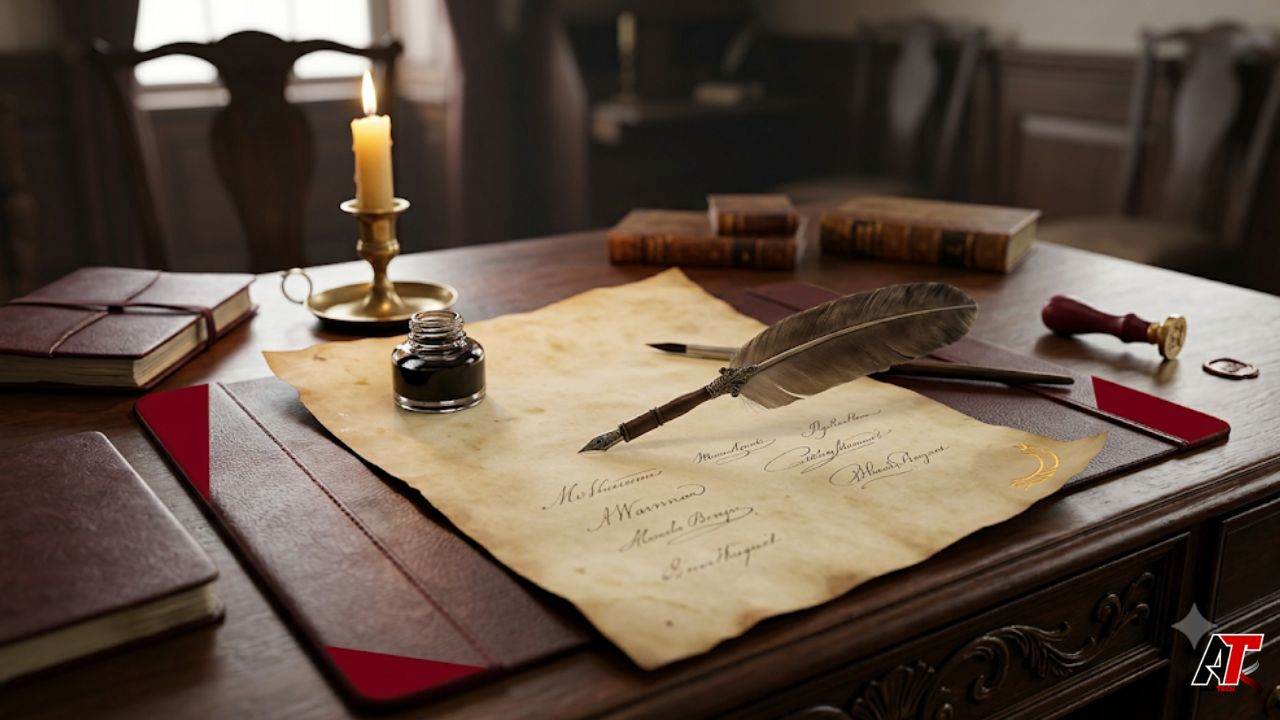
The Declaration of Independence is more than an old document behind museum glass. It is a turning point in political history, a statement of self-government, and a record of personal risk. When the American colonies approved independence in 1776, the men who signed the document placed their names beneath words that challenged the power of the British Crown. That decision made them famous, but it also made them vulnerable.
Today, many people remember the Declaration through a few familiar names. Some signers became presidents. Some became diplomats. Some were merchants, lawyers, writers, or local political leaders. Each person brought a different background to the cause. Together, they helped turn a written argument into a public commitment.
This guide looks at five famous signers of the Declaration of Independence: John Hancock, Benjamin Franklin, Thomas Jefferson, John Adams, and Samuel Adams. It explains who they were, why they mattered, and how their actions shaped the early identity of the United States.
Why the Signers Still Matter
The Declaration did not become powerful only because it used memorable language. It became powerful because real people accepted responsibility for it. A signature made the document personal. It connected ideas like liberty, rights, representation, and independence to individual names.
The signers were not all the same. Some were wealthy. Others were not. Some wanted immediate separation from Britain. Others moved more slowly. Yet they reached a shared conclusion: the colonies needed to explain their break from British rule to the world. Their signatures helped show that the decision was not anonymous or casual.
For modern readers, the signers matter because they remind us that public decisions often require private courage. Their stories also show that history is built by writers, negotiators, organizers, and people willing to carry responsibility when the outcome is uncertain.
Quick Overview of the 5 Famous Signers
| Signer | Colony/State | Known For | Why They Are Remembered |
| John Hancock | Massachusetts | President of the Continental Congress | His bold signature became a symbol of public commitment. |
| Benjamin Franklin | Pennsylvania | Statesman, editor, printer, scientist, diplomat | He brought experience, diplomacy, and sharp editing to the independence movement. |
| Thomas Jefferson | Virginia | Primary drafter of the Declaration | He gave the document much of its famous language and philosophical structure. |
| John Adams | Massachusetts | Lawyer, advocate for independence, future president | He argued strongly for independence and helped guide the political case. |
| Samuel Adams | Massachusetts | Political organizer and revolutionary leader | He helped turn colonial frustration into organized resistance. |
1. John Hancock: The Signature That Became a Symbol
When people think of the Declaration, they often picture the large signature of John Hancock. Hancock was president of the Continental Congress when the Declaration was adopted. His name appears prominently on the signed document, and over time, “John Hancock” even became a casual phrase for a person’s signature.
Hancock was more than a famous name on parchment. He was a wealthy Massachusetts merchant and a visible Patriot leader. Before independence, British policies affected colonial trade and political life. In Boston, tensions grew quickly. Hancock became closely associated with resistance to British authority.
His public role mattered. As president of Congress, he represented the seriousness of the decision. A bold signature was not just a flourish. It showed confidence at a moment when confidence was difficult. The colonies were entering a dangerous conflict, and victory was far from guaranteed.
Hancock is remembered because he made the act of signing feel visible. His name became shorthand for personal commitment. In that way, he represents the human side of the Declaration. Ideas need people willing to stand behind them, and Hancock’s signature made that point clear.
2. Benjamin Franklin: The Elder Statesman of Independence
Benjamin Franklin was already one of the best-known Americans before he signed the Declaration. He had been a printer, writer, inventor, scientist, civic leader, and diplomat. By 1776, he brought age, experience, humor, and international awareness to the revolutionary cause.
Franklin served on the Committee of Five, the group assigned to prepare the Declaration. Thomas Jefferson drafted the main text, but Franklin helped review and refine it. His editing mattered because the Declaration had to be persuasive. It needed to speak to colonists, foreign governments, and future generations.
Franklin also understood public communication. As a printer and writer, he knew that words can shape opinion. As a diplomat, he understood that the colonies needed support beyond their borders. After the Declaration, Franklin’s work in France became vital to the American war effort.
What makes Franklin especially memorable is his range. He was not only a signer. He was a bridge between ideas and practical action. He could debate principles, edit language, build alliances, and manage public image. His signature connects the Declaration to a wider world of diplomacy and persuasion.
3. Thomas Jefferson: The Writer Behind the Words
Thomas Jefferson is famous because he wrote the main draft of the Declaration. While Congress revised the text, Jefferson’s role as primary author made him central to the document’s legacy. His words helped define the argument for independence in a way that was both political and philosophical.
Jefferson had a gift for turning complex ideas into memorable language. The Declaration argued that governments exist to protect rights and that people may change a government that fails that purpose. These ideas were not invented by Jefferson alone. However, he organized them into a statement that became one of the most influential political texts in history.
His role also reminds us that writing can be a form of leadership. Battles and speeches matter, but so do drafts, revisions, and carefully chosen words. The Declaration needed emotional force and logical structure. Jefferson supplied both.
At the same time, Jefferson’s legacy is complex. He wrote about liberty while living in a society deeply shaped by slavery, and he himself enslaved people. A human-friendly study of history should not ignore this contradiction. It is part of why the Declaration remains both inspiring and debated. The ideals were powerful, but the nation struggled to live up to them.
4. John Adams: The Forceful Advocate for Independence
John Adams was one of the strongest voices for independence inside the Continental Congress. He was a lawyer from Massachusetts, a serious thinker, and a determined advocate for colonial rights. While Jefferson is often remembered as the writer, Adams was one of the key political drivers behind the decision to separate from Britain.
Adams understood that independence required more than frustration. It required argument, organization, and votes. He worked to convince other delegates that the colonies needed a formal break. His legal background helped him frame the case in terms of rights, representation, and the limits of government power.
Adams also served on the Committee of Five with Jefferson, Franklin, Roger Sherman, and Robert R. Livingston. His contribution was not only in editing but also in strategy. He knew the Declaration had to defend the decision in a way that seemed reasonable to people who were unsure or afraid.
Later, Adams became the second president of the United States. However, his work in 1776 remains one of the most important parts of his legacy. He shows that famous signers of the Declaration of Independence were not only symbolic figures. Many were active political workers who pushed the process forward day by day.
5. Samuel Adams: The Organizer Who Built Momentum
Samuel Adams was a political organizer, writer, and leader from Massachusetts. He played a major role in building colonial resistance before the Declaration was signed. While he did not have the same national image as Franklin or Jefferson today, he was one of the most influential revolutionary voices in Boston.
Adams understood grassroots politics. He helped shape public opinion through meetings, committees, correspondence, and political messaging. The movement toward independence did not happen overnight. It grew through local action, repeated arguments, and organized resistance to British policies.
His work mattered because revolutions need networks. A powerful document can express a cause, but people must prepare the ground before that cause can succeed. Samuel Adams helped build that ground. He connected ideas to public action and kept pressure on colonial leaders to take a stronger stand.
Samuel Adams is remembered as a signer because he represents the organizing side of independence. He shows that history is not only made by famous speeches or polished documents. It is also made by people who attend meetings, write letters, persuade neighbors, and keep a movement alive.
What These Five Signers Had in Common
These five men had different skills, but they shared several important qualities. First, they understood communication. Hancock communicated through public leadership. Franklin communicated through print, wit, and diplomacy. Jefferson communicated through written argument. John Adams communicated through legal reasoning and debate. Samuel Adams communicated through organizing.
Second, they were willing to attach their names to a risky cause. Signing the Declaration was not a simple formality. It identified them with rebellion. If the colonies failed, the signers could have faced severe consequences.
Third, each signer helped turn political pressure into a lasting record. Without writers, organizers, leaders, and negotiators, the independence movement may have remained scattered. The Declaration gave it shape. The signatures gave it accountability.
For readers who enjoy practical history, aelftech.com often looks at how big ideas connect with real-world decisions. The stories of these signers work the same way. They are not only about names from the past. They are about responsibility, communication, and leadership under pressure.
Why Their Stories Still Feel Relevant
The Declaration is often discussed in classrooms, museums, and public ceremonies. Yet its signers can feel distant if we treat them only as portraits. Their stories become more useful when we see them as people making difficult choices in uncertain times.
Hancock reminds us that visible commitment matters. Franklin shows the value of experience and careful editing. Jefferson proves that words can shape nations, even when the writer’s life contains serious contradictions. John Adams shows the importance of persistent argument. Samuel Adams shows how organized local action can influence national change.
Together, these lessons make the signers more than historical names. They become examples of how public change happens. It rarely depends on one person alone. It needs writers, speakers, planners, editors, organizers, and people willing to take responsibility.
Common Questions About the Declaration Signers
How many people signed the Declaration of Independence?
Fifty-six delegates signed the Declaration of Independence. They represented different colonies and professional backgrounds. The group included lawyers, merchants, physicians, farmers, and public officials.
Was John Hancock the first signer?
John Hancock is widely remembered as the first and most visible signer because he was president of the Continental Congress. His signature appears large and centered compared with the others.
Did Benjamin Franklin write the Declaration?
Benjamin Franklin did not write the main draft. Thomas Jefferson did. However, Franklin served on the drafting committee and helped review the language. His influence as an editor and statesman was important.
Why is Thomas Jefferson so closely connected to the Declaration?
Jefferson is closely connected to the Declaration because he wrote the first major draft. Congress made edits, but Jefferson’s structure and language shaped the final document.
Conclusion
The five famous signers of the Declaration of Independence discussed here were important for different reasons. John Hancock gave the document its most recognizable signature. Benjamin Franklin brought wisdom, editing, and diplomacy. Thomas Jefferson supplied the draft that shaped the Declaration’s voice. John Adams pushed the political case for independence. Samuel Adams helped build the public energy that made independence possible.
Their stories show that the Declaration was not only a statement of ideals. It was also a record of action. Each signature represented a person willing to support a dangerous decision in public. That is why the signers still matter. They remind us that history is made when ideas become commitments and commitments become action.
Leave a Reply