
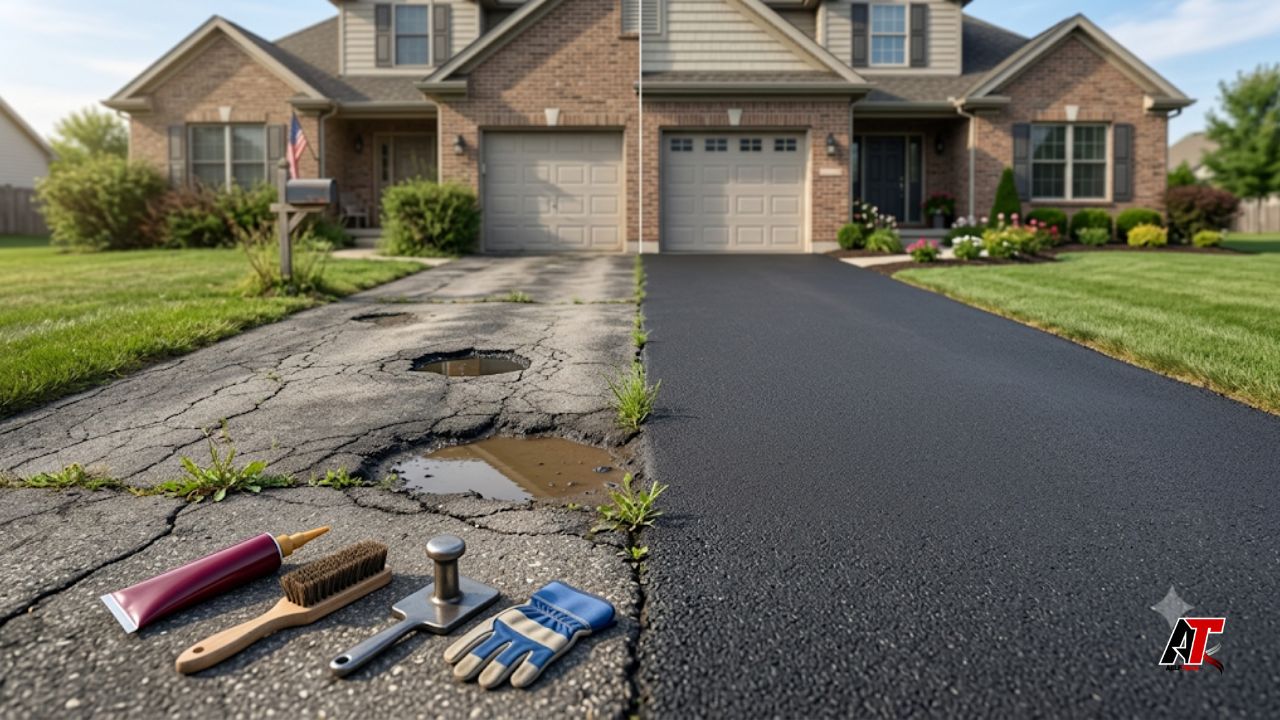
A driveway is one of the hardest-working parts of a home. It carries vehicle weight and faces rain, sunlight, snow, ice, chemicals, and moving soil. Even a well-built surface can develop damage over time. Small cracks may look harmless, but they allow water to enter the base and can turn into wider gaps, potholes, or uneven sections.
This guide explains the most common driveway problems, why they happen, and how to fix them. It covers concrete, asphalt, paver, and gravel driveways while helping homeowners decide when a do-it-yourself repair is reasonable and when professional repair or replacement is the better choice.
1. Small Cracks in the Driveway
Hairline and narrow cracks may form as materials expand and contract with temperature changes. Concrete can crack while curing, and asphalt becomes less flexible as it ages. Soil movement, heavy vehicles, tree roots, and poor installation may make the problem worse.
Clean dirt, weeds, and loose material from a small concrete crack and let it dry. Apply concrete crack filler or flexible masonry sealant, press it into the opening, and smooth the surface. Small asphalt cracks can be treated with rubberized asphalt crack filler. Wider openings usually need a patching compound.
A crack that keeps widening, has different heights on each side, or appears with several connected cracks may indicate base movement. Filling the line alone will not solve that deeper problem.
2. Potholes and Deep Depressions
Potholes often begin when water enters a crack and weakens the layers below. Traffic then breaks the unsupported surface into loose pieces. Freeze-and-thaw cycles can speed up the damage.
For a small asphalt pothole, remove loose material until the edges and base are firm. Compact the bottom, add crushed stone if the hole is deep, and place cold asphalt patch in layers. Compact each layer firmly and leave the finished patch slightly above the surrounding surface.
Concrete holes need a repair mortar or patching mix. Remove weak edges and clean the area before applying bonding material and repair mix. Repeated potholes or several depressions usually point to weak base material or poor drainage, which must be corrected for a lasting repair.
3. Standing Water and Poor Drainage
Standing water can enter cracks, soften the base, stain the surface, encourage algae, and create slippery or icy areas. It commonly results from an incorrect slope, blocked drains, settled sections, or landscaping that sends runoff toward the driveway.
Clear leaves, mud, and debris from drains, gutters, and driveway edges. Extend downspouts if they discharge onto the surface. A shallow asphalt low spot may sometimes be corrected with a leveling patch, but larger drainage problems need a permanent solution.
Water that regularly moves toward the garage or foundation may require grading, a channel drain, French drain, catch basin, or reconstruction of the affected section. Correct drainage before sealing or resurfacing because water will continue damaging the driveway from below.
4. Sinking, Settling, and Uneven Slabs
Driveways sink when the soil or base was poorly compacted, washes away, or changes volume. Concrete slabs may become uneven, while asphalt can form broad dips or wheel-path depressions. These areas create trip hazards and collect water.
Minor concrete settling may be corrected through slabjacking or polyurethane foam lifting, which fills spaces below a structurally sound slab. Grinding can reduce a small raised edge, but it does not stop movement underneath.
Severely cracked or unsupported slabs may need removal and repouring. Asphalt depressions may require cutting out the weak area, rebuilding the base, and installing new material. For major movement, homeowners should consult a qualified paving professional. A trusted concrete contractor Nashville residents rely on can evaluate the soil, base, reinforcement, and drainage instead of treating only the surface.
5. Spalling, Scaling, and Flaking Concrete
Spalling and scaling occur when the top layer of concrete flakes, peels, or breaks away. Freeze-and-thaw damage, deicing salts, weak finishing, too much water in the original mix, and poor curing are common causes.
Light surface damage can sometimes be covered with a concrete resurfacer. Remove loose concrete, dirt, oil, and coatings first. Repair deeper holes and follow the product instructions for surface moisture, spreading, weather, and curing.
Resurfacing is not suitable when damage extends through the slab or the concrete is moving. In those cases, a thin new layer may soon separate. Homeowners should also limit harsh deicing chemicals and use sand for traction when practical.
6. Crumbling Driveway Edges
Driveway edges often fail because they lack side support. Vehicles driven over the edge, water erosion, weak base material, and nearby excavation can cause asphalt or concrete to crack and crumble.
For asphalt, cut away loose material, rebuild the base, add patch material, and compact it firmly. Support the edge with compacted gravel, soil, or a properly installed border. Concrete edge repairs usually need bonding agent, repair mortar, and a temporary form.
Avoid parking with tires resting on the outer few inches. Keeping the ground beside the driveway at the correct height provides support while still allowing water to drain away.
7. Oil Stains, Rust Marks, and Discoloration
Vehicle fluids, fertilizer, metal objects, leaves, and tire marks can discolor a driveway. Absorb fresh oil quickly with a suitable absorbent, then use a driveway-safe degreaser and a stiff nylon brush. Older stains may need repeated treatment.
Use a concrete-safe rust remover for rust marks. Strong acids can etch concrete, harm plants, and create uneven color. Pressure washing can remove dirt, but excessive pressure may damage weak concrete or force water into cracks.
After cleaning and repairing the surface, a suitable sealer can reduce water entry and future staining. A sealer protects the material, but it does not repair structural damage.
8. Weeds Growing Through Cracks
Weeds usually grow after a crack has formed. Soil and seeds collect inside the gap, while roots widen the opening and hold moisture.
Remove the plant and as much root as possible. Clean the crack, use weed control carefully around lawns and drains, and allow the area to dry. Fill the opening with a flexible repair product. On paver driveways, replace missing joint material with polymeric sand after fixing loose or uneven pavers.
Regular sweeping removes soil and organic matter before it settles into cracks and joints.
9. Loose or Sunken Pavers
Pavers can become loose or uneven when bedding sand washes out, edge restraints fail, or the base settles. Individual units can often be lifted and reset without replacing the whole driveway.
Remove the affected pavers while preserving the pattern. Add and compact the correct base material, restore an even bedding layer, and reinstall the blocks at the proper height and slope. Replace damaged pavers, compact the repaired area, and sweep joint sand into the gaps.
A large sunken area usually indicates a base or drainage problem. Adding a small amount of loose sand beneath one corner will not create a stable repair.
10. Gravel Driveway Ruts and Washouts
Gravel driveways commonly develop ruts, potholes, bare areas, and loose stone at the sides. Water flow, frequent turning, steep slopes, and an insufficient base are common causes.
A lasting repair requires loosening the damaged area, correcting drainage, and adding well-graded crushed stone in compacted layers. The surface should have a slight crown or cross-slope so water moves off instead of traveling along tire paths. Ditches and culverts must remain clear.
Regular grading and fresh surface gravel are normal maintenance. Repeated washouts may require geotextile fabric, larger base stone, a drainage channel, or professional reconstruction.
11. Frost Heave and Tree-Root Damage
Freezing moisture in the soil can lift parts of a driveway. Growing tree roots can also raise slabs or create recurring cracks. Both problems may produce sudden height differences.
Frost-related repairs must address drainage and base depth. Grinding a raised spot may reduce a trip hazard, but movement can return. Tree-root damage requires care because cutting major roots may weaken or kill the tree. An arborist and driveway contractor can determine whether the surface should be rerouted, lifted, or rebuilt.
When movement affects a large area, full driveway replacement may offer better value than repeated patching.
Repair or Replace: How to Decide
Repair is usually practical when damage is limited, the base is stable, and most of the surface remains sound. Filling isolated cracks, patching one pothole, resetting a few pavers, or resurfacing lightly worn concrete can extend service life.
Replacement is more suitable when cracks cover a large area, slabs have shifted, potholes keep returning, drainage has failed, or the material is deteriorating through its full depth. Condition matters more than age alone.
Homeowners comparing repair with driveway replacement should request a written scope covering removal, base preparation, drainage, thickness, reinforcement, curing, cleanup, access, and warranty. Compare the complete work rather than selecting the lowest price without understanding what is included.
How to Prevent Future Driveway Damage
Inspect the driveway in spring and fall and after severe weather. Fill small cracks before water enters them. Keep drains, gutters, joints, and edges clear. Clean spills promptly and use products designed for the surface.
Use deicing materials carefully, keep sharp snowplow blades from scraping the driveway, and avoid placing heavy equipment on areas not designed for it. Asphalt may benefit from periodic sealcoating after repairs, concrete can benefit from a suitable penetrating sealer, pavers need stable edges and joint sand, and gravel needs grading and drainage maintenance.
Correct installation remains the best prevention. Proper excavation, a compacted base, suitable thickness, drainage, joints, reinforcement where needed, and correct curing all affect driveway life.
Frequently Asked Questions
How often should a driveway be sealed?
The schedule depends on the material, climate, traffic, product, and surface condition. Asphalt is often sealcoated periodically after repairs, while concrete sealers may last several years. Follow product and contractor guidance because sealing too often can create buildup or reduce traction.
Can driveway cracks be repaired in cold weather?
Many products need minimum air and surface temperatures to bond and cure. Emergency cold-weather patch products exist, but permanent repairs usually perform better in dry, moderate conditions. Check the label and forecast before starting.
Is pressure washing safe for every driveway?
Pressure washing is suitable for many sound surfaces when the correct pressure, nozzle, and distance are used. It can damage weak concrete, remove paver joint sand, loosen coatings, or push water into cracks. Test a small area first.
When is professional help needed?
Professional evaluation is wise when there is a height difference, repeated sinking, water flowing toward the home, widespread cracking, or damage that returns after repair. These signs suggest a base or drainage problem that surface filler cannot fix.
Conclusion
Common driveway problems are easier and less expensive to manage when found early. Small cracks, weeds, stains, and minor potholes can often be repaired with careful preparation and the correct product. Standing water, major settling, frost movement, and widespread failure usually require closer inspection of the base and drainage.
Focus on the cause of the damage rather than only its appearance. Routine checks, prompt repairs, clear drainage, supported edges, and suitable sealing can protect the driveway for years. For more practical home and property guides, readers can explore aelftech.com.
Leave a Reply