
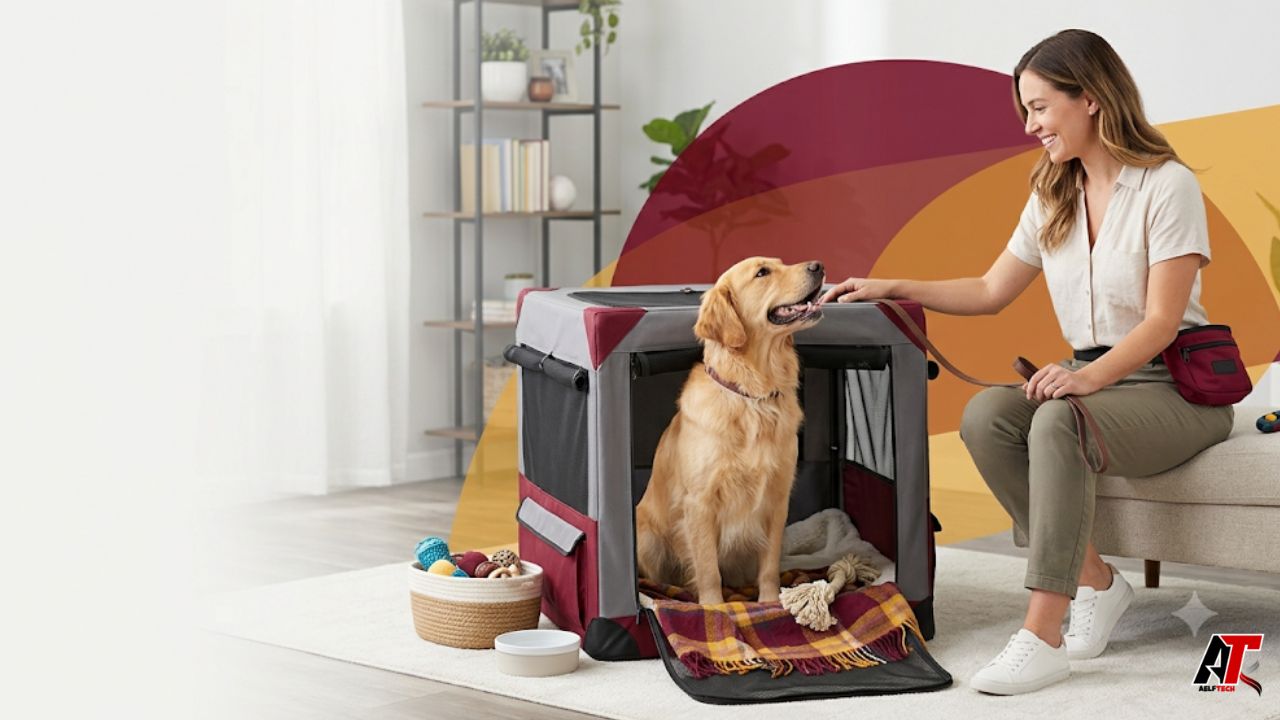
Dog training works best when a pet has structure, consistency, and a place that feels secure. Many owners focus on commands, treats, and schedules, but the training environment matters just as much as the technique. A crate can become one of the most practical tools in that environment, especially when it fits modern lifestyles. A collapsible crate offers the same basic purpose as a standard crate while adding flexibility for storage, travel, and setup. For new puppy parents, busy families, and even experienced dog owners, this type of crate can play a major role in building healthy habits. When used correctly, it helps dogs understand boundaries, settle more easily, and adapt to routines without feeling overwhelmed. In this guide, we will explore exactly how collapsible crates support training, what benefits they offer, and how to use them in a way that feels safe and humane for your dog.
A well-designed crate is not about punishment. It is about giving your dog a predictable personal area where rest, calm, and structure come together. Many owners choose a collapsible dog crate because it combines convenience with a stable, enclosed space that many dogs respond to well. Unlike bulky fixed crates, a foldable option is easier to transport and store, which makes it practical for ongoing training at home and on the go.
Why a Crate Helps Dogs Learn Faster
Dogs learn through repetition and clear patterns. A crate naturally supports that process because it creates a defined space with a clear purpose. When a dog knows that one area is meant for resting, calming down, or waiting quietly, it becomes easier to teach house rules. Instead of managing every room at once, owners can guide behavior in smaller steps. This reduces confusion for the dog and makes training sessions more predictable. A collapsible crate is especially useful because it can be moved to the area where the family spends time most often. That means the dog can still feel included while learning boundaries. Over time, the crate becomes associated with calm behavior, and this makes it easier to teach patience, quiet time, and controlled transitions between play, feeding, and rest.
Supports House Training and Better Routine Building
House training is one of the most common reasons people introduce a crate. Dogs naturally avoid soiling the area where they sleep, so a properly sized crate can encourage better bladder control and more reliable bathroom habits. This does not mean keeping a dog confined for long periods. It means using the crate as a short-term management tool alongside regular outdoor breaks, rewards, and supervision. A collapsible model helps because it can be placed in a bedroom at night, moved to a living area during the day, or taken to another location when needed. That flexibility makes it easier for owners to keep the puppy close, notice signals sooner, and maintain a routine. The more consistent the routine, the faster the dog understands when and where toileting should happen.
Creates a Safe Space That Encourages Calm Behavior
Training is not only about teaching commands. It is also about teaching emotional regulation. Dogs can become overstimulated by noise, guests, children, or changes in the environment. A crate gives them a quiet retreat where they can reset. This is one reason many trainers value crate training for excitable dogs. A covered or partially enclosed crate often feels den-like, which can promote a sense of safety. When the dog chooses to rest inside it, the crate becomes more than a container; it becomes a familiar comfort zone. This matters because a familiar resting spot can help a dog settle more quickly during stressful moments. Used alongside positive reinforcement and slow introductions, a secure crate may support routines that can ease stress and promote behavior that reduces anxiety over time when paired with healthy routines and gentle handling.
Makes Travel, Vet Visits, and Everyday Transitions Easier
A major advantage of collapsible crates is portability. Training does not happen only at home. Dogs also need to behave well during travel, overnight stays, grooming visits, and time at the vet. If your dog already sees the crate as a familiar place, transitions into new environments become smoother. Instead of forcing the dog to adjust to an unknown setup, you bring along a trusted space. The dog can rest in a recognizable environment, which often helps reduce overstimulation. For owners, this can be a huge advantage because training remains consistent even when daily life changes. Whether you are visiting relatives, taking a road trip, or attending a class, a collapsible crate allows you to maintain the same expectations and routines. That consistency is one of the biggest keys to successful long-term training.
Helps Prevent Unwanted Behaviors During Training
Management is an underrated part of dog training. Many behavior problems grow worse simply because dogs keep rehearsing them. Chewing furniture, counter surfing, barking at every movement, or getting into unsafe items can become habits if owners cannot supervise constantly. A crate offers a safe way to prevent those behaviors when active training is not possible. This is especially important for puppies who are curious and energetic. By using the crate for short, appropriate periods, owners can prevent mistakes while still rewarding calm behavior and providing mental stimulation outside the crate. A collapsible crate is helpful here because it is practical enough to use in everyday spaces without taking over the home. It can also be stored away when not needed, which makes it a more convenient option for many households.
Builds Independence Without Making the Dog Feel Isolated
Some dogs struggle when they are left alone, even for a short time. Crate training, when introduced gently, can help build comfort with brief separation. The goal is not to force independence overnight. Instead, it is to teach the dog that being alone for a little while is safe and temporary. Owners can begin by feeding meals near the crate, offering treats inside it, and practicing short sessions with the door closed for only a minute or two. Gradually, the dog learns that calm behavior in the crate leads to rewards and that the owner always returns. Over time, this can improve confidence. The key is pacing. If the crate is associated with fear, progress will stall. If it is paired with positive experiences, it becomes a useful step in teaching a dog to rest independently and wait without panic.
Useful for Multi-Dog Homes and Structured Training Sessions
In homes with more than one dog, training can become chaotic. A crate helps create individual structure. One dog can rest safely while another trains, eats, or receives attention. This reduces conflict and makes one-on-one work easier. The same benefit applies during scheduled training sessions. If you are teaching place, stay, recall, or loose-leash skills, a crate can help organize the session by providing a reset point between exercises. It can also be helpful during times when visitors arrive or when the household becomes busy. Rather than relying on constant verbal corrections, owners can use the crate to manage the environment and maintain calm. A collapsible version is especially practical if the household needs a crate that can be moved between rooms or packed away after training time ends.
What to Look for in a Good Collapsible Crate
Not every crate is ideal for every dog. Size matters because the dog should be able to stand, turn around, and lie down comfortably, but the space should not be so large that house training becomes harder. Strength matters too, especially for larger breeds or dogs that tend to push against barriers. Ventilation, secure latches, easy cleaning, and stable construction are all important. If the crate will be used for travel, lightweight design and quick folding features become extra valuable. Owners should also think about their dog’s temperament. A calm adult dog may do well in a simple portable crate, while a strong and highly active dog may need a sturdier option. The best crate is one that supports safety, consistency, and the training goals you are trying to achieve.
Common Mistakes to Avoid When Crate Training
The biggest mistake is using the crate as punishment. If a dog is sent there only after doing something wrong, the crate quickly becomes a negative place. Another common mistake is moving too fast. Some owners close the door immediately and leave the dog inside for long periods, which can create fear. A better approach is gradual exposure with rewards. It is also important not to overuse the crate. Dogs need exercise, mental stimulation, social interaction, and bathroom breaks. A crate is a training aid, not a replacement for engagement. Finally, owners should avoid choosing the wrong size or ignoring signs of distress. Whining, pacing, or refusal to enter may indicate that the process needs to slow down and become more positive.
A Simple Step-by-Step Way to Introduce the Crate
Start by leaving the crate open and letting your dog explore it freely. Place treats, toys, or meals inside so the dog forms a positive association. Once the dog is comfortable entering, begin short sessions with the door closed while you stay nearby. Reward calm behavior and release the dog before frustration builds. Next, increase the duration gradually and practice stepping away for a few seconds at a time. Keep sessions short and successful. You can then add the crate into daily routines such as nap time, bedtime, or quiet time after exercise. This step-by-step method works because it builds trust. The dog learns that the crate is predictable, comfortable, and always linked with positive outcomes.
Final Thoughts
Collapsible crates can be surprisingly effective in dog training because they combine structure with flexibility. They help owners manage behavior, build routines, support house training, and create a secure resting place that travels with the dog when needed. For modern households, that convenience matters. A training tool that is easy to move, store, and use regularly is more likely to stay part of the routine. The most important thing is how the crate is introduced. When owners use patience, positive reinforcement, and common sense, the crate becomes a safe and valuable part of the training process. For more helpful digital content and publishing support, visit aelftech.com. A thoughtful mix of training, routine, and the right equipment can make life easier for both dogs and their owners.
Leave a Reply