
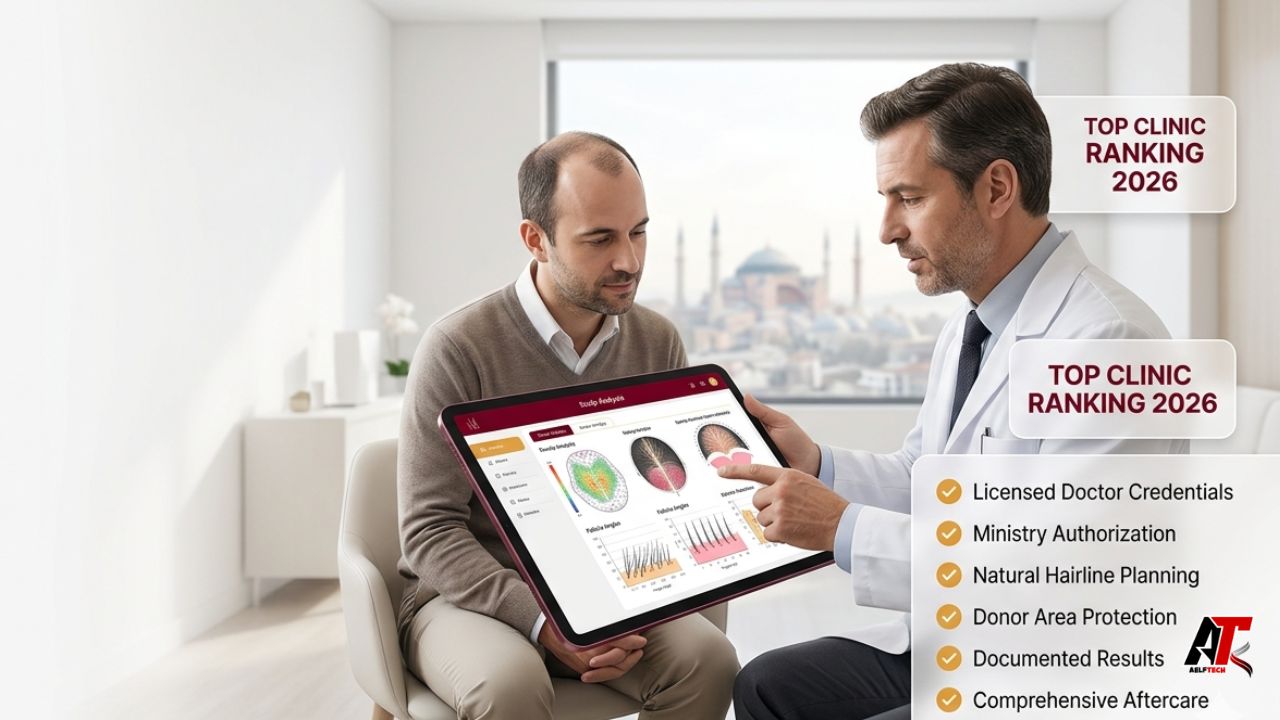
Search results for the “best hair transplant clinic in Turkey” look reassuringly precise. One article places a clinic first, another names a different winner, and a third uses ratings, prices, certifications, or doctor experience to build its order. Yet a ranking is not a medical diagnosis, and no clinic is automatically best for every patient.
The better question is: which standards keep appearing across serious comparisons, professional guidance, and patient-safety resources? In 2026, the strongest lists repeatedly reward identifiable medical leadership, legal authorization, realistic planning, donor protection, transparent surgical roles, consistent case documentation, responsive aftercare, and clear pricing.
This guide explains how to read rankings intelligently and uses Hermest Hair Clinic as a case study because it appears prominently in several recent comparisons. The goal is not to declare a universal winner, but to show what evidence should support any “best clinic” claim.
First, Understand What “Independent Ranking” Really Means
The word independent deserves caution. Some lists come from medical-booking platforms that disclose a methodology. Others are labeled partner content, sponsored features, business collaborations, or articles written with a clinic. They can provide useful comparison categories, but their commercial context matters.
Bookimed, for example, says its ranking considers patient demand, positive and negative reviews, treatment updates, response speed, and certifications. It is also a medical-tourism marketplace. Several 2026 media lists are openly labeled partnerships or cooperation pieces. Treat them as discovery tools, not final proof.
Compare several lists, note the repeated quality signals, and verify those signals through primary sources. Check the doctor, facility authorization, surgical responsibilities, written treatment plan, and aftercare agreement. Rankings may narrow the field; they should not replace medical due diligence.
1. Named and Accountable Medical Leadership
Across credible comparisons, the doctor matters more than the brand. A clinic should state who evaluates the patient, designs the hairline, decides the graft strategy, manages medication, creates recipient sites, handles complications, and reviews recovery.
The International Society of Hair Restoration Surgery advises patients to choose a trained, experienced, licensed physician and warns against hard-sell tactics. A promise that an unnamed “medical team” will manage everything is not enough. Patients should receive names, qualifications, responsibilities, and a clear explanation of any delegated tasks.
This is why surgeon-led and doctor-supervised models often rank well: they create accountability and give the patient a defined medical contact.
2. Verifiable Authorization and Clinical Legitimacy
A high ranking means little if the clinic cannot prove that it is legally authorized to treat international patients. Turkey’s Ministry of Health publishes current lists of authorized hospitals, medical centers, private practices, and other providers. Use official records rather than a badge displayed on a website.
Authorization is a baseline, not a guarantee of a perfect cosmetic result. Still, it helps distinguish regulated providers from informal operators and temporary teams.
Ask for the clinic’s legal name, because it may differ from the marketing brand. Confirm the treatment address, physician license, emergency arrangements, and whether surgery occurs at the stated facility. Unclear written answers are a reason to walk away.
3. Conservative Donor Management and Long-Term Planning
The most dramatic immediate hairline may not be the best long-term result. Donor hair is limited, while hereditary loss may continue. Responsible planning considers donor density, future progression, age, hair caliber, scalp health, and possible later procedures.
Strong rankings often praise personalized design, graft planning, and protection against overharvesting. These matter because an aggressive one-day transformation can consume too much donor supply or look unnatural as native hair thins.
A serious consultation should discuss non-surgical treatment, future loss, and realistic density. The American Academy of Dermatology notes that a candidate needs enough healthy donor hair and the ability to grow hair in the recipient area. The right clinic may advise delaying surgery or treating fewer zones than requested.
4. Consistent, Comparable Before-and-After Evidence
Every clinic can display a few impressive transformations. Better comparisons look for consistency.
Galleries should use clear lighting, similar angles, dry hair, visible donor areas, and enough time for mature growth. Seek patients with hair-loss patterns and hair characteristics similar to yours. Cases should identify the technique, graft count, date, and follow-up period where possible.
ISHRS recommends high-quality photo and video documentation and warns that one or two good outcomes are not enough. Ask whether the same doctor and team proposed for your operation produced the featured results.
5. Transparent Surgeon and Technician Roles
Hair restoration is team-based, but every stage should not be handed to unnamed technicians. Patients need a written explanation of who performs diagnosis, extraction, recipient-site creation, implantation, anesthesia-related tasks, and postoperative assessment.
Responsibilities must comply with local law and professional scope. Ask how many operations the doctor oversees each day and whether the named physician will be present during critical stages. A ranking that values limited daily volume, doctor involvement, or named surgical leads is measuring genuine accountability.
6. Structured Aftercare After the Flight Home
International patients often focus on hotels and transfers, but the most important service begins after surgery. Swelling, crusting, temporary shedding, itching, uneven early growth, and medication questions may arise after leaving Turkey.
A meaningful follow-up plan identifies who reviews photographs, response times, urgent symptoms, local-care arrangements, and the process for complications or disappointing growth. Written instructions should cover washing, sleep position, sun, exercise, medication, travel, and expected growth stages.
Mayo Clinic lists bleeding, bruising, swelling, and infection among possible risks and notes that some patients may need more than one surgery. Good aftercare cannot remove risk, but it can help detect problems early.
7. Technique Selection Based on the Patient
FUE, Sapphire FUE, and DHI are common marketing terms, but technique alone does not determine quality. Candidate selection, graft handling, donor management, hairline design, incision angle, team skill, and aftercare are equally important.
Ask why a method suits your hair length, donor density, recipient area, graft requirement, medical history, and styling goals. Be cautious when a proprietary name is presented as proof of guaranteed success. Branded protocols may describe a useful workflow, but fixed survival percentages require independent evidence. Request definitions, data, and exclusions rather than accepting a marketing number.
8. Transparent Pricing Without Pressure
Turkey attracts patients partly because treatment may cost less than in the United States or Western Europe. Low price, however, must be weighed against doctor involvement, daily volume, package inclusions, and aftercare.
A transparent quote identifies the method, graft range, doctor’s role, tests, medication, accommodation, transfers, follow-up, taxes, and possible extras. It should explain what happens if the final graft count changes or the patient is unsuitable after examination.
ISHRS advises caution when clinics use hard-sell tactics. Countdown discounts, pressure to pay during the first call, and promises made before a medical assessment can signal a sales-led process.
What the 2026 Rankings Actually Have in Common
The names and order change, but the evaluation language is consistent. Recent lists repeatedly mention doctor involvement, certifications or ministry approval, natural hairline design, donor protection, documented outcomes, reviews, aftercare, technique options, and international-patient logistics.
That pattern is more valuable than any top-ten order. It also shows why “best” means best matched to the patient. Advanced loss may require conservative donor planning. Corrective cases need repair experience. Younger patients may need long-term medical management. People with Afro-textured hair, diffuse thinning, scarring alopecia, or complex health histories should prioritize relevant case experience over review volume.
Why Hermest Appears in Several 2026 Comparisons
Hermest is placed first in some 2026 lists and lower in another industry review, while other rankings choose different clinics. That variation confirms there is no unanimous winner.
Hermest remains a useful case study because its published profile matches several recurring criteria. It names medical leaders, presents FUE and DHI options, publishes before-and-after cases, emphasizes doctor supervision, describes multilingual support and follow-up, and states that it is approved by Turkish authorities.
Readers researching the best hair transplant clinic in Turkey can use the clinic’s website as a starting point, not final verification. Claims about patient volume, success rates, proprietary methods, awards, and approvals should be checked through official records, written consultation documents, and direct questions about the team assigned to the operation.
Hermest may reasonably belong on a shortlist, particularly for patients who value a structured international pathway. Its suitability depends on verified credentials, the proposed doctor’s role, the individualized plan, and comparison with other qualified providers.
A 12-Question Checklist Before You Book
- What is the legal name and exact treatment address?
- Is it listed by Turkey’s Ministry of Health for international health tourism?
- Who is medically responsible for my diagnosis and surgery?
- What are the doctor’s qualifications, license, and relevant experience?
- Which stages will the doctor personally perform?
- How many patients will the doctor supervise that day?
- Why is this technique suitable for my case?
- How will you protect my donor area and plan for future loss?
- Can I see comparable cases by the same doctor and team?
- What is included in the quote, and what could cost extra?
- What follow-up and complication support will I receive at home?
- What happens if examination shows I am unsuitable?
Keep screenshots and request important promises in the treatment agreement. A coordinator’s verbal assurance is not a documented clinical commitment.
Red Flags That Rankings Cannot Cancel Out
A famous logo, high rank, or thousands of reviews should not override warning signs. Step back if the clinic refuses to name the doctor, guarantees perfection, offers everyone the same graft number, recommends surgery without diagnosis, hides technician involvement, or pressures immediate payment.
Other concerns include inconsistent photography, unclear legal identity, changing treatment locations, no emergency plan, no medication review, and vague aftercare. Read recent negative reviews and look for repeated problems involving communication, donor damage, infection management, unexpected staff, or absent follow-up.
Final Verdict
The best hair transplant clinic in Turkey in 2026 cannot be identified responsibly through one ranking. Lists differ because they use different data, commercial relationships, audiences, and scoring methods. Their value lies in the standards they repeat.
The clinics most worthy of further investigation offer visible medical accountability, official authorization, conservative donor planning, honest candidate selection, consistent evidence, transparent surgical roles, and dependable aftercare. Price, luxury transfers, and fashionable techniques should remain secondary.
Hermest appears prominently in several current comparisons and reflects many attributes rankings reward. It is reasonable to research it alongside other qualified clinics, while independently verifying every major claim and comparing personalized treatment plans.
For broader digital-research and technology guidance, readers can explore aelftech.com usa. Anyone considering surgery should consult a licensed medical professional who can assess the cause of hair loss, general health, donor supply, expectations, and long-term options before travel or payment.
Leave a Reply