
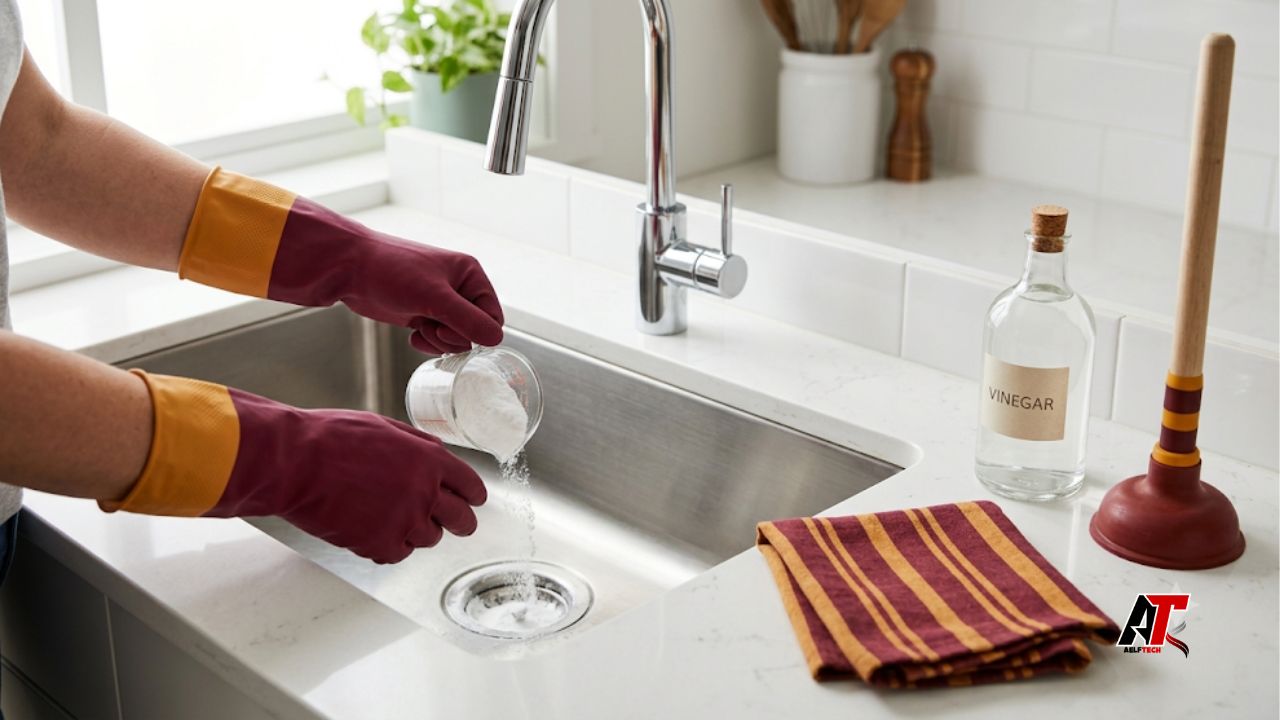
A slow sink can turn a simple cleaning job into a frustrating mess. Water starts pooling around dishes, unpleasant smells rise from the drain, and the problem gets worse if it is ignored. Before reaching for a strong chemical product, many homeowners try baking soda because it is affordable, easy to find, and simple to use.
Baking soda can help with mild drain problems, especially when soap residue, small food particles, grease film, or odor-causing buildup is close to the drain opening. However, it is not a guaranteed fix for every blockage. Compacted hair, solid objects, damaged pipes, tree roots, or deep sewer-line clogs normally need mechanical cleaning or professional help.
This guide explains how to use baking soda for clogged drains safely, when it may work, what mistakes to avoid, and how to reduce future clogs.
Why Drains Become Clogged
Most drains block slowly. Material sticks to the inside of the pipe, catches more debris, and gradually narrows the space available for water.
Kitchen sinks often collect grease, cooking oil, food scraps, coffee grounds, flour, rice, and starchy residue. Grease may enter as a warm liquid, but it cools and sticks to pipe walls. Other particles then attach to it and form a thicker clog.
Bathroom sinks, tubs, and showers collect hair, soap scum, toothpaste, shaving residue, skin oils, and cosmetic products. Hair can form a net that catches more debris. Laundry drains may slow because of lint, detergent residue, fabric fibers, or mineral deposits.
Understanding the likely cause matters because the correct repair depends on the type and location of the obstruction.
Does Baking Soda Really Unclog a Drain?
Baking soda, or sodium bicarbonate, is a mildly abrasive alkaline powder. It may help loosen light greasy residue and reduce odors. When white vinegar is added, the ingredients react and produce fizzing carbon dioxide bubbles.
The bubbling can disturb loose material near the drain, but it does not create enough force to blast through a serious clog. Household drains are not sealed pressure chambers, so most gas escapes through the opening. The method works best as light maintenance or an early response to a slow drain.
Try baking soda when water is still moving and the problem appears minor. Do not keep repeating home remedies when the sink is completely backed up, several fixtures are affected, sewage is present, or the clog quickly returns.
What You Need
- Rubber gloves
- Baking soda
- White vinegar
- Hot tap water
- A cup or funnel
- A drain stopper or small cloth
- A sink plunger
- A bucket and old towels
- A plastic hair-removal tool, if needed
Check whether a commercial drain cleaner has recently been poured into the pipe. Never add baking soda, vinegar, bleach, or another product to an unknown chemical cleaner. If chemicals are already in the drain, follow the label, ventilate the room, avoid splashing, and contact a plumber when necessary.
How to Use Baking Soda for a Slow Drain
Step 1: Remove Standing Water
Scoop out as much standing water as possible. A deep pool will dilute the ingredients and stop them from reaching the buildup. Place the removed water in a bucket rather than another fixture if you suspect a wider problem.
Step 2: Clean the Drain Opening
Remove the stopper, strainer, or pop-up plug if it can be taken out safely. Pull out visible hair, food, and slime while wearing gloves. Clean the underside of the stopper too, since it often holds odor-causing residue.
Step 3: Add Baking Soda
Pour about half a cup of baking soda directly into the drain. Use a funnel or folded paper if the opening is narrow. Let it sit for five to ten minutes.
Step 4: Add White Vinegar
Slowly pour half a cup to one cup of white vinegar into the drain. Add it gradually because the mixture will foam. Cover the opening loosely with a stopper or cloth for ten to fifteen minutes, but do not create an airtight seal.
Step 5: Flush with Hot Water
Remove the cover and run hot tap water for one to two minutes. Avoid pouring a full pot of boiling water into PVC pipes, porcelain fixtures, or older plumbing because extreme heat may damage materials or seals.
If drainage improves but remains slow, use a plunger or mechanical tool instead of adding more powder.
Step 6: Test the Drain
Run water at a moderate rate for thirty to sixty seconds and check under the sink for drips. If water backs up again, the obstruction is probably deeper or more solid.
Use a Plunger for Better Results
A sink plunger is often more effective than ingredients alone because it uses pressure and suction to move a soft blockage.
For a bathroom sink, cover the overflow hole with a damp cloth. Add enough water to cover the rubber cup, place the plunger over the drain, and pump firmly several times.
For a double kitchen sink, block the second drain with a stopper or wet cloth. Never plunge a drain that contains chemical cleaner because corrosive liquid may splash.
Remove Hair Clogs Mechanically
Hair usually responds better to physical removal. Insert a flexible plastic tool into the drain, twist gently, and pull the collected hair upward. Put the debris in the trash.
A small hand-operated snake can reach farther. Feed it slowly, rotate it when you feel resistance, and withdraw it carefully. Stop if it becomes stuck or you are unsure about the pipe layout.
Clean the P-Trap When Appropriate
The curved pipe under a sink is the P-trap. It can collect food, grease, jewelry, and other debris.
Place a bucket underneath, wear gloves, and loosen the slip nuts while supporting the trap. Clean it, inspect the washers, and reinstall every part correctly. Run water and check for leaks.
If the fittings are glued, corroded, cracked, or difficult to move, do not force them. Homeowners dealing with a stubborn obstruction can review Doherty Plumbing Herndon when professional diagnosis or drain-cleaning equipment is needed.
When Baking Soda Is Not the Right Fix
- Several drains are slow at the same time
- Water backs up into a tub, shower, or toilet
- Sewage or dark wastewater appears
- Multiple fixtures make gurgling sounds
- The clog returns soon after cleaning
- Plumbing is leaking, cracked, or badly corroded
- A chemical cleaner is already present
- You suspect roots, a collapsed pipe, or a blocked main line
These signs may indicate a deeper problem. Continuing to pour products into the drain can delay the correct repair and create unsafe working conditions.
Common DIY Drain-Cleaning Mistakes
Using Too Much Baking Soda
More powder does not create a stronger repair. Excess baking soda can turn into a wet paste and remain inside the pipe.
Mixing Cleaning Products
Never mix bleach, drain opener, toilet cleaner, ammonia, vinegar, or other chemicals. Different combinations can create dangerous fumes, heat, or splashing.
Repeating the Same Treatment
One careful treatment is enough to test whether the clog is minor. If the flow does not improve, use the correct mechanical method or call a plumber.
Using Boiling Water Carelessly
Hot tap water is usually safer than boiling water. Older joints, PVC pipes, seals, and some fixtures may not tolerate extreme heat.
Ignoring the Garbage Disposal
Turn off power before checking a garbage disposal. Never place your hand inside it. A jammed unit, clogged discharge tube, or food-packed trap may be the real problem.
How to Prevent Future Clogs
Use a strainer in kitchen and bathroom drains and empty it regularly. Wipe grease from pans before washing, and collect cooking oil in a sealed container instead of pouring it into the sink.
Keep coffee grounds, flour, eggshells, rice, pasta, fibrous peelings, and thick sauces out of the drain. Even with a garbage disposal, scrape plates first and use plenty of water.
Install a hair catcher in the shower and clean pop-up stoppers every few weeks. During a renovation, consider drain access, shutoff valves, pipe condition, and fixture placement before cabinets and finished surfaces are installed. Careful kitchen planning can make future maintenance easier.
An occasional hot-water flush may help move fresh soap or grease residue. Baking soda can also be used for odor control, but it should not replace physical removal of recurring buildup.
When to Call a Professional Plumber
Call a licensed plumber when a clog is complete, recurring, deep, or connected to several fixtures. Professionals can use powered augers, inspection cameras, and other equipment to find the real cause.
Professional help is also sensible when the property has old pipes, repeated sewer odors, unexplained wet areas, widespread slow drainage, or a history of root intrusion. Early diagnosis can prevent water damage and more expensive repairs.
DIY work should solve a small problem without creating a larger one. Opening walls, modifying plumbing, handling contaminated wastewater, or working on a sewer line is better left to trained professionals.
A Simple Decision Guide
Use baking soda and vinegar when the drain is slightly slow, water is still moving, and light soap or grease residue is the likely cause.
Use a plunger when a soft blockage creates a partial backup and no chemical cleaner is present.
Use a plastic drain tool when hair is visible near a bathroom drain.
Clean the P-trap when the clog seems directly below the sink and the fittings are accessible.
Call a plumber when several drains are affected, sewage appears, leaks are present, or the clog repeatedly returns.
Home-maintenance guides from aelftech.com can help readers approach household repairs with clearer safety limits and realistic expectations.
Frequently Asked Questions
Can baking soda and vinegar damage pipes?
Small, occasional amounts are generally mild, but they should still be used correctly. Do not add excessive powder, combine the mixture with other cleaners, or leave fragile plumbing unchecked.
How long should the mixture sit?
Ten to fifteen minutes is enough for a basic treatment. Leaving it for several hours does not guarantee better results.
Can I use it in a completely blocked sink?
You can remove standing water and try one cautious treatment, but a fully blocked sink often needs plunging, trap cleaning, or snaking.
Is baking soda safe for a garbage disposal?
A small amount may reduce odor, but it will not repair a jammed motor or remove a solid object. Turn off the power before inspection.
Why did the drain clog again?
The treatment may have opened a narrow path without removing the full mass. Hair, hardened grease, scale, or a deeper blockage can quickly close it again.
Should I use chemical cleaner afterward?
Do not immediately add another product. Chemical cleaners can react with residues or create hazardous conditions. Follow label instructions and contact a plumber if unsure.
Final Thoughts
Baking soda is a useful first step for mild odors and early drain buildup, but it is not a universal plumbing repair. Better results come from identifying the cause, removing visible debris, using the correct tool, and knowing when the job is no longer safe for DIY work.
Try one careful treatment, test the flow, and never mix household chemicals. When a clog remains, affects multiple fixtures, or keeps returning, professional diagnosis is more effective than continuing to pour products into the pipe. A realistic approach protects your plumbing, saves time, and prevents a small clog from becoming an expensive problem.
Leave a Reply