
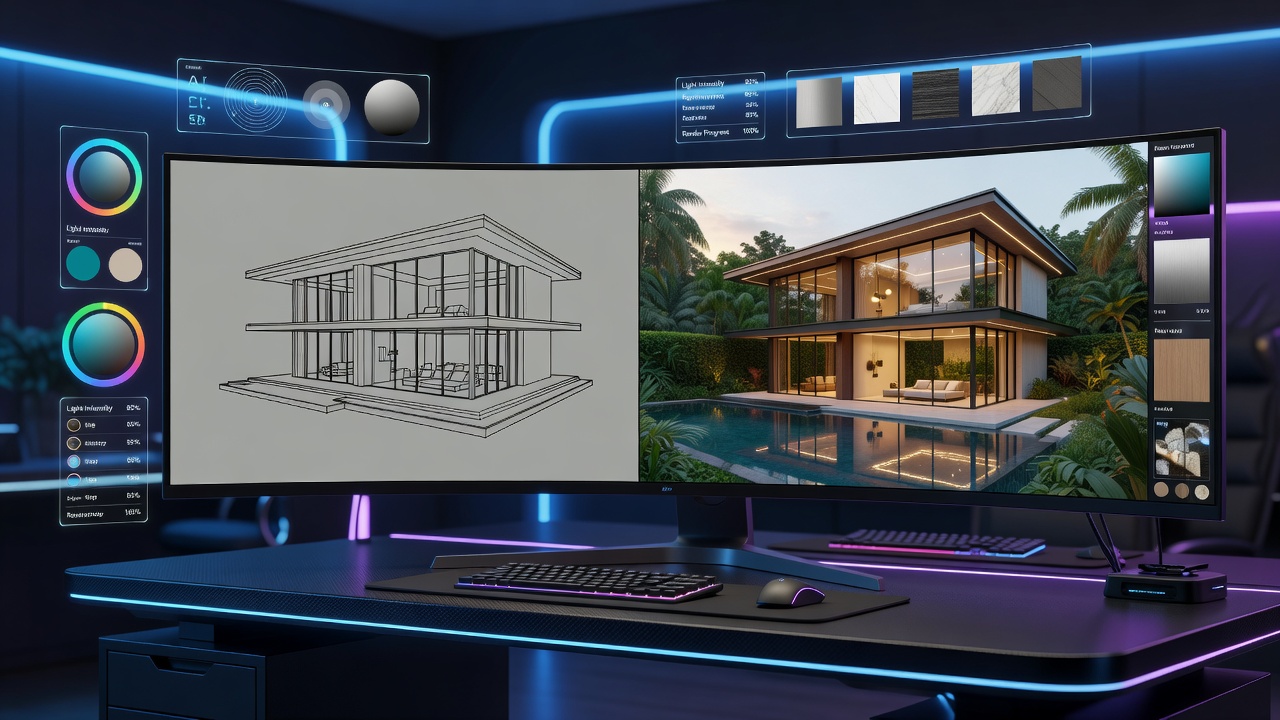
3D rendering services have completely changed how businesses design, market, and sell their ideas. By turning raw digital models into stunning, photorealistic imagery and immersive animations, 3D rendering services bridge the critical gap between imagination and reality. Whether you are bringing an unbuilt architectural masterpiece to life, showcasing a new consumer product before manufacturing begins, or creating captivating virtual environments, professional 3D visualization makes it possible. By leveraging advanced computer-generated imagery (CGI), sophisticated lighting algorithms, and high-end texturing, these services empower businesses to make faster decisions. They reduce costly prototyping errors. They market offerings with unprecedented visual impact. In this comprehensive guide, we explore the fundamentals, applications, and transformative business value of professional rendering studios.
What Are 3D Rendering Services?
At its core, 3D rendering is the final step in the 3D visualization pipeline. A computer program processes a 3D model and converts it into a 2D image or video.
Think of it like taking a photograph of a virtual world. 3D modeling creates the geometric structure—the “skeleton.” Texturing adds materials and colors—the “skin.” Rendering calculates how light interacts with every single surface to produce the final, viewable picture.
Professional 3D rendering services provide the specialized software, hardware, and artistic expertise needed to execute this process at the highest level. Rather than relying on basic software outputs, a dedicated rendering studio applies advanced techniques. They use global illumination, ray tracing, and physically based rendering (PBR). These techniques ensure that every shadow, reflection, and material texture behaves exactly as it would in the real world.
The 3D Visualization Pipeline Explained
Understanding the workflow of a 3D visualization project helps clarify the value of hiring professionals. A typical pipeline includes:
- Consultation & Briefing: The client provides CAD files, blueprints, or reference images. They also define the project goals and target audience.
- 3D Modeling: Skilled artists build the precise digital geometry of the object or space.
- Texturing & Materials: Real-world materials like wood, glass, metal, and fabric are applied using high-resolution texture maps.
- Lighting Setup: Virtual lights are placed to simulate the sun, ambient room light, or interior fixtures. This creates the desired mood and photorealism.
- Rendering: The computer calculates the final image. Depending on complexity, this can take minutes or even hours per frame.
- Post-Processing: Artists apply final touches like color grading, depth of field, and compositing in software like Photoshop or After Effects.
Key Industries Transformed by 3D Rendering Services
The demand for high-fidelity 3D visualization spans nearly every sector. However, several industries rely on it as an absolute operational necessity.
Architectural Rendering and Real Estate Visualization
Architecture and real estate are arguably the biggest sectors leveraging 3D rendering services. Architectural rendering allows architects, developers, and real estate agents to showcase properties long before construction is complete.
Through real estate visualization, potential buyers and investors can take virtual tours of unbuilt homes. They can experience different interior design schemes. They can view the property within its surrounding landscape and lighting conditions. This capability is vital for pre-selling off-plan properties. It helps secure zoning approvals from city boards. It also helps win architectural competitions.
Exterior renderings demonstrate how a building interacts with its environment at different times of day. Interior rendering focuses on the spatial experience, furniture layout, and material finishes.
Product Rendering and E-Commerce
Physical prototyping is expensive and time-consuming. Product rendering eliminates the need for physical photo shoots by creating photorealistic digital twins of products. From consumer electronics and automotive parts to furniture and fashion, 3D visualization allows brands to launch global marketing campaigns while the product is still on the assembly line.
E-commerce platforms increasingly use 360-degree product renders and interactive 3D models to boost conversion rates. Customers can rotate, zoom, and inspect products in hyper-detail. This closely mimics an in-store shopping experience.
Furthermore, product rendering allows for infinite variations in color, material, and finish (CMF). You can show a chair in fifty different fabrics without the logistical nightmare of reshooting physical prototypes.
Interior Design Rendering
For interior designers, communicating a vision to a client can be a struggle. Relying solely on 2D mood boards and fabric swatches often leads to misinterpretation. Interior design rendering bridges this communication gap.
By creating highly detailed 3D visualizations of rooms, designers can experiment with different wall colors, flooring options, and lighting fixtures. Clients get to “walk through” their future space and approve designs with confidence. This drastically reduces the likelihood of costly mid-project change orders.
Types of 3D Rendering Services
Not all visual projects require the same output. Professional studios offer various formats tailored to specific business needs.
Photorealistic 3D Rendering vs. Stylized CGI
Photorealistic rendering is the industry standard for architecture and product marketing. The goal is to make the viewer question whether the image is a photograph or computer-generated. This requires meticulous attention to physically accurate lighting and material properties.
Stylized CGI takes a different approach. It is often used for branding, editorial features, or entertainment. This style embraces artistic interpretation. It utilizes exaggerated lighting, non-physical materials, or cartoonish elements to evoke a specific emotion or brand identity.
3D Animation and Virtual Tours
Static images are powerful, but moving media tells a story. 3D animation services bring cameras to life. They glide through architectural spaces or showcase the assembly and functionality of a complex product. For real estate, animated fly-throughs provide a cinematic experience of a property.
Virtual tours take interactivity a step further. Using technologies like WebXR, interactive 3D rendering allows users to navigate a space at their own pace. Users can click on hotspots to learn about materials. They can switch between day and night lighting in real time.
The Business Benefits of Professional 3D Visualization
Investing in professional 3D rendering services is not merely an aesthetic choice. It is a strategic business decision with measurable ROI.
Accelerating Project Approvals and Sales
The human brain processes visual information 60,000 times faster than text. When stakeholders—whether city planners, investors, or home buyers—see a photorealistic representation of a project, they make confident decisions quickly. In real estate, properties marketed with 3D visualization sell faster and at higher price points than those advertised with standard 2D floor plans.
Cost-Effective Marketing and Prototyping
Traditional prototyping and commercial photography are expensive. They demand logistics, shipping, studio rentals, and set design. If a design changes, you must reset the entire shoot.
With product rendering, changes happen digitally in minutes. A single 3D model can generate hundreds of marketing assets. You can place the product in different backgrounds, lighting setups, and camera angles at a fraction of the cost of traditional photography.
Enhancing Brand Perception
High-quality CGI signals innovation and premium quality. Brands that utilize state-of-the-art 3D visualization are perceived as industry leaders. This creates a “halo effect” that enhances the perceived value of their physical products or architectural projects.
How to Choose the Right 3D Rendering Studio
The market is full of freelance artists and offshore studios. Choosing the right partner for your 3D rendering services requires careful evaluation.
Evaluating a 3D Rendering Portfolio
A studio’s portfolio is the ultimate testament to its capability. Look beyond the flashiness of the images and evaluate the details. Are the materials physically believable? Is the lighting natural, or does it look flat and artificial? Does the studio demonstrate versatility across different industries? Consistency in quality is key. A studio should maintain a high standard across all portfolio pieces, not just a few highlights.
Technical Expertise and Software Proficiency
Ensure the studio utilizes industry-standard software. This includes 3ds Max, Cinema 4D, Blender, V-Ray, or Corona Renderer. Furthermore, if your project requires specific deliverables—like Unreal Engine files for real-time virtual tours—verify that the studio has technical proficiency in those pipelines.
Workflow, Communication, and Revision Policies
The difference between a good render and a great one usually comes down to the revision process. A professional rendering studio will have a structured workflow. They will provide regular updates at the modeling, texturing, and lighting stages before final rendering. This ensures the project stays aligned with your vision. It also prevents wasting expensive render farm time on incorrect setups. Always clarify how many revision rounds are included in the quote and what the turnaround times are.
The Future of 3D Rendering Services
The 3D visualization industry is undergoing a rapid technological shift. This shift is driven by hardware advancements and artificial intelligence.
Real-time rendering engines like Unreal Engine 5 and Unity are breaking the barriers of traditional offline rendering. What once took hours to calculate can now be rendered in real time. This allows architects and clients to change the time of day, swap materials, and walk through environments instantaneously during live presentations.
Additionally, AI is streamlining the 3D workflow. It automates tedious tasks like UV mapping, texture upscaling, and denoising. This allows 3D artists to focus more on creative direction. Cloud rendering solutions are also democratizing access to massive computational power. Even smaller studios can now deliver Hollywood-level CGI without investing in physical server farms.
Conclusion:
In a visually driven global market, the ability to show rather than tell is an indispensable competitive advantage. 3D rendering services provide the ultimate tool for translating complex ideas, unbuilt structures, and unmanufactured products into compelling, photorealistic realities. By partnering with a professional rendering studio, businesses unlock faster approvals, reduced prototyping costs, and marketing assets that captivate audiences. Whether you require precise architectural rendering, dynamic product visualization, or immersive 3D animation, investing in expert 3D rendering services ensures your vision is realized with the impact, accuracy, and visual splendor it deserves.
Frequently Asked Questions (FAQs)
1. What are 3D rendering services used for?
They create photorealistic images and animations for architectural visualization, product marketing, interior design, real estate pre-selling, and CGI entertainment.
2. How long does a typical 3D rendering project take?
A single high-quality render typically takes 3 to 7 days, while full animations or interactive virtual tours may require several weeks depending on complexity.
3. What is the difference between 3D modeling and 3D rendering?
3D modeling builds the digital geometric structure, while 3D rendering adds lighting, materials, and shadows to produce a final 2D image or video.
4. How much do professional 3D rendering services cost?
Pricing varies widely; basic product renders may start at a few hundred dollars, while complex architectural animations can cost several thousand.
5. What files do I need to provide to a 3D rendering studio?
Clients typically provide CAD files (.DWG, .RVT), 3D models (.OBJ, .FBX), sketches, reference images, material specifications, and blueprints.
6. Can 3D rendering replace traditional product photography?
Yes, modern photorealistic product rendering is increasingly replacing physical photography due to its lower costs, infinite flexibility, and perfect lighting control.
Leave a Reply