
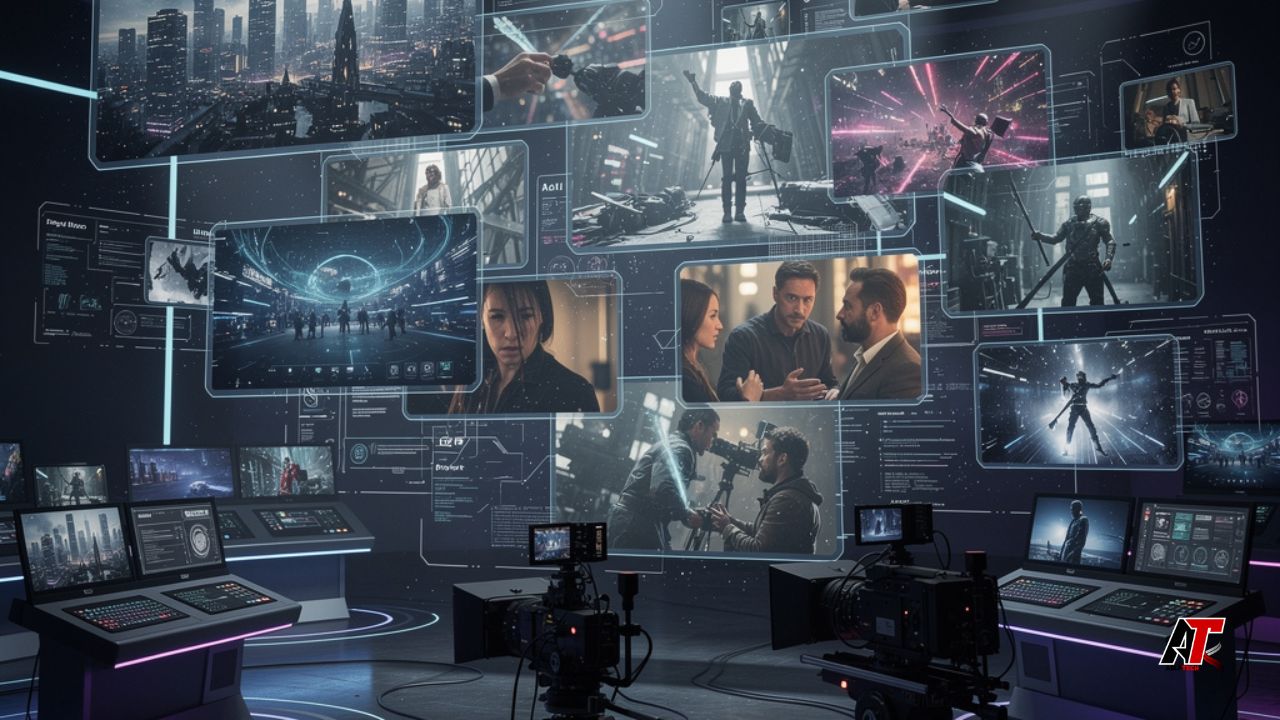
The film industry has witnessed some remarkable innovations over the decades, but nothing comes close to the seismic shift caused by the ai movie generator. This extraordinary technology empowers anyone—from bedroom creators to seasoned Hollywood professionals—to produce jaw-dropping cinematic content using nothing more than a text prompt, a creative idea, or a simple script. Gone are the days when filmmaking demanded million-dollar budgets, massive production crews, and months of shooting schedules. In this ultimate guide, we will dive deep into every aspect of AI movie generators, exploring how they work, the best platforms available, practical use cases, step-by-step creation guides, expert tips, and what lies ahead for this transformative technology.
What Exactly Is an AI Movie Generator?
An AI movie generator is a sophisticated software platform that uses artificial intelligence algorithms—including deep learning, generative adversarial networks (GANs), diffusion models, and natural language processing—to automatically create video and film content from user-provided inputs.
Instead of manually filming scenes, hiring actors, building elaborate sets, and spending weeks in post-production, users simply describe what they want in plain language, upload reference images, or provide a script. The AI then interprets these inputs and generates photorealistic or stylized video sequences complete with characters, environments, camera movements, lighting, sound effects, and dialogue.
This end-to-end automation of the filmmaking pipeline is what makes AI movie generators so revolutionary and disruptive to the entire entertainment and content creation ecosystem.
The Technology Behind AI Movie Generators
Understanding the technology powering these tools provides deeper insight into their capabilities and limitations.
Diffusion Models
Diffusion models serve as the backbone of most modern AI movie generators. These models learn to create realistic images and videos by gradually removing noise from random visual data until a coherent, stunning output emerges. This iterative refinement process produces remarkably high-quality visuals.
Generative Adversarial Networks (GANs)
GANs consist of two competing neural networks—a generator that creates content and a discriminator that evaluates its realism. This adversarial loop pushes the generator to produce increasingly convincing visuals, particularly for human faces, natural landscapes, and complex textures.
Natural Language Processing (NLP)
NLP engines enable AI movie generators to understand human language inputs. When you type a scene description like “a lonely astronaut floating through a colorful nebula,” the NLP system decodes the meaning and translates it into precise visual instructions for the video generation model.
Neural Radiance Fields (NeRF)
NeRF technology allows AI to construct three-dimensional scene representations from two-dimensional data. This enables realistic camera movements, depth-of-field effects, and immersive spatial environments within generated movies.
Text-to-Speech and Voice Cloning
Advanced AI movie generators incorporate voice synthesis engines that produce natural-sounding dialogue, narration, and character voices. Some platforms even offer voice cloning capabilities that replicate specific vocal characteristics with permission.
Computer Vision
Computer vision algorithms help AI understand spatial relationships, object placement, lighting dynamics, and physics within scenes, ensuring that generated content looks natural and believable.
Step-by-Step Guide: How to Create a Movie with AI
Creating a movie with AI is surprisingly accessible. Follow this detailed step-by-step process:
Step 1: Select the Right Platform
Choose a platform that aligns with your creative goals. Consider factors such as:
- Maximum video length supported
- Output resolution quality
- Style customization options
- Pricing and subscription plans
- Export format availability
- Community support and tutorials
Step 2: Craft a Detailed Script or Prompt
Your output quality directly correlates with input quality. Write vivid, specific descriptions for each scene. Include details about:
- Setting, location, and environment
- Character appearance, clothing, and expressions
- Time of day and lighting conditions
- Camera angles and movements
- Actions, gestures, and emotions
- Dialogue and narration
Example Prompt: “A weathered detective in a dark trench coat walks through rain-soaked city streets at night. Neon signs reflect off puddles on the asphalt. He pauses under a flickering streetlight to light a cigarette, his face half-hidden in shadow. Film noir style, slow tracking shot, moody ambient soundtrack.”
Step 3: Generate Initial Output
Submit your prompt and allow the AI to process it. Generation time varies depending on complexity and platform—ranging from a few seconds to several minutes. Once complete, review the output thoroughly.
Step 4: Refine Through Iteration
First outputs are rarely perfect. Adjust your prompt wording, modify descriptors, alter style references, or tweak platform-specific parameters. Regenerate specific portions without restarting the entire project.
Step 5: Layer Audio Elements
Add AI-generated voiceovers, background music, ambient sounds, and sound effects. Some platforms handle audio automatically while others provide libraries and synthesis tools for manual layering.
Step 6: Edit and Polish
Use the platform’s built-in editing tools or export raw footage to professional software like Adobe Premiere Pro, DaVinci Resolve, or Final Cut Pro for color correction, transitions, pacing adjustments, and final touches.
Step 7: Export and Distribute
Export your completed movie in the desired resolution and format. Share it across YouTube, social media platforms, film festival submissions, client presentations, or your personal portfolio.
Top AI Movie Generator Platforms Compared
Here is an in-depth comparison of leading platforms:
| Platform | Best For | Max Video Length | Resolution | Pricing Model |
|---|---|---|---|---|
| Sora (OpenAI) | Cinematic realism | Up to 1 minute | 1080p | Premium subscription |
| Runway ML Gen-3 | Creative professionals | Variable | Up to 4K | Free tier + paid plans |
| Pika Labs | Social media clips | 4-10 seconds | 1080p | Freemium |
| Kling AI | Long-form video | Up to 2 minutes | 1080p | Free + paid tiers |
| Synthesia | Corporate & education | No strict limit | 1080p | Subscription-based |
| Luma Dream Machine | 3D-style videos | 5-10 seconds | 1080p | Freemium |
| InVideo AI | Marketing videos | Full-length | 1080p | Free + paid |
| HeyGen | Avatar-based content | No strict limit | 1080p | Subscription-based |
| Haiper AI | Quick creative clips | Up to 4 seconds | 1080p | Free + premium |
| Vidu AI | Artistic storytelling | Variable | 1080p | Freemium |
Real-World Applications of AI Movie Generators
Independent Filmmaking
Indie creators with limited resources use AI movie generators to visualize concepts, build proof-of-concept trailers, pitch projects to investors, and even produce entire short films worthy of festival submissions.
YouTube and Social Media Content
Content creators generate eye-catching visual essays, animated explainers, cinematic vlogs, reaction backgrounds, and short-form video content that drives engagement and subscriber growth.
Corporate Training and Internal Communication
Businesses replace costly traditional video production with AI-generated training modules, onboarding videos, safety demonstrations, and company-wide announcements—saving thousands of dollars per project.
Advertising and Brand Storytelling
Marketing agencies produce personalized ad campaigns at massive scale, rapidly testing multiple visual concepts, narratives, and audience-targeted variations without expensive reshoots.
Music Videos
Musicians and bands create visually stunning music videos that perfectly match their artistic vision without studio rental fees, equipment costs, or production delays.
Education and E-Learning
Teachers, professors, and educational platforms produce animated history lessons, scientific visualizations, language tutorials, and interactive learning materials that boost student engagement.
Video Game Cinematics and Trailers
Game developers generate cutscenes, promotional trailers, and in-game cinematic sequences using AI, dramatically reducing production timelines and budgets.
Real Estate and Architecture
Real estate agencies and architects create immersive property walkthroughs, neighborhood visualizations, and concept presentations using AI-generated cinematic content.
Undeniable Benefits of Using an AI Movie Generator
Massive Cost Reduction
Traditional filmmaking demands enormous financial investment in cameras, lighting equipment, locations, actors, costumes, and post-production teams. An AI movie generator eliminates most of these expenses, enabling professional-quality output for a fraction of the cost.
Blazing Speed
Projects that previously required weeks or months of shooting and editing can now be completed in hours or even minutes. This accelerated timeline is invaluable for creators facing tight deadlines.
Zero Technical Barrier
You do not need formal education in cinematography, animation, or video editing. AI movie generators democratize filmmaking by making powerful creation tools accessible to absolute beginners.
Unlimited Creative Experimentation
Want to try sci-fi, horror, romance, documentary, and anime styles—all in one afternoon? AI movie generators allow risk-free experimentation across genres, visual aesthetics, and narrative structures.
Multilingual Content Creation
Many platforms support content generation in dozens of languages, enabling creators to reach global audiences without translation or dubbing services.
Consistent Visual Quality
AI maintains visual coherence across scenes, ensuring consistent character appearances, color palettes, and environmental details throughout the project.
Effortless Scalability
Whether you need one video or one thousand, AI movie generators scale effortlessly without proportional increases in time or cost.
Challenges and Ethical Considerations
Despite their incredible potential, AI movie generators present important challenges that deserve honest discussion.
Visual Artifacts and Glitches
AI-generated videos sometimes contain imperfections—distorted hands, flickering objects, unnatural facial expressions, or inconsistent physics—that break viewer immersion.
Copyright and Intellectual Property Complexity
Questions surrounding ownership of AI-generated content and whether training datasets infringe existing copyrights remain legally ambiguous and evolving.
Deepfake and Misinformation Risks
The same technology that creates beautiful cinematic content can also produce misleading deepfake videos, raising profound ethical and societal concerns about truth and authenticity.
Job Displacement Concerns
Traditional filmmaking professionals—including camera operators, editors, animators, and voice actors—worry about job displacement as AI automates tasks previously requiring human expertise.
Emotional and Psychological Depth Limitations
AI still struggles to capture the nuanced emotional performances that skilled human actors deliver, making deeply psychological or emotionally complex narratives particularly challenging to generate convincingly.
Over-Reliance on Technology
Excessive dependence on AI tools may discourage creators from developing foundational filmmaking skills that remain valuable for storytelling mastery.
Expert Tips for Maximizing Your AI Movie Generator Results
- Write cinematically specific prompts — Use precise language describing camera angles, lighting moods, color palettes, and character emotions
- Leverage film terminology — Words like “dolly zoom,” “tracking shot,” “chiaroscuro lighting,” and “shallow depth of field” guide AI effectively
- Reference iconic visual styles — Mentioning “in the style of Blade Runner” or “Wes Anderson symmetry” helps AI understand aesthetic intent
- Generate scene by scene — Break long narratives into individual scenes for dramatically better quality and consistency
- Combine AI generation with human editing — The most impressive results come from blending AI-generated footage with manual post-production refinement
- Iterate relentlessly — Do not settle for the first output; regenerate, adjust prompts, and refine until the result matches your vision
- Build a prompt library — Save successful prompts for reuse and modification across future projects
- Stay informed about platform updates — AI tools evolve rapidly with frequent model improvements and new feature releases
- Use reference images — Upload visual references alongside text prompts for more accurate style matching
- Experiment with negative prompts — Specify what you do NOT want in the scene to help the AI avoid common mistakes
The Road Ahead: Future of AI Movie Generators
The trajectory of AI-powered filmmaking points toward extraordinary possibilities:
- Full-length feature films generated entirely by AI with coherent narratives and character arcs
- Interactive cinema where viewers make real-time plot decisions and AI generates corresponding scenes instantly
- Hyper-personalized content tailored to individual viewer preferences, moods, and cultural backgrounds
- Virtual and augmented reality integration creating fully immersive AI-generated cinematic experiences
- Real-time multi-user collaboration where creative teams co-direct alongside AI in shared virtual studios
- Emotion-aware content generation where AI reads audience biometric reactions and adapts content dynamically
- Seamless human-AI co-creation blurring the line between AI-assisted and traditionally produced content
Frequently Asked Questions (FAQs)
What is an AI movie generator?
An AI movie generator is a technology platform powered by artificial intelligence that creates video and film content automatically from user inputs such as text descriptions, scripts, images, or storyboards. It handles everything from visual generation to audio synthesis and post-production.
Which AI movie generator platform is the best?
The ideal platform depends on your specific needs. Sora by OpenAI excels in cinematic realism, Runway ML suits creative professionals, Synthesia dominates corporate video production, and Pika Labs works perfectly for quick social media content.
Can I create a full-length movie using AI?
Currently, most AI movie generators specialize in short-form content. However, by generating individual scenes and combining them through professional editing, creators are successfully assembling longer narrative projects. Fully automated feature-length generation is rapidly approaching feasibility.
How much does an AI movie generator cost?
Pricing varies significantly. Many platforms offer free tiers with basic features and limited outputs. Premium subscriptions typically range from $10 to $100+ per month depending on resolution, video length, generation limits, and advanced capabilities.
Is AI-generated movie content legal for commercial use?
Most commercial AI movie generator platforms grant users rights to use generated content commercially. However, licensing terms vary between platforms, so always review the specific terms of service before monetizing content.
Will AI movie generators replace human filmmakers?
AI movie generators serve as powerful tools that augment human creativity rather than replace it entirely. They handle technical execution while humans provide vision, emotional intelligence, and storytelling depth. The most compelling projects will continue blending AI efficiency with human artistry.
Can I control the visual style of my AI-generated movie?
Absolutely. Most platforms allow extensive style customization through prompts, reference images, and style selection menus. You can specify photorealistic, animated, anime, film noir, vintage, watercolor, cyberpunk, and countless other aesthetics.
Do I need filmmaking experience to use an AI movie generator?
No prior experience is required. These tools are designed for users of all skill levels. A clear creative vision and well-written descriptive prompts matter far more than technical filmmaking knowledge.
Conclusion
The ai movie generator stands as one of the most transformative innovations in creative technology, fundamentally dismantling the traditional barriers that once kept filmmaking exclusive to those with massive budgets and specialized expertise. Today, anyone with a compelling story and a vivid imagination can bring cinematic visions to life with astonishing speed, affordability, and creative freedom. While challenges around visual consistency, ethical implications, and emotional depth certainly remain, the pace of technological advancement ensures these limitations will continue shrinking rapidly. The wisest approach for creators, businesses, and storytellers is to embrace these tools now, invest time in mastering prompt crafting and workflow optimization, and position themselves at the forefront of this creative revolution. AI movie generators are not replacing the human spirit of storytelling—they are amplifying it beyond anything previously imaginable, and the creators who harness this power today will define the future of cinema tomorrow.
Leave a Reply