

Long runs in Peryagame can make any Color Game session feel strangely “obvious.” When one shade—often red—keeps showing up, attention sharpens. Players start watching the Roadmap like it’s a live signal, and the next roll begins to feel more important than the last. Then the run ends, and the streak breaks.
That break is when many players make their quickest decisions. Some switch colors immediately. Others raise their bet to “catch” the new direction. Many start searching for color game tricks or trying to interpret what the interruption supposedly means. In practice, the most useful response is much calmer: treat the broken streak as a single outcome, not a rule change.
Quick takeaway for Peryagame players
When a Peryagame streak breaks, handle the new color like it belongs to a fresh round. A streak ending can feel loaded with meaning because the human brain is built to notice sequences, but past outcomes do not guarantee the next one. A short pause to reassess limits—and a firm choice to avoid chasing losses—keeps the session from becoming emotional instead of intentional.
Why a broken streak feels like a big moment
A simple color run shows how fast meaning gets attached:
Red → Red → Red → Red → Blue
From a results perspective, blue is simply the latest entry. From a player’s perspective, it can feel like a major turning point. Someone who spent several rounds expecting red may read the break as a signal that the game “shifted.” Another person may interpret it in reverse: blue finally appeared, so red must be “due.”
Both reactions turn a sequence into a story. Research on gambling cognition often points to biases that feed this mindset, including the gambler’s fallacy, trend-based decision making, overconfidence after short runs, and the illusion of control. Spotting patterns is normal; relying on them as predictions is where mistakes begin.
What a streak break actually tells you
A streak ending communicates one thing with certainty:
the sequence changed.
Nothing in that fact identifies which color should appear next. A break doesn’t confirm a “new trend,” and it doesn’t prove the opposite color is more likely.
GameZone’s current Color Game materials describe a format built around three dice and six available colors, with the Roadmap showing recent outcomes and frequency information. GameZone’s results guidance also frames the Roadmap as historical—useful for review—but not a dependable tool for predicting the next result. That distinction matters for anyone searching “how to win in color game,” because history explains what already happened without automatically producing a winning forecast.
The reaction to avoid: “Now I know what comes next”
Imagine Paolo, an example player, watching red come up repeatedly. He expects another red. Then blue hits and ends the run. His immediate thought becomes: “The pattern changed. I should follow blue now.”
The logic feels clean, but it still depends on interpreting recent outcomes as instruction. The decision is driven by the storyline of the streak, not by any verified change in game mechanics.
A 2025 field study looking at more than 17 million baccarat games found that gamblers commonly followed streaks, becoming more likely to align future bets with consecutive prior outcomes as streaks got longer. The study also observed that this trend-following behavior declined when streaks were interrupted. Researchers noted that behavior depends on the structure of the game, so the findings shouldn’t be treated as direct proof for Color Game. The usable insight stays behavioral: streaks strongly shape what players feel like doing next, even when streaks aren’t a reliable forecasting system.
What to do immediately after the streak breaks
Instead of reacting instantly, a short reset can reduce impulsive choices.
1) Name what happened—without turning it into a forecast
2) Check whether your reason for changing strategy is real
3) Return to the limits you set before playing
A practical streak-break decision guide
- A long streak ends
Common reaction: “Opposite color is hot.”
Better response: treat the break as a new data point. - A color appears after being absent
Common reaction: “It was due.”
Better response: avoid treating absence as a requirement. - A prediction lands correctly
Common reaction: “My streak method works.”
Better response: separate one correct call from a proven method. - A prediction fails
Common reaction: “I need a stronger system.”
Better response: question the assumption instead of adding complexity. - A loss happens after switching
Common reaction: “Next time, bet bigger.”
Better response: keep spending decisions independent from the last result.
Traditional perya familiarity and the online “pattern” effect
Players who grew up with the physical Perya Color Game often find the digital format instantly comfortable because the concept remains familiar: choose a color, then three dice decide the outcome. GameZone’s guide describes this same three-dice, six-color structure for its online version.
That comfort can also make patterns feel easier to “read.” Traditional perya games are linked with fairs, festivals, and community gatherings. The National Commission for Culture and the Arts describes traditional Philippine games as communal activities connected with events like town fiestas and festivals. Online play makes historical results easier to inspect—yet easier viewing still doesn’t turn past sequences into reliable prediction.
When streak chasing turns into a bankroll problem
A streak itself isn’t always the main risk. The bigger hazard is what it pushes a player to do.
Mia, another example player, sees four red results, chooses red, then watches blue break the run. Frustration follows. She switches repeatedly, then increases her wager to recover earlier losses. At that point, the issue is no longer the color sequence—it becomes the attempt to repair a previous decision through a new one. PAGCOR specifically advises against chasing losses and emphasizes that gambling is not a source of income.
Peryagame on GameZone: verifying rules and safe access
GameZone materials describe Color Game as a digital version of the perya-style format, with official pages detailing mechanics and interface features. PAGCOR’s September 15, 2026 approved-games list includes Color Game with Lightning Bonus Feature under GameZone specialty games and identifies it as a live dealer table game. PAGCOR’s September 17, 2026 registry lists Gamezone under Total Gamezone Xtreme Incorporated, citing gamezone.ph as the main domain and gzone.ph among additional URLs.
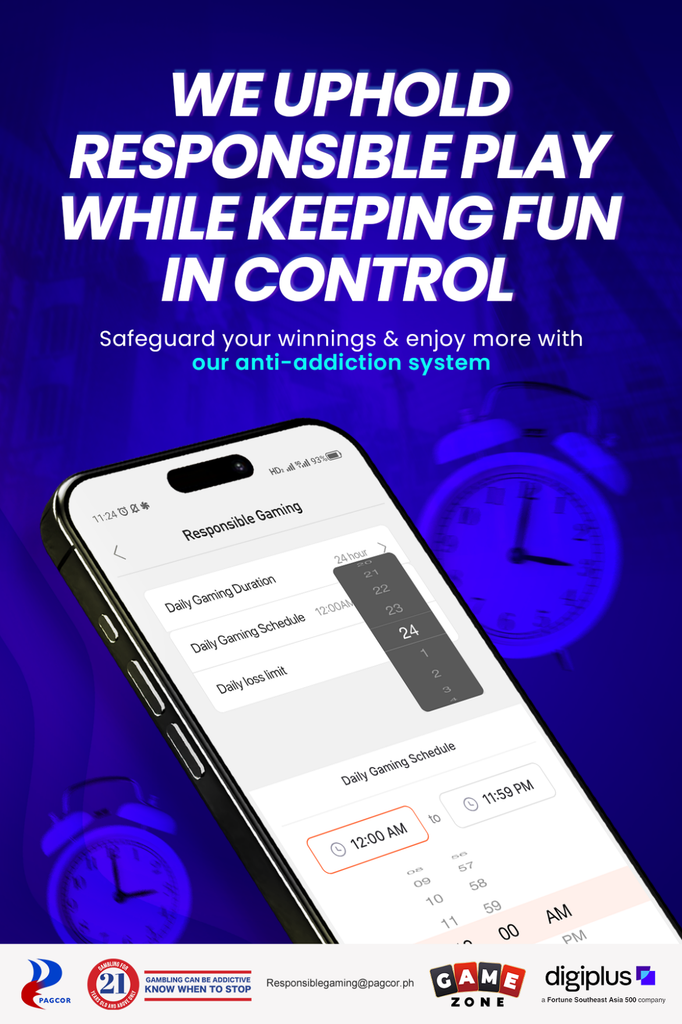
GameZone’s Terms of Use state that qualified users must be 21 years old and above, with other eligibility restrictions. For iPhone users, the Philippine App Store listing identifies DigiPlus as the developer of GameZone – #1 Tongits Platform, notes compatibility with iOS 15.0 or later, and indicates the service is for users 21+. Official website instructions or supported app-store listings remain the safer option compared with unfamiliar third-party download pages.
FAQ
Does a broken streak mean another color is now more likely?
A streak break confirms the previous sequence ended, but it doesn’t establish which color must appear next. GameZone guidance warns against treating historical patterns as reliable predictions.
Can old Peryagame results still help?
Yes—primarily for reviewing what already happened. GameZone describes the Roadmap as a record of prior outcomes and frequencies, not a guaranteed prediction system.
What if a streak makes it hard to stop playing?
A pause helps confirm whether continuing still fits the time and spending limits set before starting. PAGCOR recommends time limits, avoiding borrowed money, and not chasing losses.
Leave a Reply