

Remote work does not need to tie you to a wall socket or noisy generator. Portable solar panels give freelancers, digital nomads, and remote teams reliable power in cabins, RVs, campsites, and backyard offices. Compact solar kits can keep laptops, phones, hotspots, and cameras running through long workdays off-grid. You can pair panels with power stations, battery banks, and DC adapters to build a flexible mobile office setup. Lightweight foldable designs slip into a backpack or car trunk, so you can chase quiet places and strong signals instead of outlets. This guide explains why portable solar panels matter for remote work, which features to prioritize, and how to charge more efficiently so your office can follow you almost anywhere.
Why Portable Solar Panels Matter for Remote Work
Common Remote Work Power Problems
Remote workers face several recurring power issues. Shared outlets in cafés fill up fast, and you may not want to leave gear unattended while you hunt for a plug. Campground or RV park power can be unreliable, noisy, or limited to certain spots. In cabins or rural rentals, grid outages can last hours or days, killing your ability to meet deadlines. Van and car chargers drain vehicle batteries if you rely on them too heavily. Power banks alone only delay the problem; once they empty, you still need a source. These gaps lead to stress, rushed work, missed calls, and time wasted searching for charging options.
Benefits of Portable Solar Energy
Portable solar energy solves many of these problems. You generate power wherever you find sun, not outlets. A foldable solar panel plus a power station can keep laptops, phones, cameras, and hotspots running for full workdays. You can work at a quiet campsite or beach parking lot and still send large files or join video meetings. Solar cuts dependence on noisy generators and reduces fuel costs and maintenance. It also lowers your environmental impact, which matters if your brand promotes sustainability. Most portable panels work plug-and-play with modern power stations, so setup stays simple. The result: more freedom to choose work locations and less stress about running out of power.
Key Features to Look for in Portable Solar Panels
Fast Charging and High Efficiency
For remote work, fast charging keeps downtime low. Higher-watt solar panels paired with MPPT charge controllers or modern power stations convert sunlight more quickly and efficiently. Look for monocrystalline panels with efficiency ratings above 20% when possible. Check how many watts your power station can accept, then match or slightly exceed that with your panel setup. Faster charging helps you recover from cloudy mornings or late starts and ensures your battery reaches a useful level during the peak sun hours in the middle of the day.
Foldable and Travel-Friendly Designs
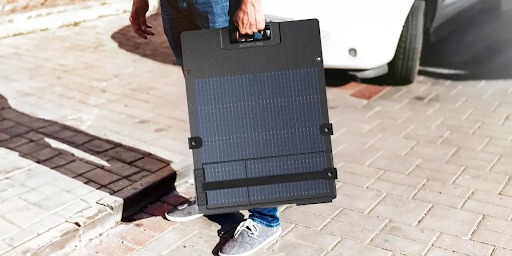
Foldable panels make off-grid work practical. They usually fold into briefcase-style packages with handles, so you can carry them from car to campsite or café patio without hassle. Lightweight materials and slim profiles fit easily in trunks, RV storage bays, or gear closets. Integrated stands let you prop the panel at a good angle without extra hardware. Some travel-friendly models include built-in pouches for cables and adapters. These details save time during setup and pack-down, which matters when you move between locations frequently.
Tips to Improve Solar Charging Efficiency
Better Panel Placement for Maximum Sunlight
Panel placement has a huge impact on charging speed. Set panels in full, unobstructed sun, away from shade from trees, awnings, or vehicles. Even a small shadow across one section can cut output significantly. Angle the panel roughly toward the sun; mid-day, this often means tilting it so it faces the sky directly rather than laying it flat. Adjust the angle every few hours when possible so the panel points toward the moving sun. In cool weather, panels perform better, so allow airflow behind them instead of placing them on hot metal surfaces. Check your power station’s input display to confirm improvements as you reposition.
Smart Energy Management While Working
Good energy habits extend your off-grid work time. Dim your laptop screen, close unused apps, and turn off keyboard backlights. Use power-saving modes on your operating system and disable background syncing for heavy apps during low-power periods. Charge phones, tablets, and accessories during strong sun and unplug them overnight to prevent vampire loads. If you use a hotspot, place it where signal is strong; weak signal makes radios work harder and drain more power. Avoid running high-draw devices, like electric kettles or space heaters, on the same battery that powers your laptop unless you sized your system for those loads.
Conclusion
Portable solar panels give remote workers control over their power supply, whether they work from a van, cabin, backyard, or changing travel route. With a well-matched panel and power station, you can keep key devices online, avoid noisy generators, and reduce long-term energy costs. By choosing the right wattage, efficient cells, and travel-friendly designs, your solar setup becomes an asset rather than extra baggage. Careful panel placement and smart energy habits further boost reliability. Instead of planning your work around outlets, you plan it around sunlight and your own schedule. That freedom lets you design workdays that fit both your productivity needs and your preferred environments.
READ ALSO: How a Cleaning Company CRM Helps Cleaning Businesses Stay Organized
Leave a Reply