
Campers often worry that power sources will ruin the peace of a quiet campsite. Traditional gas generators hum, rattle, and drone through the night, making it hard to relax or sleep. Portable power stations solve much of this problem by delivering electricity with far less noise. They rely on batteries and inverters instead of combustion engines, so they run much more quietly. Modern units, such as the EcoFlow DELTA 3 Plus Portable Power Station, can even operate almost silently under light loads. Understanding how these devices work and what affects their sound levels helps you decide if they fit your camping style.
Why Portable Power Stations Are a Quiet Solution for Camping?
How Portable Power Stations Produce Less Noise Than Generators
Portable power stations rely on lithium batteries and electronic inverters, not fuel engines, so they make much less noise than gas generators. A generator needs constant combustion, which creates engine noise, exhaust sound, and vibration. That noise can easily reach 60–70 dB or more, similar to a loud conversation or traffic. A battery station only makes small electrical and cooling sounds. Some units stay around 30–40 dB in normal use, which blends into background noise at most campsites. Without moving pistons, mufflers, or constant fuel burning, power stations offer a calmer experience that keeps birdsong and campfire crackle in the spotlight.
Understanding Cooling Fans and Noise Levels During Use
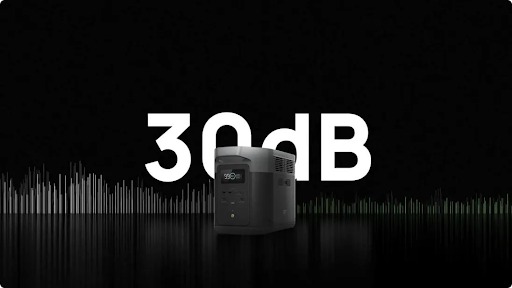
Most portable power stations use internal fans to keep the battery and inverter at safe temperatures. These fans create the main sound you hear during operation. When the unit handles a low to moderate load, fans often run slowly or not at all. For example, the EcoFlow DELTA 3 Plus Portable Power Station operates silently under 600W, blending seamlessly with ambient noise around 30 dB. As the load or temperature rises, the fan may spin faster, adding a soft whir. Manufacturers design fan curves and vent layouts to manage heat without creating harsh or disruptive noise at the campsite.
What Affects the Noise Level of a Portable Power Station?
Battery Size, Output Power, and Fan Activity
Bigger batteries and higher output ratings usually mean more heat to manage, which directly affects fan noise. A large-capacity station that can deliver 2000W or more needs robust cooling to protect internal components. When you draw near its upper power limit, the system senses rising temperatures and increases fan speed. That extra airflow keeps everything safe but adds noticeable sound. Smaller units with modest output can sometimes run fanless at low loads. However, smart engineering matters as much as size. Efficient inverters, well-designed vents, and intelligent fan control allow even powerful stations to stay surprisingly quiet in real use.
How Appliance Load Changes Noise Performance
The type and number of devices you plug in have a big impact on noise. Light loads, like phones, cameras, and LED lanterns, draw little power and produce minimal heat. Under these conditions, many stations run silently or keep fans at their lowest setting. When you add heavier appliances, like portable fridges, induction cookers, or electric kettles, power draw spikes. The power station must work harder, so heat builds quickly. Its cooling system then ramps up, and fan noise increases. Managing your load wisely lets you enjoy quiet operation most of the time, even with a capable, high-output power station.
The Role of Thermal Management and Build Quality
Thermal management and build quality strongly influence how quiet a portable power station feels. High-quality units use efficient heat sinks, smart temperature sensors, and optimized airflow paths that reduce hot spots. This design lets the fans spin slower, cutting noise while still protecting electronics. Sturdy housings and tight assembly prevent rattling or vibration that cheaper models might produce. Rubber feet can dampen resonance on tables or vehicle floors. Premium systems, like the EcoFlow DELTA 3 Plus, combine advanced battery management with solid construction. The result is smoother fan operation, fewer sudden speed changes, and a more discreet acoustic profile at camp.
Best Ways to Keep a Portable Power Station Quiet While Camping
Use Energy-Efficient Devices and Moderate Power Loads
You control much of the noise by choosing what you plug in. Use LED lights instead of halogen lamps, and efficient 12V fridges instead of power-hungry coolers. Charge phones, tablets, cameras, or drones in batches rather than all at once. Avoid running multiple high-wattage appliances together, like a coffee maker and induction cooktop. When possible, cook with gas or the campfire and save the station for electronics and small appliances. By keeping the total load lower, the power station stays cooler. Its fans run less often, or at lower speeds, which preserves the quiet atmosphere around your campsite.
Place the Unit on Stable and Ventilated Ground
Where you set the power station also affects perceived noise. Place it on firm, level ground to prevent vibration or rattling, and avoid hollow surfaces like thin wooden tables that can amplify sound. Keep vents clear of dust, leaves, and tent fabric so the fans can work efficiently at lower speeds. A spot a few meters away from your tent or sleeping area reduces the sound even more. Do not cover the unit with blankets or boxes to muffle noise, as that traps heat and forces the fans to work harder. Instead, use distance and smart placement to keep things quiet.
Conclusion
Portable power stations are quiet enough for camping when you understand how to use them. Their battery-based design avoids the constant roar of gas generators, and most noise comes only from cooling fans. Models like the EcoFlow DELTA 3 Plus Portable Power Station operate silently under 600W, blending into natural campground sounds. Noise levels depend on battery size, load, cooling design, and placement. By choosing efficient devices, moderating power use, and giving the unit space to breathe, you can enjoy reliable electricity without spoiling the peace. For most campers, a quality portable power station offers the ideal quiet power solution.
READ ALSO: How a Cleaning Company CRM Helps Cleaning Businesses Stay Organized
Leave a Reply